

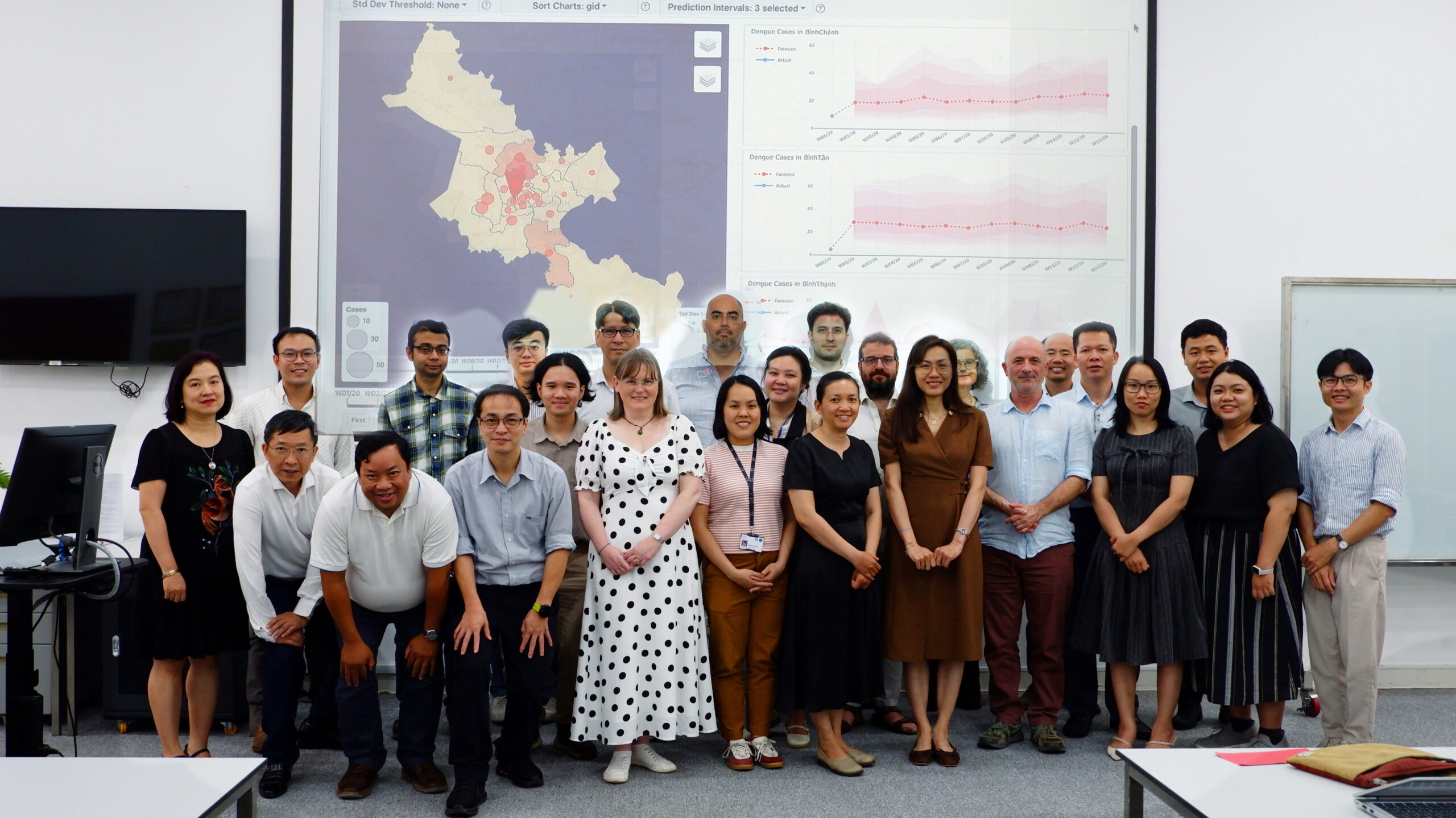
Forecasting dengue in a changing climate
Every year, Vietnam braces for dengue season. Up to 200,000 cases are reported annually, and the conditions that shape those outbreaks are becoming harder to read.
Rising temperatures and shifting rainfall are pushing Aedes aegypti, the mosquito that transmits dengue, into northern and mountainous regions. Changes in the climate, rapid urbanisation, population growth, and complex human movement are making dengue increasingly difficult to anticipate through conventional surveillance alone.
Dengue Advanced Readiness Tools (DART) was designed to help address this challenge. Supported by Wellcome, the platform brings together case notifications, climate, and population data to forecast dengue weekly incidence at district level 1 to 12 weeks in advance, giving public health teams more time to prepare, allocate resources and respond before an outbreak takes hold.
The scope and outputs of DART were shaped through direct consultation with local partners, making it highly customised to Vietnam’s needs and realities.
A new way to forecast
Building an effective dengue forecast is harder than it sounds. Many forecasting tools have traditionally relied on statistical models because they can show a range of possible outcomes, helping decision makers better understand uncertainty.
But they require researchers to decide up front which factors should shape those predictions and the uncertainties, such as temperature, rainfall, or population density. Miss something important, and the forecast can become inaccurate.
Machine learning models work differently. Rather than being told which factors matter, it analyses large amounts of data and identifies patterns for itself. The catch is that most machine learning models produce only a single predicted case count, with no range and no indication of how confident it is. For a public health manager deciding whether to act, that missing context matters.
‘It used to be an either-or dilemma, so DART was designed to bring these strengths together,’ said Huỳnh Ngọc Tuyên, DPhil candidate, University of Oxford, forecast modeller of DART project, OUCRU Vietnam.
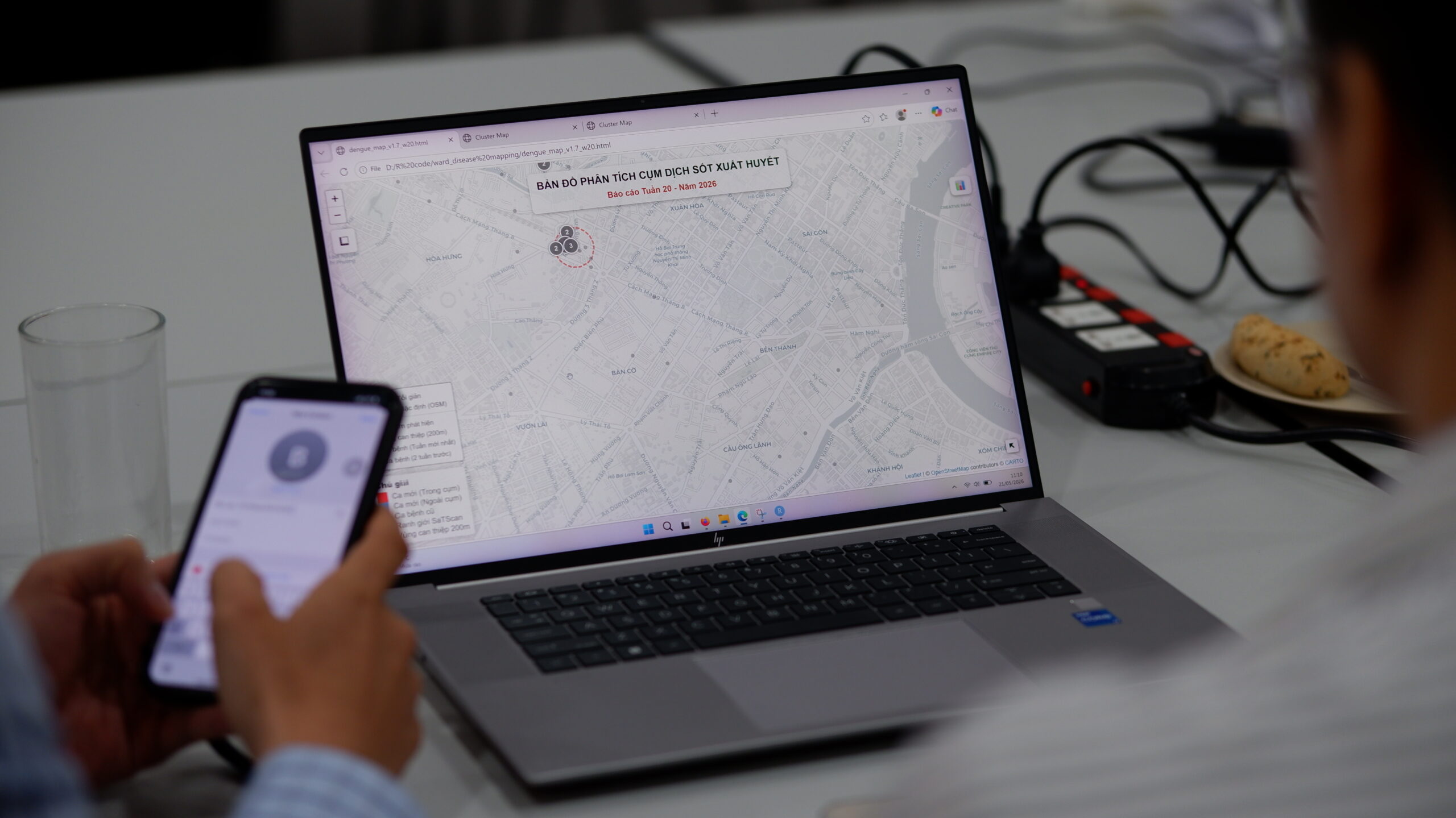
DART combines machine learning with an advanced technique that adds a confidence range to each forecast. In practice, rather than relying on human judgements to decide in advance whether humidity, rainfall or other factors matter most, DART identifies those relationships from the data itself. Instead of a single predicted number, users see a range, say 400 to 650 cases, giving them a clearer basis for deciding whether and how to act.
‘It gives us the flexibility of machine learning while still producing outputs that are meaningful for public health decision making,’ Tuyên said. ‘That combination is what sets DART apart.’
The platform brings together three components: a data pipeline, a forecasting model, and a visualisation interface. Disease surveillance records, weather data, and population density estimates feed into the system, where they are processed and aggregated automatically.
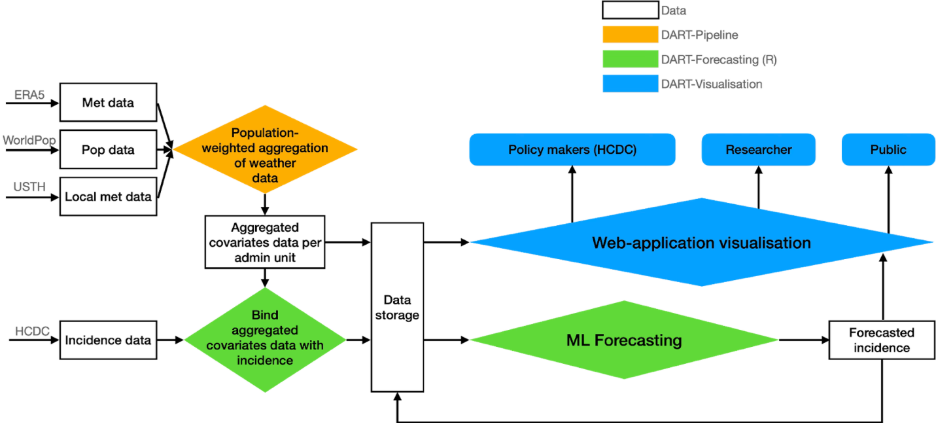
Processing data for the whole of Vietnam from 2002 to 2025 takes around eight hours. Once in routine operation, the pipeline can be automated to run weekly with little manual input.
The current system already generates weekly forecasts of dengue incidence for Ho Chi Minh City, up to 12 weeks ahead, at either city or district level. In 2025, district-level administrative was removed in Vietnam, DART aims to adapt the model to commune level to reflect this change.
A forecast is only useful if it is used
Over three years, DART grew in ways that reflected the complexity of the problem itself. The project began with a focused technical team and ended with a wider circle of partners, including local government, public health agencies, and academic institutions, all of whom shaped what the platform became.
‘We have more people involved, which is a good thing,’ said project lead Associate Professor Sarah Sparrow of the University of Oxford. That expansion was not simply a matter of scale.
Bringing in the National Institute of Hygiene and Epidemiology (NIHE), Hanoi Centre for Disease Control (Hanoi CDC), Centre for Disease Control of Ho Chi Minh City (HCDC), Ho Chi Minh City Department of Health (HCMC DoH), the University of Science and Technology of Hanoi (USTH), and other local stakeholders meant the platform was tested against operational realities, not just research assumptions.
The original ambition was to compare dengue dynamics across multiple Vietnamese cities. Over time, the team moved towards a more grounded approach: getting the framework right in Ho Chi Minh City first, validating it, then thinking about where else it might go.
‘It’s not an academic exercise,’ Assoc Prof Sparrow said. ‘We want to develop a tool that public health teams could understand, trust and use.’
By 2026, the question was no longer whether DART could generate reliable forecasts. It was whether the institutions it was built with had enough confidence to act on them.
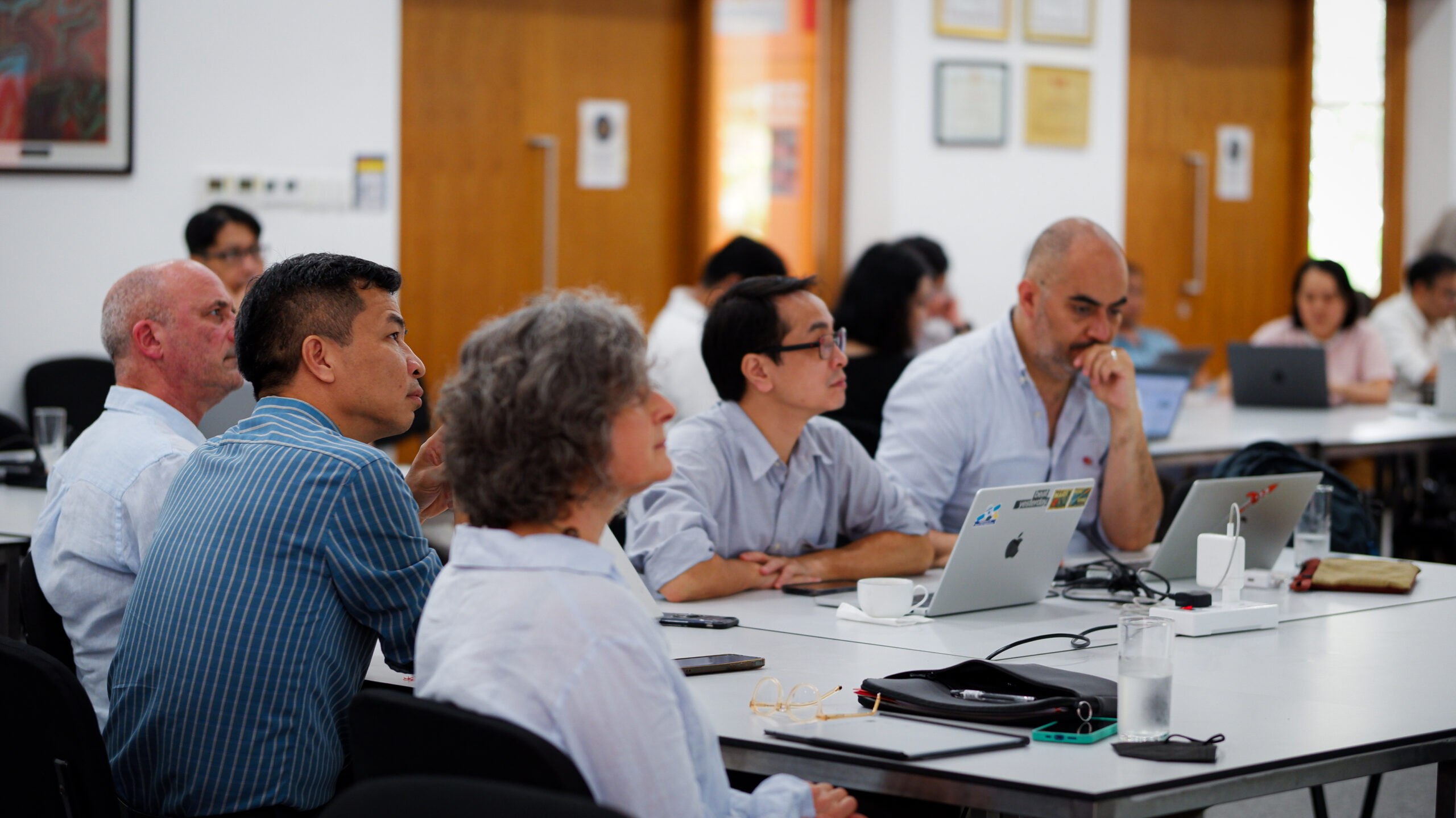
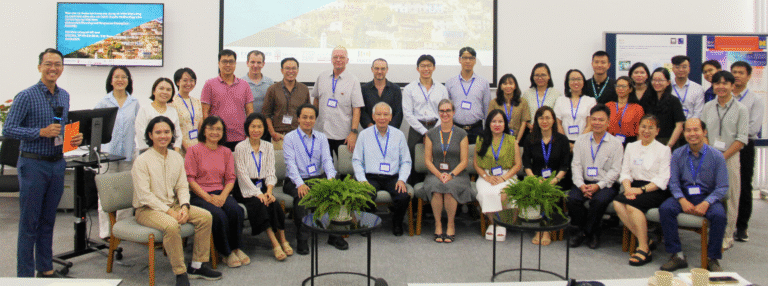
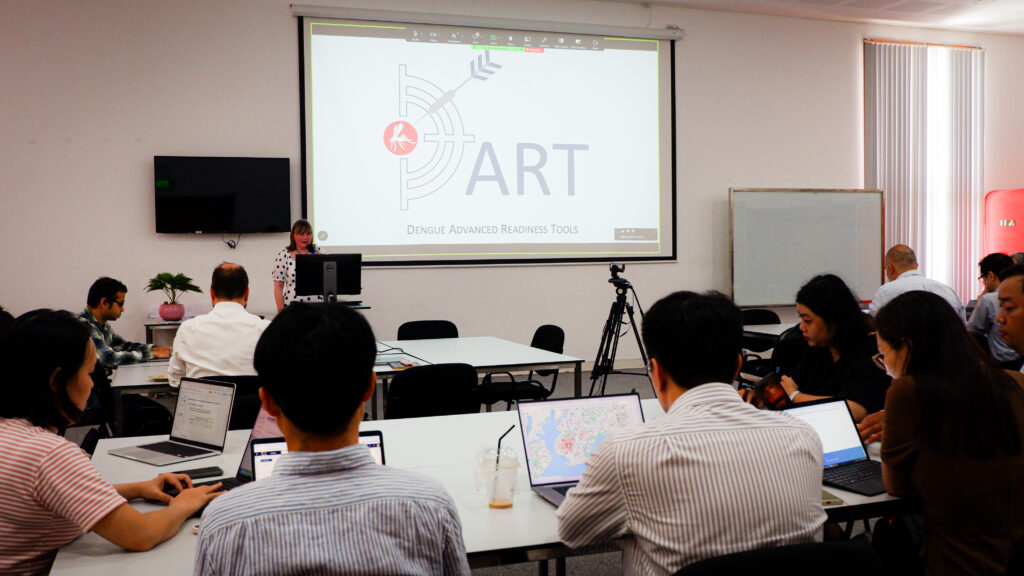
On 21 and 22 May, the question was brought into the closing workshop. Participants watched data move through the pipeline and reviewed what it had produced. The institutions present, including Wellcome, NIHE, HCDC, Hanoi CDC, Ho Chi Minh City Pasteur Institute, USTH, Save the Children and academic partners from Vietnam and the United Kingdom, reflected the translational ambition of the project.
Trương Thị Thanh Lan, MSc, Head of the Department of Surveillance, Early Warning, Preparedness and Emergency Response to Epidemics at HCDC, described the platform as ‘an effective tool for supporting dengue forecasting in Ho Chi Minh City’ but noted that recent changes to the city’s administrative structure will require further refinement to ensure it remains relevant and usable in practice.
The meeting also surfaced a challenge the field has been grappling with more broadly. Associate Professor Phạm Quang Thái, Vice Head of Communicable Disease Control at NIHE, observed that initial enthusiasm for modelling tools among public health managers has given way to caution.
‘The models get caught up in numbers, visuals, technique,’ he said. ‘For public health managers, the question is simpler: what does this mean, where should we look, and what should we do next?’
Earning broader confidence, he argued, would require closer involvement of surveillance specialists from the outset, clearer evidence of practical benefit and formal validation by recognised scientific bodies to give tools like DART the legitimacy needed for government adoption.
What comes next
The workshop also turned to the harder question of what happens after the grant ends. Forecasting systems require ongoing technical support, updated data, and most importantly, institutional ownership. The research team plans to continue working closely with key stakeholders, including HCDC and local partners, to integrate DART into routine dengue prevention and control activities.
Findings from Advance Warning and Response Exemplars, another study conducted at OUCRU on barriers and enablers to early warning systems, highlighted that stakeholder engagement must be treated as an ongoing process throughout the entire life cycle of the project.
The conversation also looked further ahead. Interest has been expressed in adapting the platform for Brazil and Nepal, stress-testing the framework in different epidemiological settings, and making it more scalable.
Dr Felipe J. Colón-González of Wellcome framed the ambition plainly: ‘This is not purely philanthropic. It is a strategic investment in creating tools that will guide policy and decision-making on the ground.’
DART’s long-term value may therefore depend less on a single technical breakthrough than on whether Vietnam’s public health institutions can own, test and use the system over time. In dengue control, as in weather forecasting, a prediction matters only if someone is prepared to act on it.