
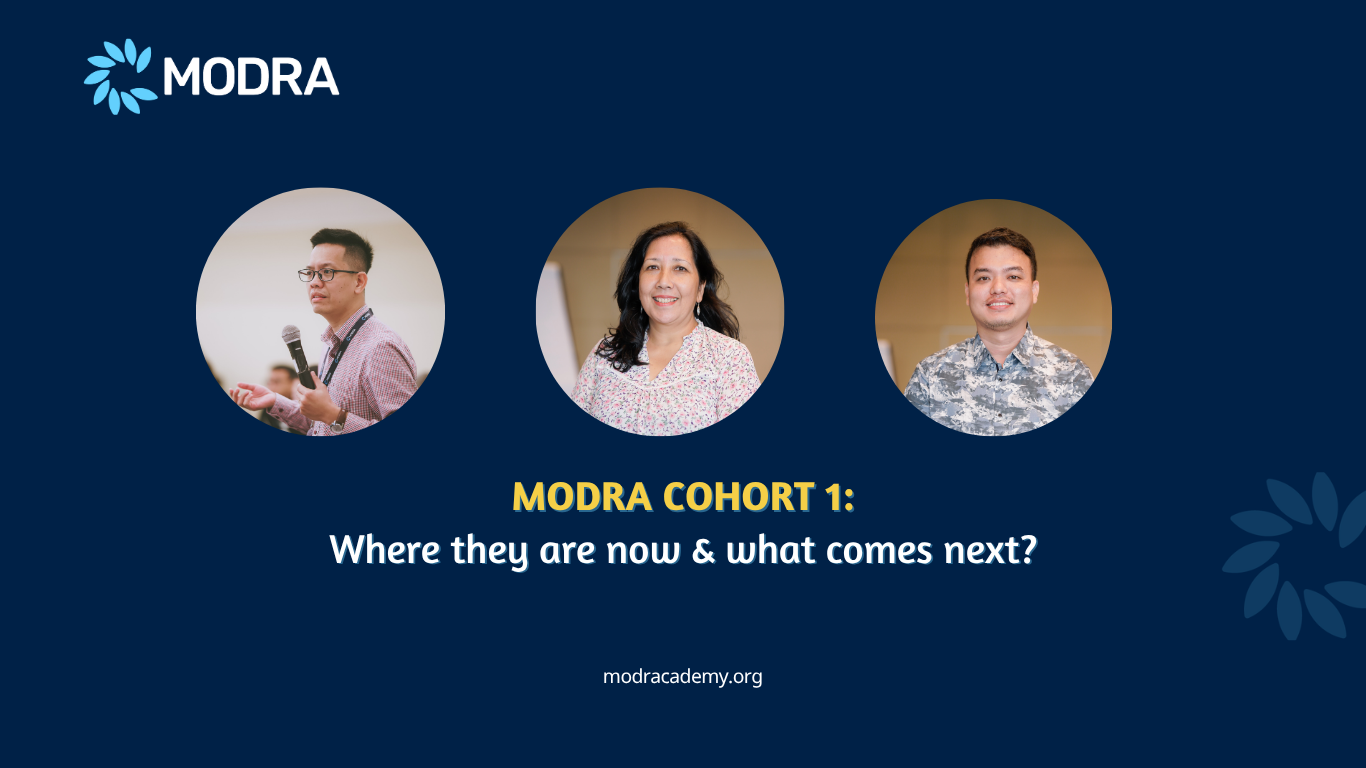
Upon completion of the MODRA programme and moving move into the next stage of their careers, here’s a look at how our fellows are turning learning into lasting impact.
Dr Pham Tran Vinh Phu’s current research focuses on discovering new antibacterial compounds to fight Methicillin-resistant Staphylococcus aureus (MRSA), a dangerous “superbug” that causes hospital infections. With his MODRA seed award, has combined computational analysis and laboratory experiments to identify new molecules that can stop MRSA from growing, helping to address the growing challenge of antimicrobial resistance.
Through MODRA, Phu learned how to translate research ideas into fundable projects. “Most big grants require preliminary data, but getting that data without funding is impossible,” he explains. “MODRA gave me the structure and confidence to design a strong proposal, manage my project effectively, and communicate my research impact to funders.”
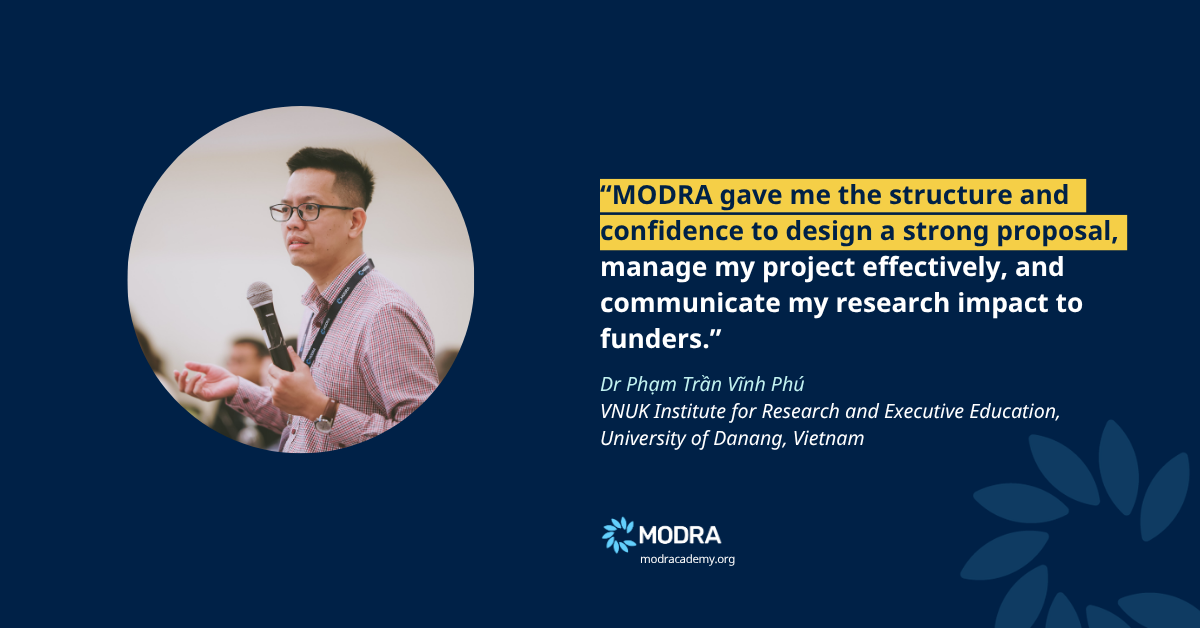
As a lecturer and researcher at the University of Danang, Phu is using the MODRA experience to launch his own laboratory and create a baseline for future research. In his lab, he is also nurturing the next generation of scientists through hands-on mentorship and training
Originally from Myanmar, Dr Pyae Linn Aung relocated to Thailand to continue his research career amid the current political situation in his home country. His work focuses on public health, epidemiology, and the socio-behavioral aspects of malaria control among migrants and hard-to-reach populations. With his MODRA seed award, he led a study on hidden malaria transmission among Myanmar migrants in Thailand, documenting infection prevalence and care-seeking behaviors to inform more inclusive malaria elimination strategies.
“The MODRA seed grant was my first international research funding,” he reflects. “It allowed me to conduct a small but meaningful study and adapt to the research environment in Thailand. Through this experience, I gained confidence in conceptualizing ideas, collecting relevant data, identifying collaborators, and developing compelling grant applications. I now feel more prepared to apply for larger, competitive grants.”
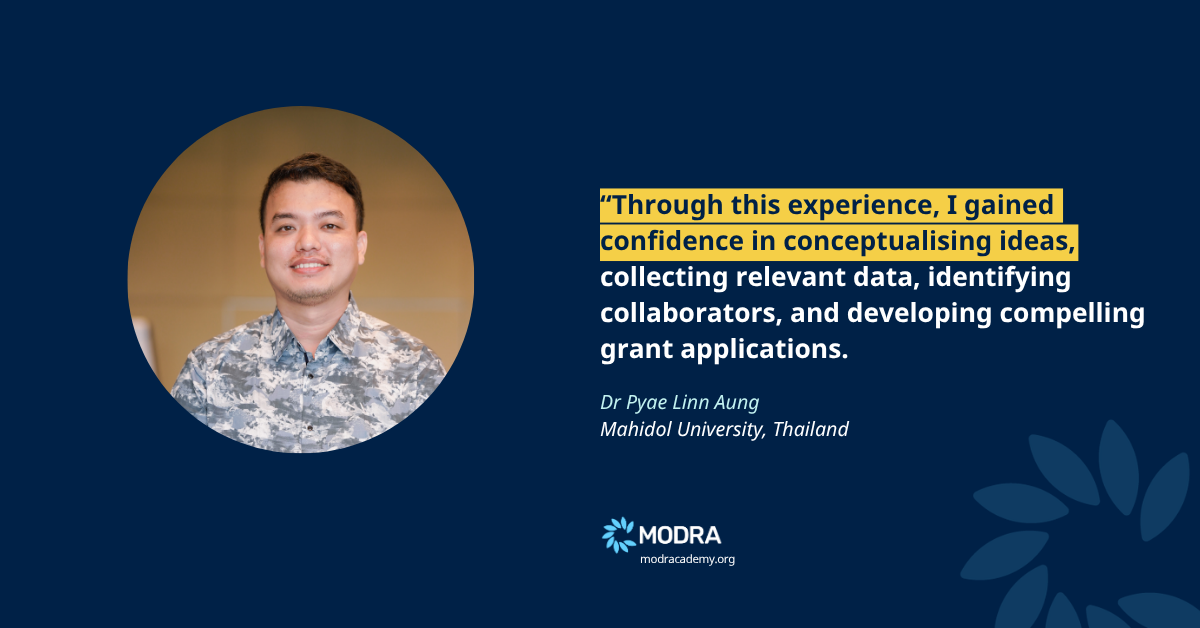
Having completed his MODRA project, Pyae has published two papers from his seed grant work and established new collaborations with researchers in Australia and elsewhere to extend his study on malaria transmission dynamics. He hopes to expand this network further and contribute evidence that supports regional malaria elimination efforts across Southeast Asia.
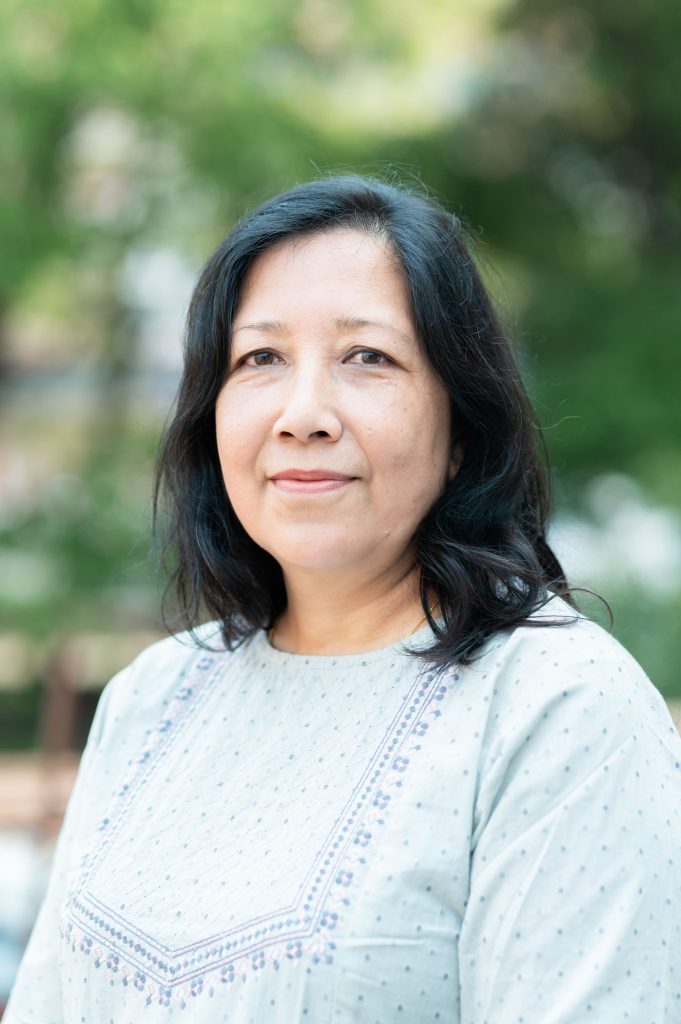
Dr Sabina Dongol is the Head of Laboratory at OUCRU Nepal, where she has long been behind the lab work supporting all major research projects. With her MODRA seed award, she led her first independent research study evaluating rapid diagnostic tests for typhoid. The project has helped to fill a critical evidence gap and improve the accuracy of typhoid diagnosis in low-resource settings.
MODRA provided Sabina with the backbone to transition from a laboratory technician to an independent researcher capable of leading her own studies. “For many years, my work focused on generating data for other projects,” she explains. “MODRA gave me the structure, mentorship, and space to design and lead a study from start to finish.”
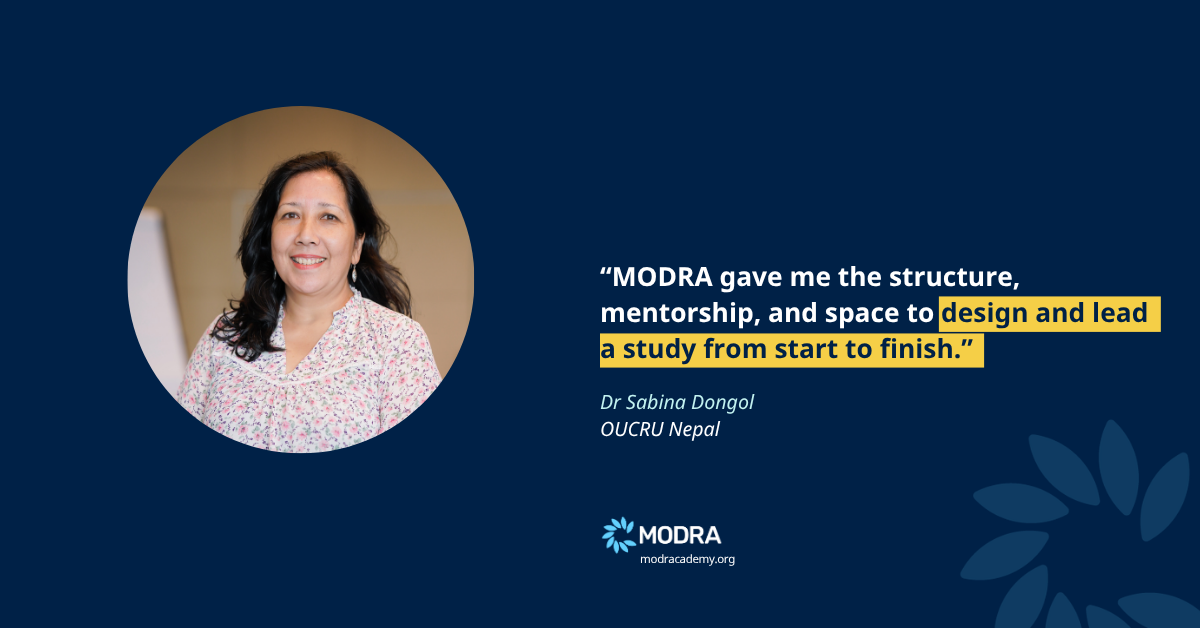
Beyond strengthening her technical expertise, MODRA helped Sabina build new collaborations with hospitals and laboratories across Kathmandu and expand her professional network. She recently won a place in the ISARIC Leadership Programme for Scientists, further recognizing her potential as a future leader in infectious-disease diagnostics and health research in Nepal.