

Oktober 6, 2025

Capacity-Building Training Series on Antimicrobial Stewardship within the 60HN – ASPARNet  

The study titled “Evaluating Antimicrobial Stewardship strategies and capacity building through Participatory Action Research and a Network approach in Vietnam” (60HN – ASPARNet) continues to implement key activities to promote Antimicrobial Stewardship (AMS) programmes across hospitals participating in the network.

One of the key activities within the 60HN – ASPARNet study is a capacity-building training series on antimicrobial stewardship (AMS), jointly organized by the National Hospital for Tropical Diseases (NHTD) and the Oxford University Clinical Research Unit (OUCRU), in collaboration with the Dong Thap and Phu Tho Departments of Health 

The activity aims to enhance both the professional knowledge and practical skills of healthcare staff in antimicrobial stewardship (AMS), supporting rational antibiotic use and effective antimicrobial resistance (AMR) control in healthcare settings. Through the sessions, participants are updated on the latest treatment guidelines and strengthened in key areas such as clinical microbiology, clinical pharmacy, and infection control – essential components for successful AMS implementation. 

In addition, this activity places strong emphasis on building research capacity and supporting the practical implementation of AMS activities at hospitals, enabling each unit to proactively develop action plans tailored to their specific context. The training sessions also serve as a platform for experience sharing among hospitals within the network, fostering mutual learning and promoting the sustainable and equitable development of the AMS programs. 
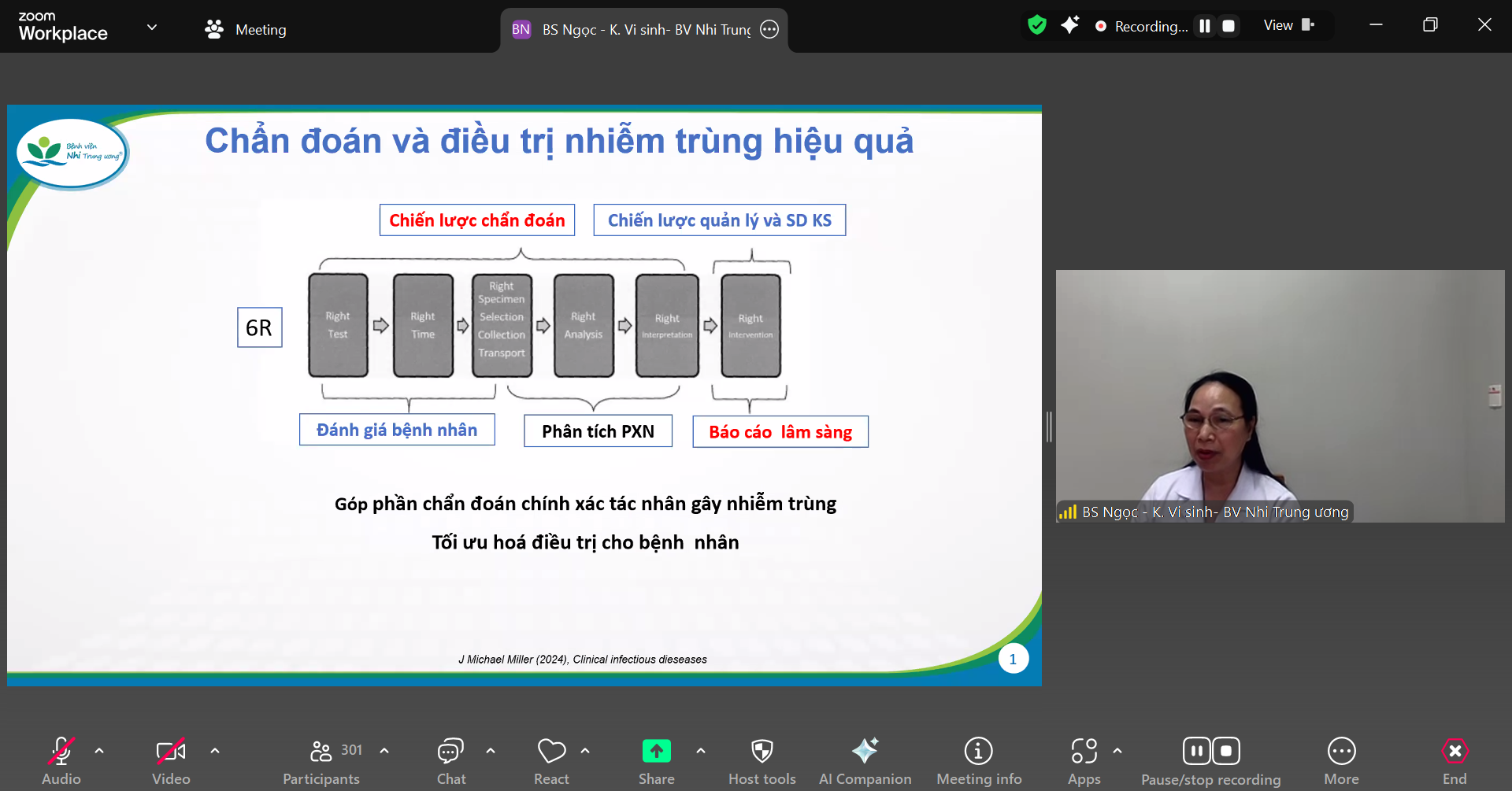
Picture 1: Dr. Vu Thi Lan Huong – Principal investigator of 60HN delivered the opening speech of the training course (Source: OUCRU) 

The content of the training course is developed based on the principles of Participatory Action Research (PAR). This approach emphasizes active involvement from hospitals and healthcare staff in identifying training needs, providing feedback from real-world AMS implementation and clinical practice, and ensuring a strong connection between scientific research and clinical application. By grounding the training in local realities, this activity aims to deliver context-appropriate and practical solutions. 

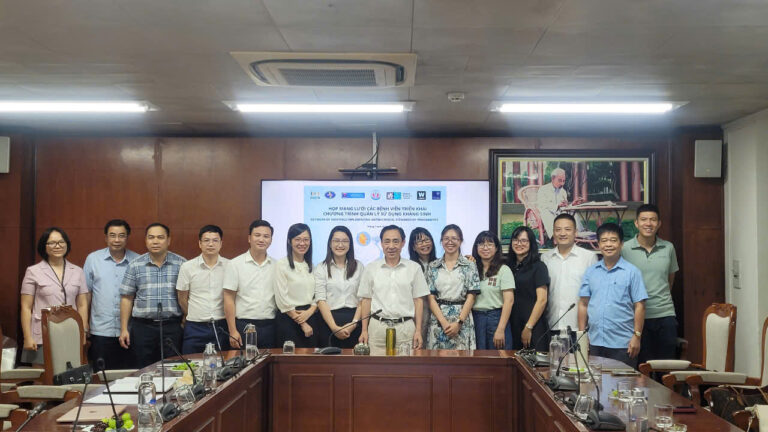
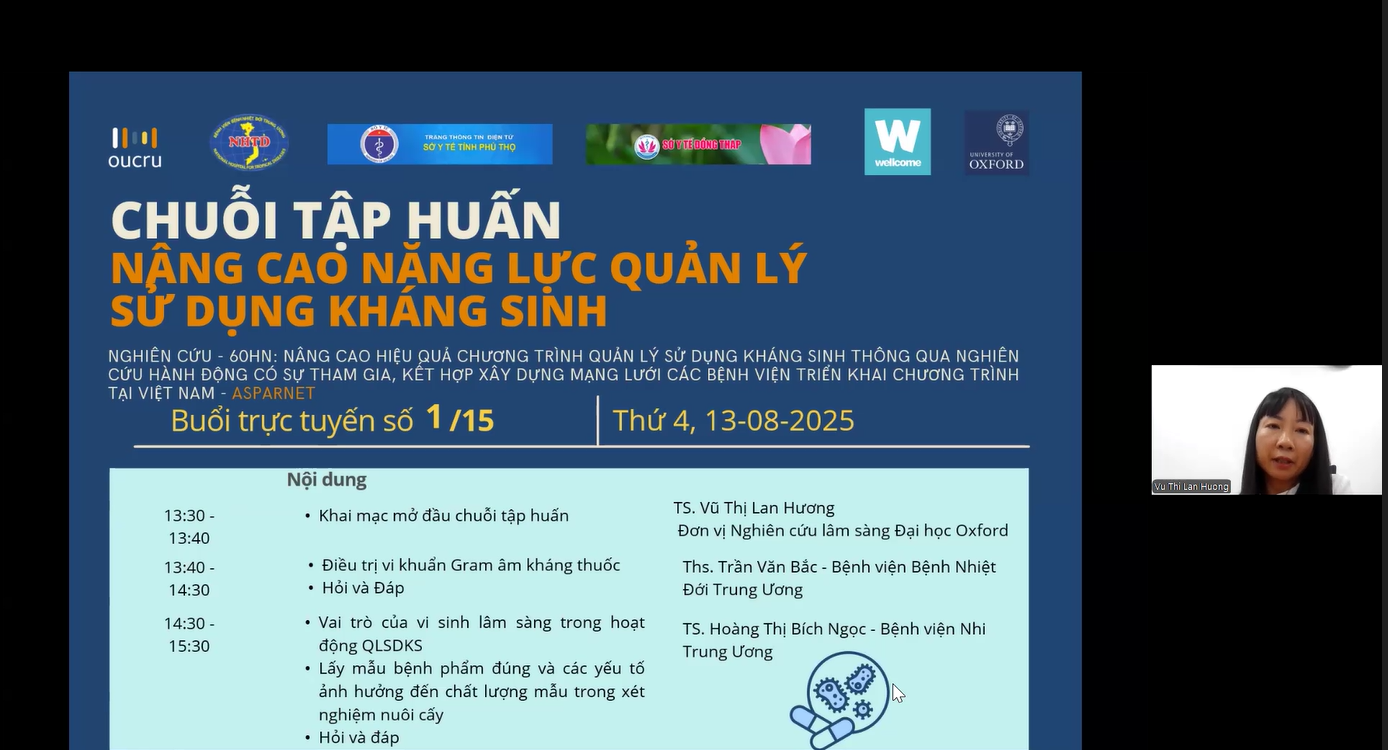
The training series features experienced lecturers from leading hospitals and universities, including the National Hospital for Tropical Diseases, the Vietnam National Children’s Hospital, Hanoi University of Pharmacy, Hanoi Medical University, Saint Paul Hospital, etc. According to the plan, the series began with one in-person training session in each province in July 2025, followed by a total of 15 virtual sessions running from July 2025 to June 2026. As of September 2025, four online training sessions have been conducted, with participation from over 300 healthcare staff from 12 network hospitals involved in the 60HN study, as well as many other healthcare facilities interested in AMS implementation. 
Picture 2: Healthcare staff participated in the training series (Source: OUCRU) 

In addition to strengthening healthcare professionals’ knowledge in clinical antibiotic use, clinical microbiology, clinical pharmacy, analysis of common bacterial groups, and guidance on developing AMS implementation plans at their respective institutions, the training sessions also feature practical experience sharing by lecturers who have directly implemented AMS programs in their hospitals. These insights help participants better understand the challenges and identify context-specific solutions tailored to the realities of each healthcare setting. 
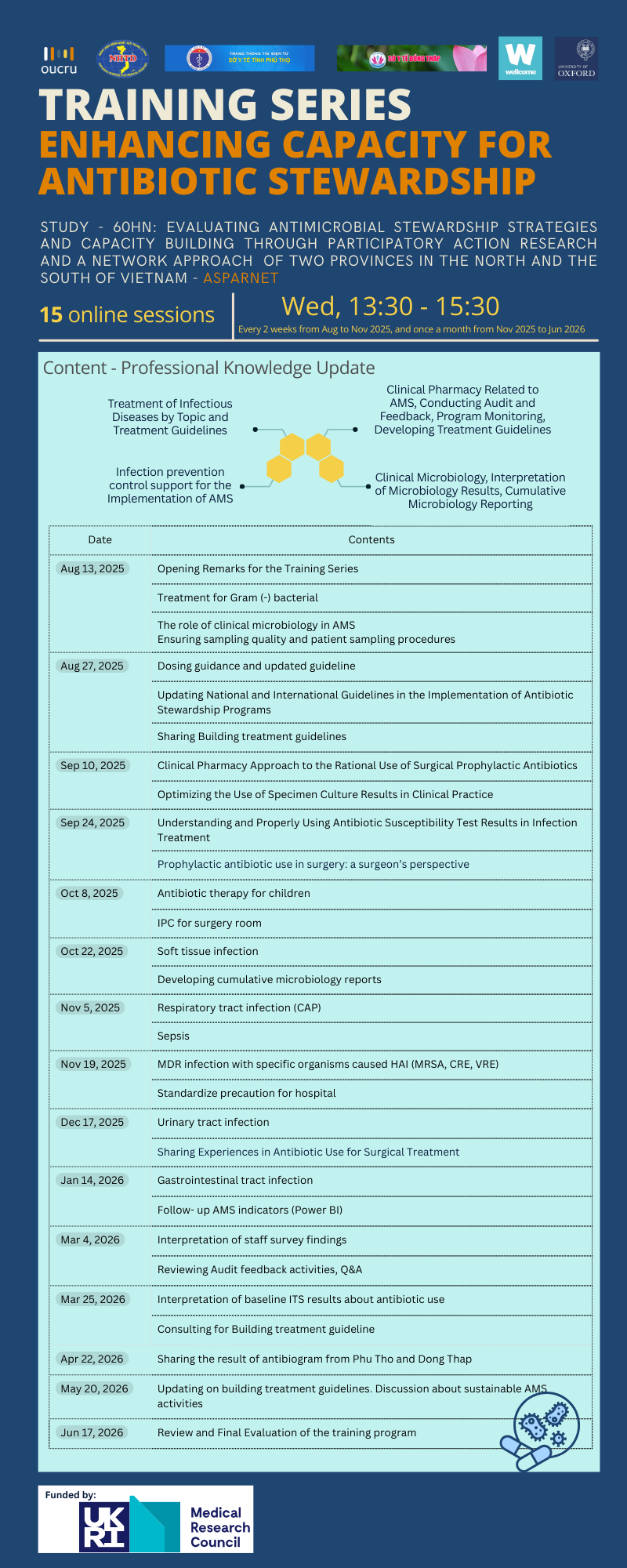
Picture 3: Content of training series to improve capacity in antibiotic stewardship (Source: OUCRU) 

Beyond enhancing the professional capacity of healthcare staff, the activity is expected to drive long-term changes in antibiotic prescribing practices among clinical doctors. These changes will contribute to more appropriate antibiotic use, helping to reduce the risk of antimicrobial resistance, improve treatment outcomes, shorten hospital stays, and lower healthcare costs for patients. Effective AMR control also plays a vital role in safeguarding public health, especially in the context of emerging infectious disease threats. 

In the long run, the program aims to support healthcare institutions in developing regular capacity-building plans for their staff, ensuring the sustainable and effective implementation of AMS initiatives. This effort reflects a strong integration between scientific research and practical application, contributing to improved quality of care and health outcomes in Vietnam. 

Loading...

In This Article

Learn More

Related

Forum Theatre Simulation

Analyse Tam’s choices. Step inside the story as an interactive spectator to break the chain of medical mishaps before it’s too late.

STORY TIMELINE PROGRESSION

5

The Ultimate Prevention: Vaccine Status

What if the volunteer leader had checked everyone’s Tetanus vaccination status before leaving for the field trip?

Vaccination Changes Everything

  • 100% Preventable: As you can see from our play, Tetanus cannot be cured easily once symptoms start and can be costly. But it is almost completely preventable with regular vaccination.
  • 10-Year Rule: Adults need a Tetanus booster shot every 10 years to maintain immunity.
  • Early booster shot: If you receive a deep or dirty cut (such as in the play, one from a rusty tool), you may need a booster if your last shot was more than 5 years ago.

When was your last Tetanus shot? Check your records today — a simple booster is the ultimate protection against unexpected accidents.

Forum Theatre Simulation

Analyse Tam’s choices. Step inside the story as an interactive spectator to break the chain of medical mishaps before it’s too late.

STORY TIMELINE PROGRESSION

4

Scenario Solved at Step 5!

Life-saving intervention! Jaw stiffness (lockjaw) is a classic symptom of active Tetanus toxin. Immediate hospital admission is required to secure the airway and control muscle spasms.

What if Tam had an ultimate shield against tetanus—protecting him from rusty tools before the trip even started?

Forum Theatre Simulation

Analyse Tam’s choices. Step inside the story as an interactive spectator to break the chain of medical mishaps before it’s too late.

STORY TIMELINE PROGRESSION

3

Scenario Solved at Step 4!

Good call! Healthcare providers depend on the full context. Clearly stating that an injury involved rusted metal alerts the nurse to assess Tetanus exposure immediately.

What if Tam had an ultimate shield against tetanus—protecting him from rusty tools before the trip even started?

Forum Theatre Simulation

Analyse Tam’s choices. Step inside the story as an interactive spectator to break the chain of medical mishaps before it’s too late.

STORY TIMELINE PROGRESSION

2

Scenario Solved at Step 3!

Spot on! Social media content often promotes unverified advice that delays crucial medical intervention. Deep, dirty cuts always require professional evaluation within hours.

What if Tam had an ultimate shield against tetanus—protecting him from rusty tools before the trip even started?

Forum Theatre Simulation

Analyse Tam’s choices. Step inside the story as an interactive spectator to break the chain of medical mishaps before it’s too late.

STORY TIMELINE PROGRESSION

1

Scenario Solved at Step 2!

Smart choice! Clostridium tetani bacteria thrive in organic material like dirt and leaves. Keeping raw plants out of deep cuts prevents pushing bacterial spores deeper into tissue.

What if Tam had an ultimate shield against tetanus—protecting him from rusty tools before the trip even started?

Forum Theatre Simulation

Analyse Tam’s choices. Step inside the story as an interactive spectator to break the chain of medical mishaps before it’s too late.

STORY TIMELINE PROGRESSION

1

Scenario Solved at Step 1!

Great call! By stopping work with high-risk, corroded tools, you removed the physical source of Tetanus exposure entirely before an injury could even happen.

What if Tam had an ultimate shield against tetanus—protecting him from rusty tools before the trip even started?

Skip to content