Laboratories

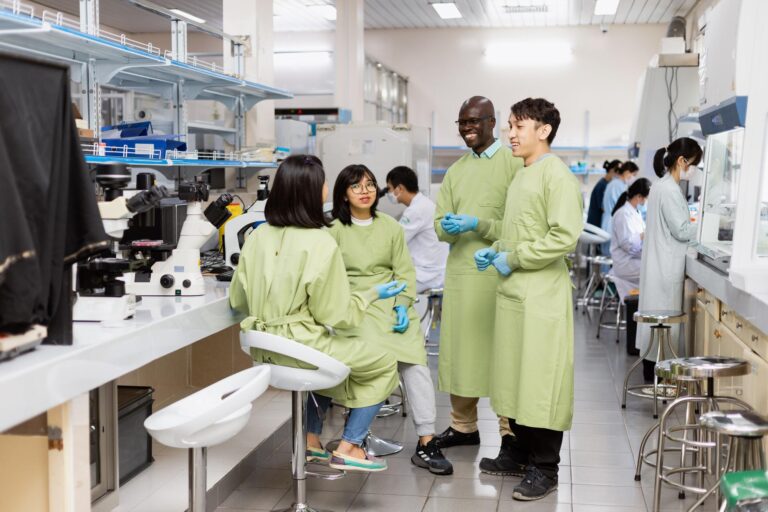
OUCRU’s state-of-the-art laboratories are crucial to our medical research breakthroughs, providing robust, evidence-based data that fuels our understanding and treatment of infectious diseases.  Our laboratory network has evolved significantly over the years, encompassing a diverse range of facilities designed to meet the complex demands of our research programs.

Our Laboratory Network:

OUCRU operates and collaborates with a variety of laboratories, each playing a vital role in the research process:

Site Labs

These labs are our first point of contact for samples. Located across Vietnam (including 26 sites in Ho Chi Minh City) and in our other locations, site labs collect, process, and temporarily store samples before they are securely transported to our central laboratories for further analysis. This process ensures sample integrity and facilitates efficient research workflows.

Clinical Diagnostic Labs

Partnering with established clinical diagnostic laboratories, such as those at the Hospital for Tropical DiseasesPham Ngoc Thach Hospital, and the Pasteur Institute Nha Trang, allows us to leverage existing infrastructure and expertise for routine patient care. These labs adhere to stringent diagnostic protocols and employ approved methodologies for sample analysis, contributing valuable data to our research while supporting patient management.

Biomedical Research Labs

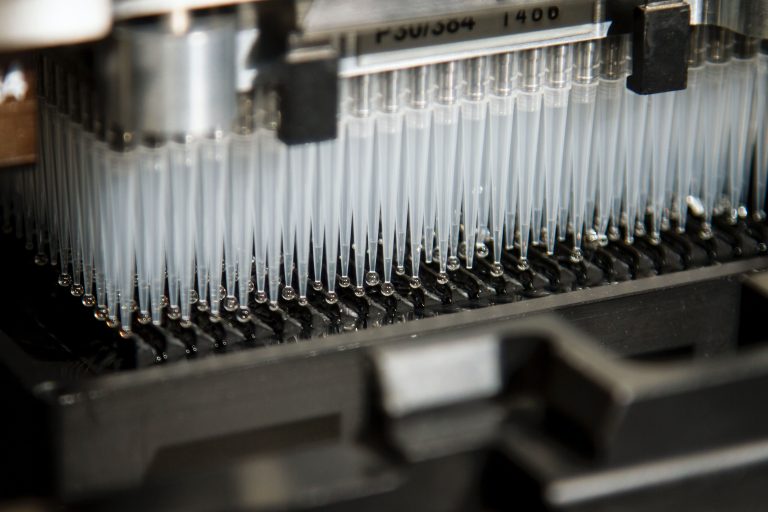
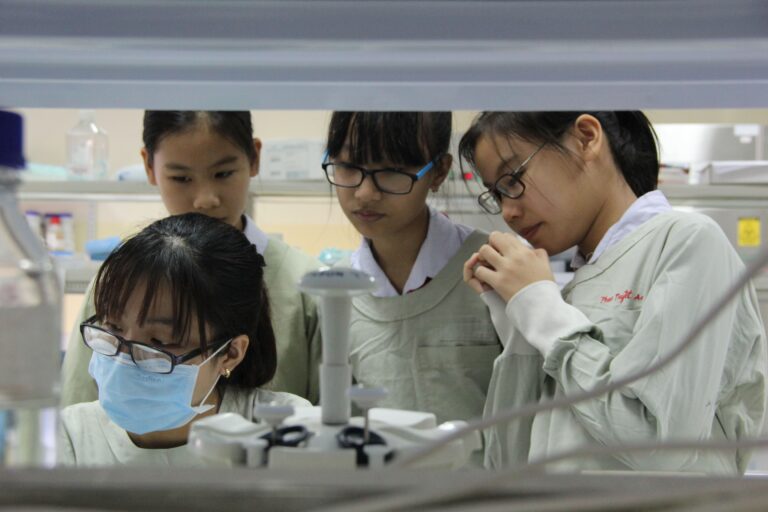
At the heart of OUCRU’s research efforts are our 18 biomedical research laboratory units in Ho Chi Minh City. These labs investigate the biological and biochemical mechanisms underpinning health and disease, focusing on areas such as cellular processes, genetics, molecular biology, and microbiology (bacteriology, virology, and mycology). Researchers utilize advanced techniques, including cell culture, animal models, and analytical processes, to unravel disease mechanisms and pave the way for new therapies and control strategies.

Biosafety Levels

All our laboratories adhere to strict biosafety standards, categorized by Biosafety Level (BSL), also sometimes referred to as Containment Level (CL) or Protection Level (PL).  These levels dictate the level of containment required for handling specific biological agents.

BSL1

Handles agents unlikely to cause disease in healthy individuals.  These labs are commonly found in educational settings.

BSL2

Handles agents with moderate potential hazard to laboratory personnel and the surrounding environment.  The majority of OUCRU’s laboratories in Ho Chi Minh City, as well as those in Indonesia, Hanoi, and Nepal, are designated BSL-2.

BSL3

Handles agents that can cause serious or lethal disease through inhalation.  BSL-3 facilities are specially engineered with rigorous controls, including both engineering and administrative measures, to protect laboratory staff and the surrounding environment. Access to BSL-3 facilities is determined by a strict criteria based on the activity performed, the pathogenicity and transmissibility of the biological agent, and the availability of treatment or prophylaxis, including vaccines.

The OUCRU Biorepository: A Hub for Biomedical Research

The Oxford University Clinical Research Unit (OUCRU) Biorepository in Ho Chi Minh City serves as a vital infrastructure for biomedical research, providing a robust and secure environment for the long-term storage of biological samples. Our facility is designed to support the research of seven key groups: Emerging Infection (EI), Molecular Epidemiology (MolEP), Dengue, Malaria, Tuberculosis (TB), Modelling, and Zoonosis.​

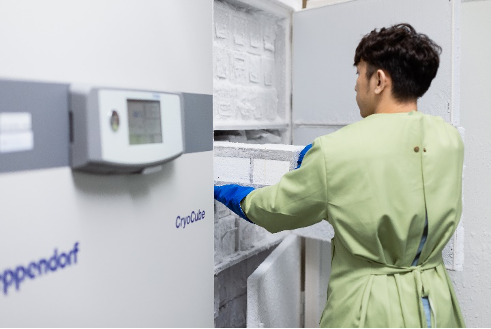
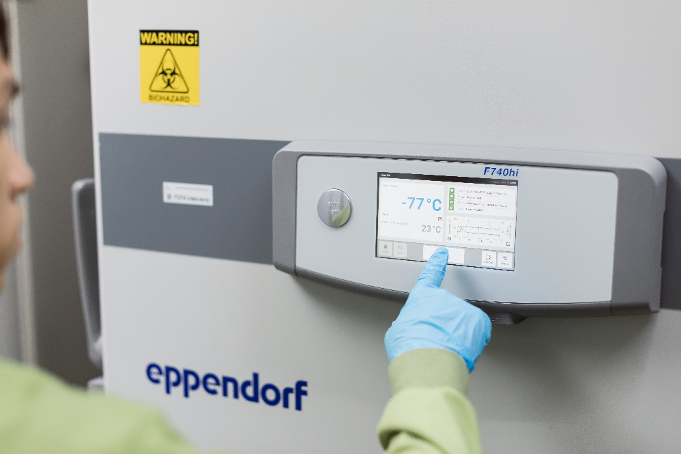
With approximately 150 refrigerators, freezers and ultra-low temperature freezers, the biorepository accommodates a wide range of storage requirements, including temperatures of 2-8°C, -20°C, -40°C, and -80°C. Additionally, we have 10 liquid nitrogen tanks for specialized sample preservation. A stringent cold chain system is maintained from the moment samples are received in our dedicated receiving room to their final ultra-low temperature storage. To maintain optimal performance, our freezers undergo annual preventative maintenance. Additionally, external surfaces are thoroughly cleaned every six months as part of our “Big Lab Cleaning” initiative.
 

To enhance security, all freezers including liquid nitrogen tanks are kept locked when not in use. They are housed within a restricted access area, where entry is controlled by card-key or fingerprint biometrics. Sample information is meticulously managed using the Freezerworks system, a specialized software that ensures accurate tracking and easy retrieval. This system also helps to manage storage space efficiently, minimizing the need to operate empty freezers. This practice reduces the harmful CO2 emissions produced by ultra-low temperature freezers, aligning perfectly with the LEAF (Laboratory Efficiency Assessment Framework) principles published by the University College London. For added security and sample integrity, the temperature of all freezers is monitored in real-time through the MySirius (JRI) system, providing continuous oversight and instantly alerting the Lab Management team to any deviations. All sample management processes, including receiving, storing, and disposing of samples, are guided by strict Standard Operating Procedures (SOPs) shared on SharePoint between the lab management team and research groups. Furthermore, the Laboratory Information Management System (LIMS) facilitates the exchange of information, from sample storage layouts to incident reporting, between the Lab Management team and research groups. This systematic approach ensures the integrity and value of every sample, making our biorepository a cornerstone of OUCRU’s mission to advance public health.


Loading...
Learn More

Related

Skip to content