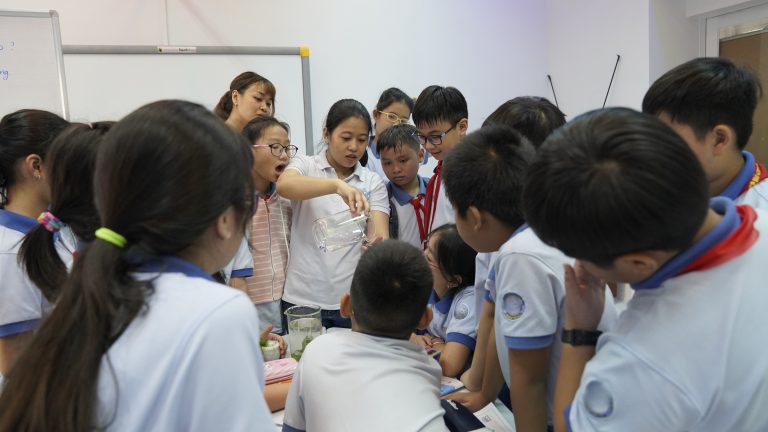
Chat with Scientists was the first online interactive event in Vietnam to connect middle school students with scientists. Students can discuss with scientists, challenge them with fun questions following three themes, engage in online conversations about science topics, and vote for their favorites to win the School Science Award.

Key Activities

Scientists

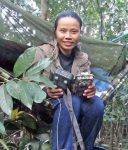
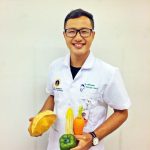
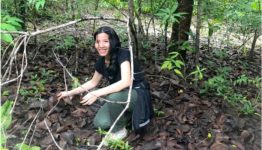
During the project, scientists uploaded their profiles to the project’s webpage, answered students’ questions related to their scientific fields, and participating in dialogues with students during online chat sessions.

By participating in the event, besides the “challenge” of communicating science to young people, scientists also have the opportunity to better understand the perspective of today’s youth regarding science and the role of scientists.

Favorite scientists, chosen by participating students, would won the School Science Award, which could be used to organise other scientific activities for students.


Teachers

As the format of the project was an interactive contest between scientists with participating students were judges, teachers could help in many ways such as:

  • Guide students to learn about scientists’ work through “profiles” posted on the project’s website
  • Help students develop criteria for selecting scientists
  • Support students to participate in project activities most effectively through specialised instructional materials developed for teachers
  • Guide students in asking questions and chatting online with scientists about specific topics

Discussion Topics

Questions like “Why are whales mammals but live in water?” or common argument “Between lions and tigers, which is stronger?” would be explored in the Animals topic. Scientists who joined this topic studied different animal species, ranging from birds, reptiles and amphibians, frogs, insects (especially butterflies), veterinary, and primatology.

Partnered scientists

The World Health Organization ranks Vietnam among the countries with the highest rates of antibiotic resistance globally, compounded by low public awareness of proper antibiotic use.

Antibiotic resistance researchers study drug-resistant microorganisms, resistance genes, evolutionary processes, and transmission rates. Their ultimate goal is to safeguard human health by providing scientific evidence that promotes the correct use of antibiotics.


Partnered scientists

Biomedical Science is a broad field studying the biological structures and processes related to health and disease in humans and animals.

Using scientific methods—observation, experimentation, and analysis—biomedical scientists develop treatments, prevent diseases, and protect health. These interdisciplinary teams combine expertise across biochemistry, medicine, veterinary science, engineering, and life sciences.

Partnered scientists

For an agricultural country like Vietnam, Crops Science plays an important role in economic and social development. It studies crop varieties, farming techniques, soil, fertilizers, irrigation, pest control, and post-harvest preservation.

Partnered scientists

Vietnam and the world face severe threats from climate change and human-driven pollution. Environmental Science investigates pollutants and human impacts across land, water, air, and ecosystems—aiming to protect our planet and improve life for all.

Partnered scientists

Food Science is an applied science studying the physical, chemical, and biochemical nature of food, as well as the principles of processing and nutrition.

Combining engineering, biology, and physics, it investigates food properties, spoilage, and quality improvement—translating laboratory discoveries into industrial production and everyday nutrition.

Partnered scientists

Human health research has evolved over thousands of years—from ancient remedies to groundbreaking vaccines. Today, scientists continue to fight critical health challenges, from heart disease to infectious viruses.

In this topic, researchers specialising in nutrition, cardiology, immunology, and microbiology interacted with students to answer all questions related and share their passion, how their work shapes and impacts the future.

Partnered scientists

This section covers definitions, transmission mechanisms, key characteristics of bacteria, viruses, fungi, protozoa, as well as prevention and treatment strategies.

Featured questions:

  • Does current hot weather easily cause infectious diseases?
  • Why do some people get bitten by mosquitoes more than others?
  • Is there a cure for HIV yet? 

Partnered scientists

Life Sciences encompasses the study of living organisms—including microorganisms, plants, animals, and humans—alongside related fields like bioethics. Centered around biology, it has expanded into molecular biology, biotechnology, and specialized branches such as neuroscience and bioengineering.

Life Sciences plays an important role in improving our quality of life, driving key advancements across medicine, agriculture, pharmaceuticals, and food science.

Partnered scientists

Microorganisms are tiny living things invisible to the naked eye yet always present around us. Despite their size, they significantly impact our lives – mostly beneficial, though some may spread terrifying diseases and cause global pandemics.

Partnered scientists

Did you know that “science” comes from the Latin word “Scientia,” consisting of knowledge gained through practical experience, research, and testing hypotheses based on evidence and experiments? Find out more how students learned about what scientific research involves and what qualities make a good researcher. 

Partnered scientists

Project Materials

LEARN MORE

Related

Skip to content