Associate Professor Abhilasha Karkey is a medical microbiologist and Director of OUCRU Nepal.
Expertise
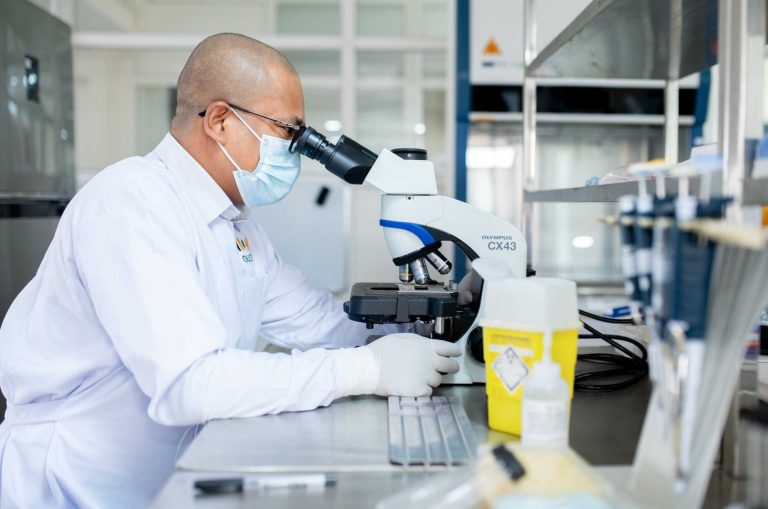
Dr Abhilasha Karkey’s current research focus is on antimicrobial resistance in Gram-negative pathogens (Klebsiella pneumonia and Enterobacter spp) with a specific focus on the enteric pathogens Salmonella Typhi and Paratyphi A. She leads research studies focusing on the surveillance of resistant pathogens and works in close collaboration with hospitals to devise appropriate antimicrobial stewardship (AMS) and infection prevention-control (IPC) programs.
Of specific interest for her are the enteric fever pathogens, Salmonella Typhi and Paratyphi. In addition to monitoring the resistance in these pathogens, she is working towards the elimination of enteric fever in Nepal: could this be a case study for the elimination of other similar infectious diseases?
Career and achievements
Dr Karkey started her career with the French section of a non-profit organisation Médecins Sans Frontières, also known as Doctors Without Borders. She has a decade of experience working with MSF, managing infectious diseases, often in conflict areas all over Africa and Asia.
She has extensive experience in setting up field diagnostic laboratories and blood banks. On completion of her master’s degree in medical microbiology at the Liverpool School of Tropical Medicine and Hygiene, she returned to Nepal and started her career with OUCRU Nepal as a researcher and simultaneously enrolled for a DPhil degree with the Nuffield Department of Medicine at the University of Oxford. She won the prestigious NDM graduate prize for her thesis, which she completed in 2012.
Honored with the Health Research Award at the 12th National Summit of Health and Population Scientists in Nepal, organized by the Nepal Health Research Council (NHRC).
2022- Present
Appointed as Director of the Oxford University Clinical Research Unit Nepal
2018
Became the Alan J Magill Fellow and an Aspen New Voices Fellow.
2017
Appointed as Vice Director of the Oxford University Clinical Research Unit Nepal
2016
Became an OAK Foundation Scientific Leader Fellow
2012
Completed DPhil and awarded the Nuffield Department of Medicines’ graduate prize
2010
Seminal work on the epidemiology of Salmonella Typhi in Nepal looking at geospatial analysis revealing modes of endemic urban typhoid fever transmission.
2008
Started working with the Oxford University Clinical Research Unit Nepal in Patan Hospital as a DPhil student