Dengue in the Elderly: Characterising Clinical, Biomarker, and Immunological Phenotypes

Funders: 
Merck

Principal Investigators:
Prof Sophie Yacoub (OUCRU HCMC)
Dr Nguyen Minh Nguyet (OUCRU HCMC) Project Lead.
Dr Phan Vinh Tho (Head of Ward D, Hospital for Tropical Diseases, HCMC)
Dr Tran Thi Van Anh (Head of the Infectious Diseases ward, Thong Nhat Hospital, HCMC)
Dr Dang Thi Bich (National Hospital for Tropical Diseases, Ha Noi)

Research Partners: The National Hospital for Tropical Diseases (NHTD) in Hanoi, the Hospital for Tropical Diseases (HTD) and Thong Nhat Hospital in Ho Chi Minh City.

Study Design: Observational cohort study. 

Dengue is known to disproportionately affect children; however, major hospitals in Vietnam still receive high numbers of admissions of patients aged 60 and above. This study investigates how ageing may influence dengue progression and the body’s response to the virus. The results aim to improve clinical treatment and inform vaccine development.

Background

Dengue is known to be a disease that disproportionately affects children, however, at both The National Hospital for Tropical Diseases in Hanoi and the Hospital for Tropical Disease in Ho Chi Minh City, more than 300 patients over the age of 60 present every year requiring admission.  

While many anecdotal reports suggest elderly patients may develop severe disease more frequently, there is limited prospective data in the literature. 

Objectives

  1. To describe and compare the daily signs, symptoms, and blood tests in dengue patients aged 60 and above with those aged 18 to 30. 
  2. To better understand the body’s responses to dengue infection by measuring biomarkers released over the disease course due to inflammation, immune cells activation, and blood vessel injuries; and compare these results between the two age groups.
  3. To explore the innate and adaptive immune responses to dengue in both age groups.
  4. To examine the effects of immunosenescensce (age-related immune dysfunction) on dengue virus levels in patients’ blood and disease severity.

Dr Nguyen Minh Nguyet said: “We want to explore how the immune system in elderly patients contributes to severe progress of disease. The outcomes of this study could inform not only improved clinical treatment guidelines for this population, but also vaccine development pathways in the future.” 

An outcome of this project is supporting Dr Dang Thi Bich from NHTD to pursue her PhD at the Hanoi Medical University (supervised by Assoc Prof Nguyen Minh Thu and Dr Nguyen Minh Nguyet). Dr Bich’s project, titled “Disease progression and the changes of biomarkers in elderly patients hospitalised with dengue with warning signs,” will use some data and samples collected in this project. Dr Bich is expected to complete her PhD in December 2027. 

Study Design

Type: Observational cohort study 

Recruitment sites: Both the general and ICU wards at the National Hospital for Tropical Diseases (NHTD) in Hanoi, the Hospital for Tropical Diseases (HTD) and Thong Nhat Hospital in Ho Chi Minh City. 

Sample size: 150 dengue patients 

  • 100 elderly patients (aged 60 and above) 
  • 50 younger patients (aged 18 to 30) as a control group


Data collection: 

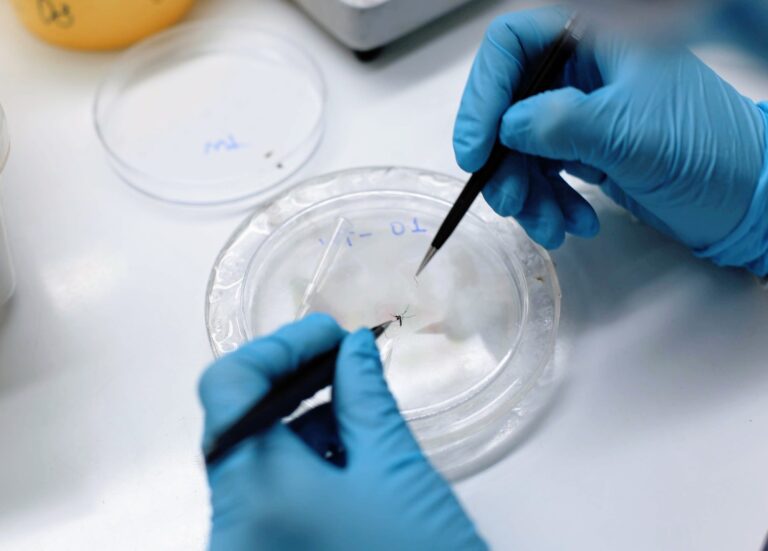
  • Daily blood samples to measure full blood cell count, liver function, renal function, viremia levels, and immune responses. 
  • Point-of-care ultrasound scan (POCUS) to assess fluid accumulation in the lungs and abdomen, indicators of plasma leakage and disease severity. 
  • Electrocardiography (ECG) to assess the electric functions of the heart. 
  • Tracking clinical outcomes through hospitalisation and follow-up visits. 
    • 5 days during hospitalisation. 
    • Additional follow-ups on Day 30 and Day 90 since fever onset.


Status:
Active and ongoing; patient recruitment and laboratory testing are in progress.   

Photo credit: Nicholas Fernandez (Fact & Fiction Films)

Key Milestones / Activities

January 2023

Project started.

As of March 2025, 92 patients have been recruited. 

December 2025

Project is expected to end.

Results are planned to be presented at ASTMH 2025 

Loading...

OUCRU Investigators

LEARN MORE

Related

HTD-updated logo

Hospital For Tropical Diseases

NHTDw

National Hospital of Tropical Diseases

BV Thống Nhất

Thong Nhat Hospital

Forum Theatre Simulation

Analyse Tam’s choices. Step inside the story as an interactive spectator to break the chain of medical mishaps before it’s too late.

STORY TIMELINE PROGRESSION

progress step 6

The Ultimate Prevention: Vaccine Status

What if the volunteer leader had checked everyone’s Tetanus vaccination status before leaving for the field trip?

Vaccination Changes Everything

  • 100% Preventable: As you can see from our play, Tetanus cannot be cured easily once symptoms start and can be costly. But it is almost completely preventable with regular vaccination.
  • 10-Year Rule: Adults need a Tetanus booster shot every 10 years to maintain immunity.
  • Early booster shot: If you receive a deep or dirty cut (such as in the play, one from a rusty tool), you may need a booster if your last shot was more than 5 years ago.

When was your last Tetanus shot? Check your records today — a simple booster is the ultimate protection against unexpected accidents.

Forum Theatre Simulation

Analyse Tam’s choices. Step inside the story as an interactive spectator to break the chain of medical mishaps before it’s too late.

STORY TIMELINE PROGRESSION

progress step 5

Scenario Solved at Step 5!

Life-saving intervention! Jaw stiffness (lockjaw) is a classic symptom of active Tetanus toxin. Immediate hospital admission is required to secure the airway and control muscle spasms.

What if Tam had an ultimate shield against tetanus—protecting him from rusty tools before the trip even started?

Forum Theatre Simulation

Analyse Tam’s choices. Step inside the story as an interactive spectator to break the chain of medical mishaps before it’s too late.

STORY TIMELINE PROGRESSION

progress step 4

Scenario Solved at Step 4!

Good call! Healthcare providers depend on the full context. Clearly stating that an injury involved rusted metal alerts the nurse to assess Tetanus exposure immediately.

What if Tam had an ultimate shield against tetanus—protecting him from rusty tools before the trip even started?

Forum Theatre Simulation

Analyse Tam’s choices. Step inside the story as an interactive spectator to break the chain of medical mishaps before it’s too late.

STORY TIMELINE PROGRESSION

progress step 3

Scenario Solved at Step 3!

Spot on! Social media content often promotes unverified advice that delays crucial medical intervention. Deep, dirty cuts always require professional evaluation within hours.

What if Tam had an ultimate shield against tetanus—protecting him from rusty tools before the trip even started?

Forum Theatre Simulation

Analyse Tam’s choices. Step inside the story as an interactive spectator to break the chain of medical mishaps before it’s too late.

STORY TIMELINE PROGRESSION

progress step 2

Scenario Solved at Step 2!

Smart choice! Clostridium tetani bacteria thrive in organic material like dirt and leaves. Keeping raw plants out of deep cuts prevents pushing bacterial spores deeper into tissue.

What if Tam had an ultimate shield against tetanus—protecting him from rusty tools before the trip even started?

Forum Theatre Simulation

Analyse Tam’s choices. Step inside the story as an interactive spectator to break the chain of medical mishaps before it’s too late.

STORY TIMELINE PROGRESSION

progress 1 of 6

Scenario Solved at Step 1!

Great call! By stopping work with high-risk, corroded tools, you removed the physical source of Tetanus exposure entirely before an injury could even happen.

What if Tam had an ultimate shield against tetanus—protecting him from rusty tools before the trip even started?

Skip to content