

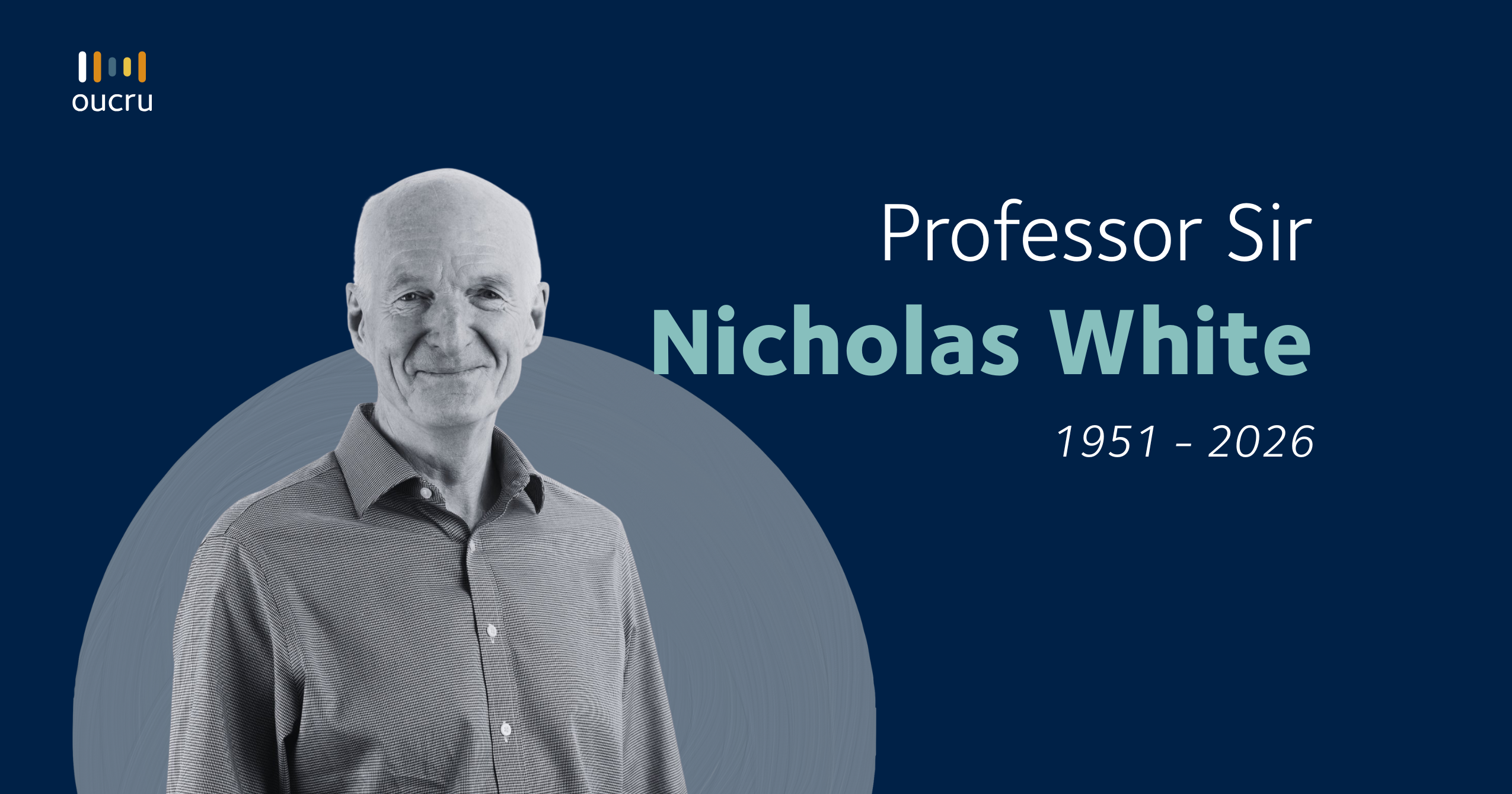
Nick White was Professor of Tropical Medicine at the University of Oxford and Mahidol University in Thailand. He was a central figure in the development of the Mahidol Oxford Tropical Medicine Research Unit (MORU) in Thailand, and the Oxford University Clinical Research Unit (OUCRU) in Vietnam. In these endeavours, he was supported by the Wellcome Trust throughout his career.
From his arrival in Thailand in 1980, he was closely involved in establishing MORU as a leading centre for clinical research on malaria and other infectious diseases, working in long-term partnership with local hospitals, clinicians, and researchers. This work continued with the establishment of OUCRU in 1991. Under his scientific leadership, MORU and OUCRU both became world renowned for clinical research that combined methodological rigour with direct relevance to patient care.
Nick was internationally recognised as a leading expert in malaria therapeutics, making seminal contributions to the field that transformed global policy. At a time when resistance to existing antimalarial drugs threatened effective treatment, Nick led a team that generated the clinical evidence through multinational clinical trials that underpinned the widespread adoption of artemisinin drugs.
Together with local partners, including the Hospital for Tropical Diseases and Professor Tran Tinh Hien, he developed the theory and evidence to support artemisinin-based combination therapies, which have become the standard of care for Plasmodium falciparum malaria, and intravenous artesunate for the treatment of severe malaria. These treatments have been used in more than a billion patients and saved millions of lives. His work continues to shape clinical practice.
Nick’s contribution to Vietnam’s health research capacity was noted by Dr Nguyen Van Vinh Chau, Deputy Director of Ho Chi Minh City Department of Health.
“Professor Sir Nicholas White was not only an outstanding scientist, but also a key founder of the enduring collaboration between the University of Oxford and the Hospital for Tropical Diseases in Ho Chi Minh City. Through his generosity, vision, and long-term commitment, he helped build a sustainable international scientific community at OUCRU, grounded in trust and mutual respect. To Vietnamese doctors, he was not only a mentor and collaborator, but a lifelong and cherished friend.”
Nick’s scientific interests extended to other infectious diseases of major public health importance, including dengue, melioidosis, typhoid fever, and tetanus. Across these areas, his research was grounded in careful clinical observation and a consistent focus on practical solutions that had maximum impact on health outcomes. His pragmatic approach ensured that his findings were applicable in real-world settings, particularly in resource-limited environments. He made further important contributions to healthcare during the COVID-19 pandemic.
He placed particular importance on training and collaboration. Over the course of his career, Nick supported and supervised hundreds of clinicians and scientists, especially in Southeast Asia, strengthening local research capacity alongside international collaboration. Many of those he worked with have gone on to lead research programmes of their own, reflecting his long-standing commitment to building sustainable scientific partnerships, and empowering his colleagues to become leaders in their own right.
Nick worked in Nepal from 1974 for approximately six years and has remained closely connected to the country ever since through regular visits. Over this extended period, he has been a significant and positive influence for OUCRU Nepal, particularly in shaping our approach to working with government partners and in strengthening international engagement.
Nick authored or co-authored more than 1,300 peer-reviewed scientific publications. He contributed extensively to international advisory bodies, including those of the World Health Organization. His achievements were recognised through honours, including election as a Fellow of the Royal Society and appointment as Knight Commander of the Order of St Michael and St George, as well as being awarded the Canada Gairdner Global Health Award in 2010 and Thailand’s Prince Mahidol Award in 2011.
His sustained commitment and deep understanding of the local context have contributed substantially to meaningful and lasting change globally. Nick’s legacy is reflected in the treatments now used worldwide, the research units and collaborations he helped to establish, and the many colleagues and students influenced by his work. He will be remembered with enormous affection, respect and gratitude by those who worked alongside him and will be sorely missed.
OUCRU extends our deepest condolences to his family, friends and colleagues.