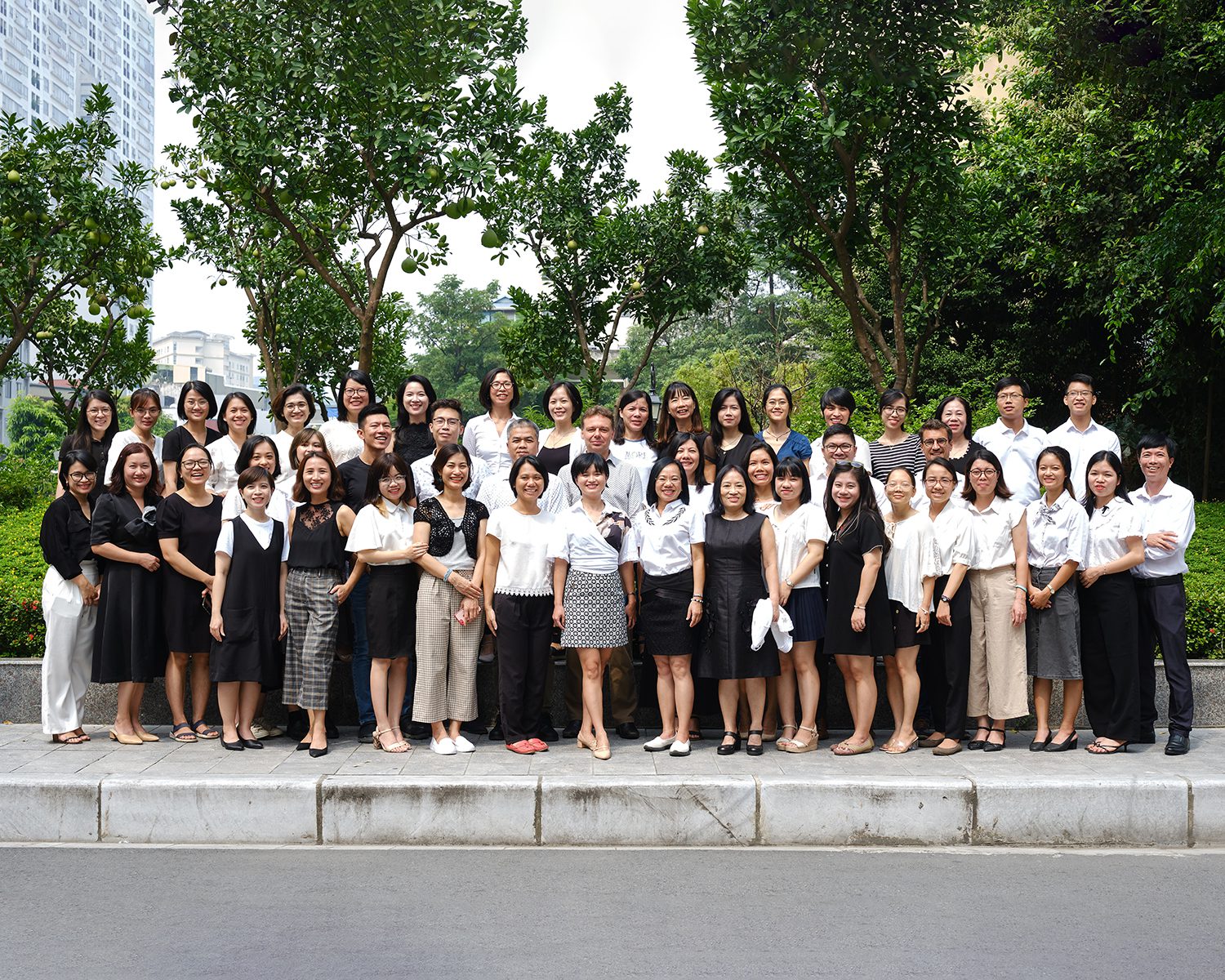


The course brought together 10 participants from NIHE’s Northern Expanded Programme on Immunization (EPI) Office and the Health Information & Communication Unit, many of whom currently serve as trainers for provincial vaccination staff. Participants represented a highly experienced group, with extensive backgrounds in public health and immunisationprogrammes.
The training was facilitated by Nguyen Hong Nga (Senior Public and Community Engagement Coordinator, OUCRU Hanoi) and Nguyen Quoc Giang (Senior Public and Community Engagement Coordinator, OUCRU Ho Chi Minh City).
Building practical skills for vaccine communication
The original vaccine communication package was designed as a five-day programme. To accommodate participants’ schedules while maintaining core learning outcomes, the agenda was adapted into an intensive two-day format covering all five modules. The training team also reorganised the learning flow by introducing Local Context Analysis at the beginning of the course, helping participants better connect communication strategies with real-world vaccine challenges in communities.
The training covered topics including:
- Building trust with caregivers and communities
- Persuasive communication techniques
- Verbal and non-verbal communication skills
- Understanding local contexts and vaccine hesitancy drivers
- Vaccine knowledge and addressing misinformation
- Adult learning principles and facilitation skills for trainers
- Micro-teaching practice to prepare participants for delivering future courses
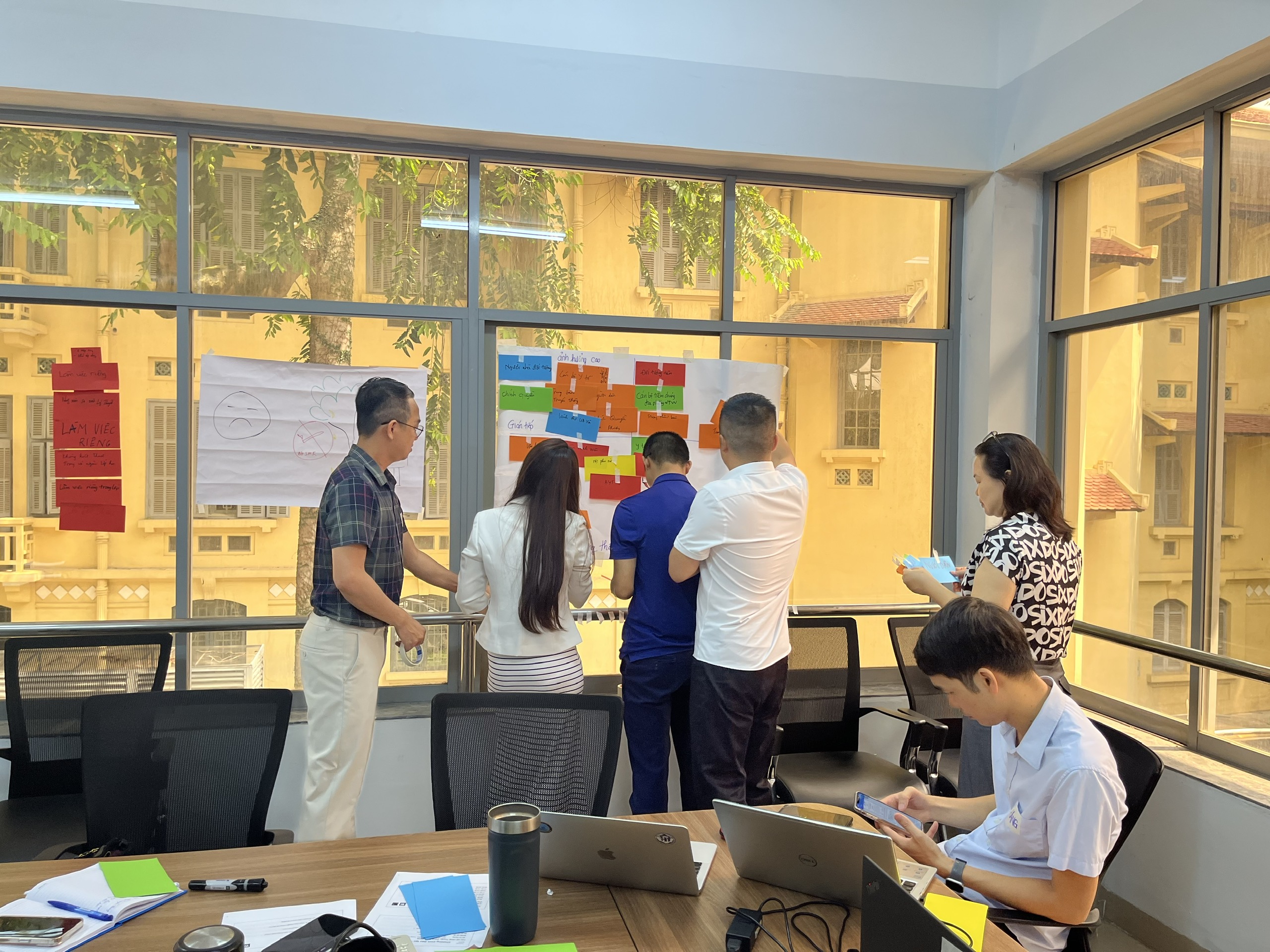
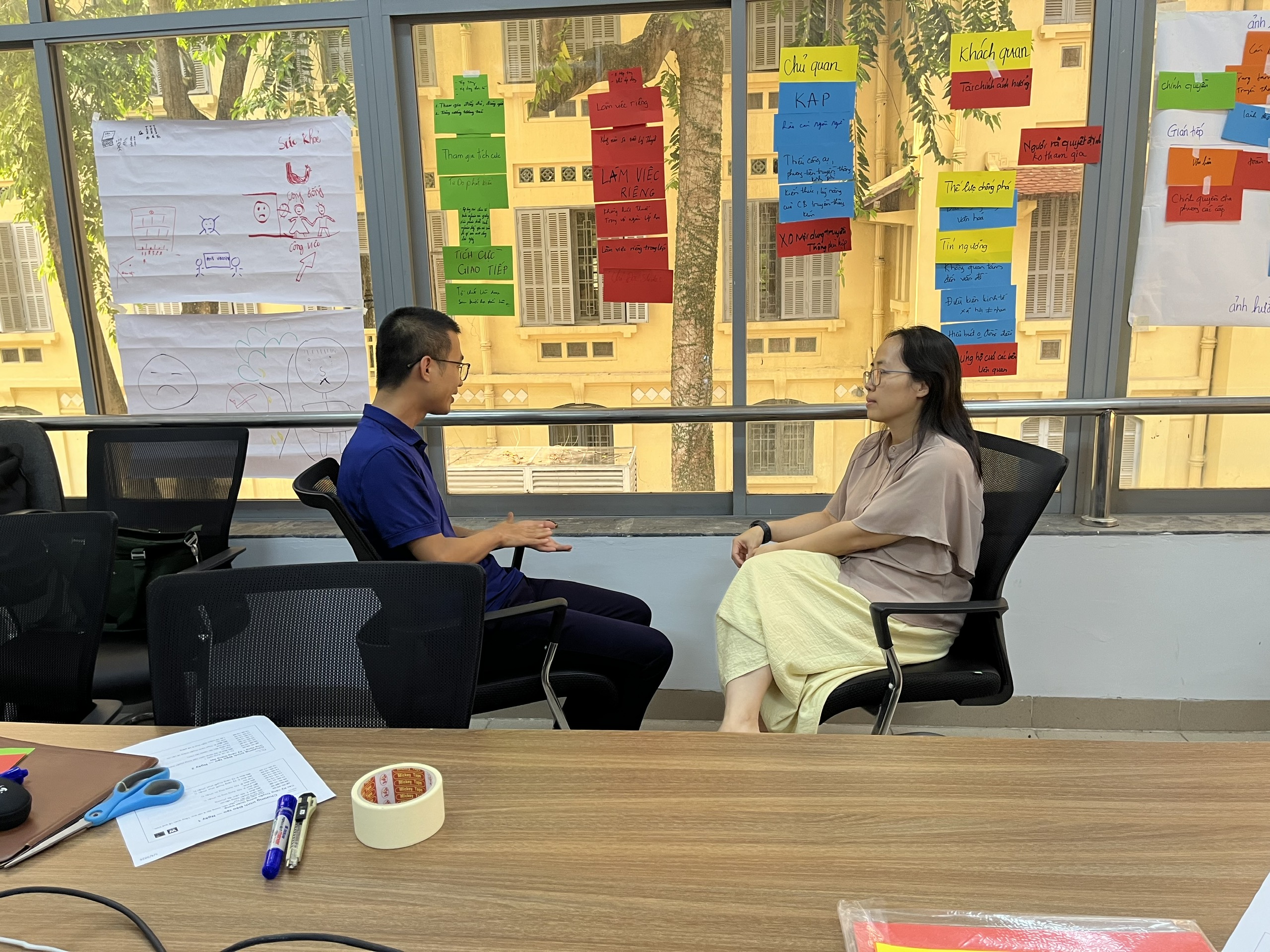
Interactive methods such as role-play, reflection exercises, group discussions, debates, and micro-teaching sessions were integrated throughout the programme to encourage active learning and peer exchange.
Strong engagement and positive participant feedback
Participants showed high levels of enthusiasm and engagement during discussions and practical exercises. Many highlighted the usefulness of interactive methods and communication techniques that could be immediately applied to their work.
Post-training feedback was positive. Participants particularly appreciated Practical communication and persuasion skills; Techniques for building trust and active listening; Opportunities for role-play and reflection and Interactive facilitation approaches suitable for adult learners. Evaluation results indicated consistently high satisfaction across training content, facilitation methods, and trainer performance. Participants praised facilitators for “being approachable, energetic, and creating an inclusive learning environment”
One recurring recommendation was the need for annual refresher or update sessions to maintain and strengthen communication skills among trainers.
Early signs of sustainability and scale-up
Encouragingly, the training materials and approaches are already being applied beyond the workshop itself.
Even before officially attending the ToT course, M.D, Msc Tran thi Lan Anh, Expert at Communicable Diseases Control and Prevention Department, NIHE used the OUCRU vaccine communication manual in December 2025 to deliver communication training for new vaccine staff in Thai Nguyen province, demonstrating early adoption of the materials. Several participants are also scheduled to deliver three vaccine consultation training courses in May 2026 for commune health staff in Hung Yen, provincial CDC staff in Phu Tho and Lao Caiprovinces. Looking ahead, NIHE plans to organise two additional ToT courses in July and September 2026 targeting commune health workers and village health collaborators. OUCRU may be invited to co-facilitate these future trainings, further supporting national capacity strengthening efforts.
These developments suggest that the programme is moving beyond a one-off training activity towards a sustainable cascade model, where trained national facilitators can continue building communication capacity at provincial and community levels.
Improving training materials for future implementation
Participant feedback also highlighted opportunities to refine the training package. Materials including the ToT manual, flipbooks, communication cards, and reflective journals may be adapted further to improve flow, wording, and usability for different learner groups.
Continuous refinement of the package will help ensure that vaccine communication training remains practical, context-specific, and responsive to the evolving needs of healthcare workers.
Looking ahead
Effective vaccine communication remains essential for addressing misinformation, building trust, and supporting informed vaccination decisions within communities. Strengthening the capacity of trainers at national and provincial levels is a critical step towards improving communication between healthcare workers and caregivers across Vietnam.
This Training of Trainers programme represents an important milestone in the ongoing collaboration between OUCRU and NIHE to strengthen vaccine communication systems and support frontline health workers through sustainable learning approaches.
OUCRU extends sincere thanks to NIHE participants, facilitators, and partners for their active engagement and continued collaboration in advancing vaccine communication capacity in Vietnam.