Overview
Respiratory viral infections, including influenza, COVID-19, and respiratory syncytial virus (RSV), continue to place a significant burden on public health in Nepal. Early diagnosis is essential for effective clinical management, disease surveillance, and research; however, access to rapid diagnostic testing remains limited, even at the hospital level.
This project aims to strengthen the early detection of respiratory viral infections by developing a community co-designed referral system that supports timely identification and referral of adults with respiratory symptoms to Sukraraj Tropical and Infectious Disease Hospital (STIDH) for rapid diagnostic testing.
Background
Many individuals with symptoms of respiratory infection initially seek care from pharmacies, community physicians, or other informal healthcare providers rather than directly visiting healthcare facilities where diagnostic testing is available. As a result, opportunities for early diagnosis, appropriate clinical management, and participation in research are often missed.
Addressing these challenges requires a better understanding of community healthcare-seeking behaviours and stronger connections between communities, frontline healthcare providers, and research institutions.
Project Approach
The project will bring together Female Community Health Volunteers (FCHVs), pharmacists, community physicians, and researchers to identify barriers and facilitators to respiratory virus testing and referral.
Using a participatory approach, stakeholders will collaborate in a series of workshops to co-design practical referral solutions tailored to local needs. These activities will support the development of:
- A simple symptom-tracking tool for identifying individuals with suspected viral respiratory infections.
- A community referral pathway to facilitate access to rapid diagnostic testing at STIDH.
By involving community stakeholders throughout the design process, the project aims to ensure that referral tools and pathways are practical, acceptable, and sustainable.
Expected Impact
The project seeks to improve timely access to rapid diagnostic testing for respiratory viral infections and reduce delays between symptom onset, healthcare seeking, diagnosis, and appropriate clinical management.
The referral system will also strengthen links between communities and ongoing clinical research at STIDH by creating opportunities for eligible individuals to learn about and participate in research studies on influenza, COVID-19, and RSV. This may support the identification and recruitment of participants for ongoing clinical trials while increasing community awareness and engagement with health research.
More broadly, the project aims to foster stronger partnerships between communities, healthcare providers, and researchers, demonstrating how public and community engagement can contribute to both improved health outcomes and more inclusive clinical research.
Key Collaborators
Co-design Workshops: Developing Community-led Solutions
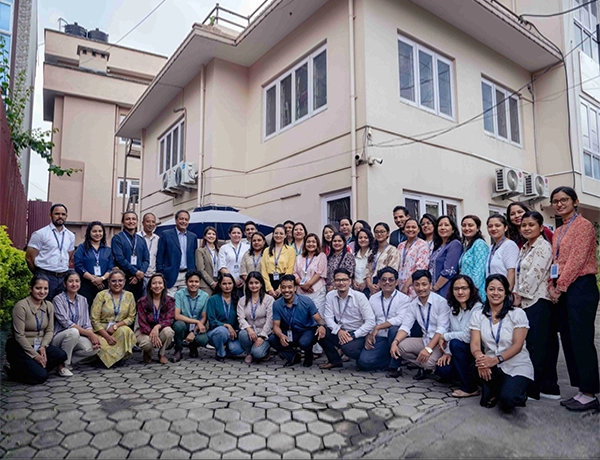
As part of the project, three separate co-design workshops were conducted with Female Community Health Volunteers (FCHVs), pharmacists, and community physicians. Each stakeholder group contributed their unique perspectives and experiences to develop practical tools and referral pathways for improving early respiratory virus detection.
Key Outputs
Community-designed Symptom-Tracking Tool
Workshop participants collaboratively developed a simple symptom-tracking tool to support the identification of individuals with suspected viral respiratory infections. Key symptoms were reviewed and refined to ensure the tool was practical and easy to use across different community settings.
- FCHVs helped adapt the language for use during household visits.
- Pharmacists contributed insights for rapid symptom identification in community pharmacies.
- Physicians ensured the tool remained clinically relevant and aligned with existing healthcare practices.
Practical Referral Pathway
Participants also co-designed a referral mechanism linking community-based identification of respiratory illness with rapid diagnostic testing at Sukraraj Tropical and Infectious Disease Hospital (STIDH).
The workshops explored:
- How referrals could be initiated in community settings.
- Information required for effective referral and follow-up.
- Practical approaches for guiding patients to testing services.
- Simple methods for documenting and tracking referrals.
The resulting referral pathway was designed to be practical, feasible, and easy to implement within existing community healthcare networks.
Impact
By bringing together frontline healthcare providers and community representatives, the workshops created locally informed solutions that are both scientifically robust and responsive to community needs. The co-design process ensured that the proposed tools and referral system reflect real-world experiences and can be integrated into existing healthcare pathways.