
Finding My Path After PhD
“After finishing my PhD, I felt isolated and uncertain about the future,” recalls Dr Kien. For four years, her research was focused entirely on understanding how the Dengue virus evolves inside mosquitoes. “When that chapter ended, stepping into the broader scientific community felt overwhelming.”
Adding to the challenges, Dr Kien made a bold decision to shift her research trajectory. “Changing my research focus made everything feel even more uncertain,” she explains. In 2024, she joined the MORU – OUCRU Discovery Research Academy (MODRA), which connected her with experienced mentors, including Dr Tineke Cantaert from Pasteur Institute, Cambodia and Prof Ooi Eng Eong from Duke-NUS Medical School, Singapore.
“The mentorship I received through MODRA was genuinely supportive and inspiring. It helped me reconnect with the scientific community and gave me clarity and confidence to move forward in my new research direction.”
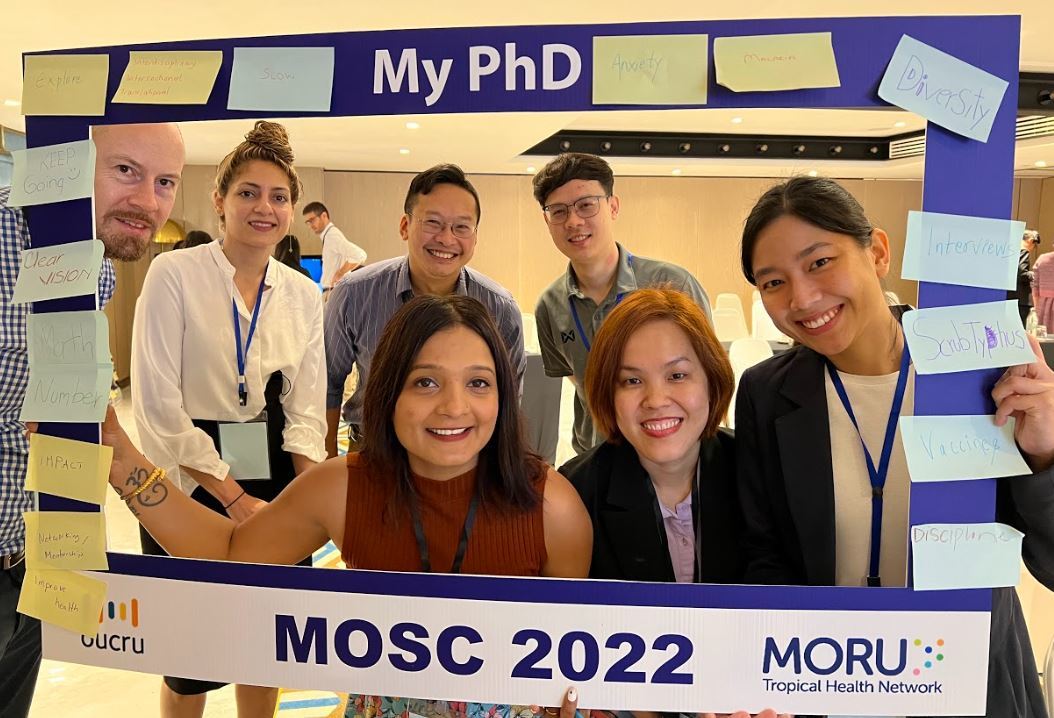
Like many young scientists, Dr Kien faced the frustrating “catch-22” challenge: to secure research funding, she needed data; but to gather data, she needed funding. MODRA’s seed award helped her break this cycle, enabling her to conduct preliminary research.
“MODRA’s seed award was incredibly valuable,” Dr Kien explains. “It gave new researchers a rare yet essential opportunity to test their initial ideas and refine research plans. The experience significantly improved my grant-writing skills, directly contributing to my successful Wellcome Trust application.”
“To get research funding, you need data. But to collect data, you need funding. It felt like an impossible cycle.“
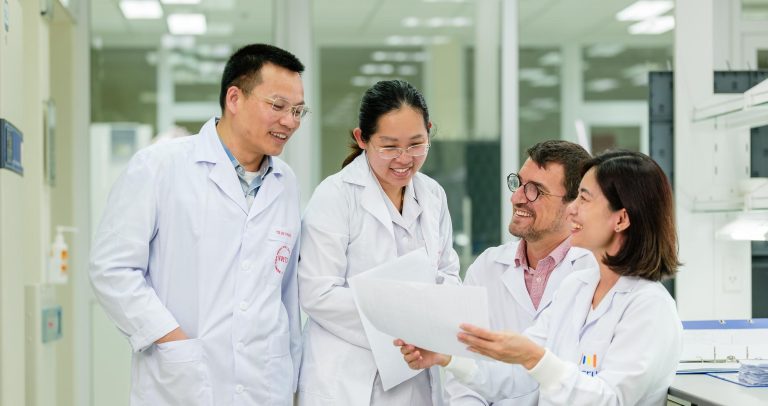
Dr Duong Thi Hue Kien
Leading a Major Research Project
With MODRA’s support, Dr Kien recently secured a multi-million-pound Wellcome Trust Infectious Disease Award. She now leads the Vietnam component of an ambitious international project, spanning nine countries in Africa and Asia. The project investigates how dengue and Zika viruses spread, how the body responds to infections, and the risks at a population level.
“MODRA fundamentally changed how I communicate my research,” Dr Kien says. “I learned to clearly explain the real-world impact of my work beyond laboratory findings. Managing a large international project is challenging, but MODRA gave me the vision, leadership and management skills to succeed.”
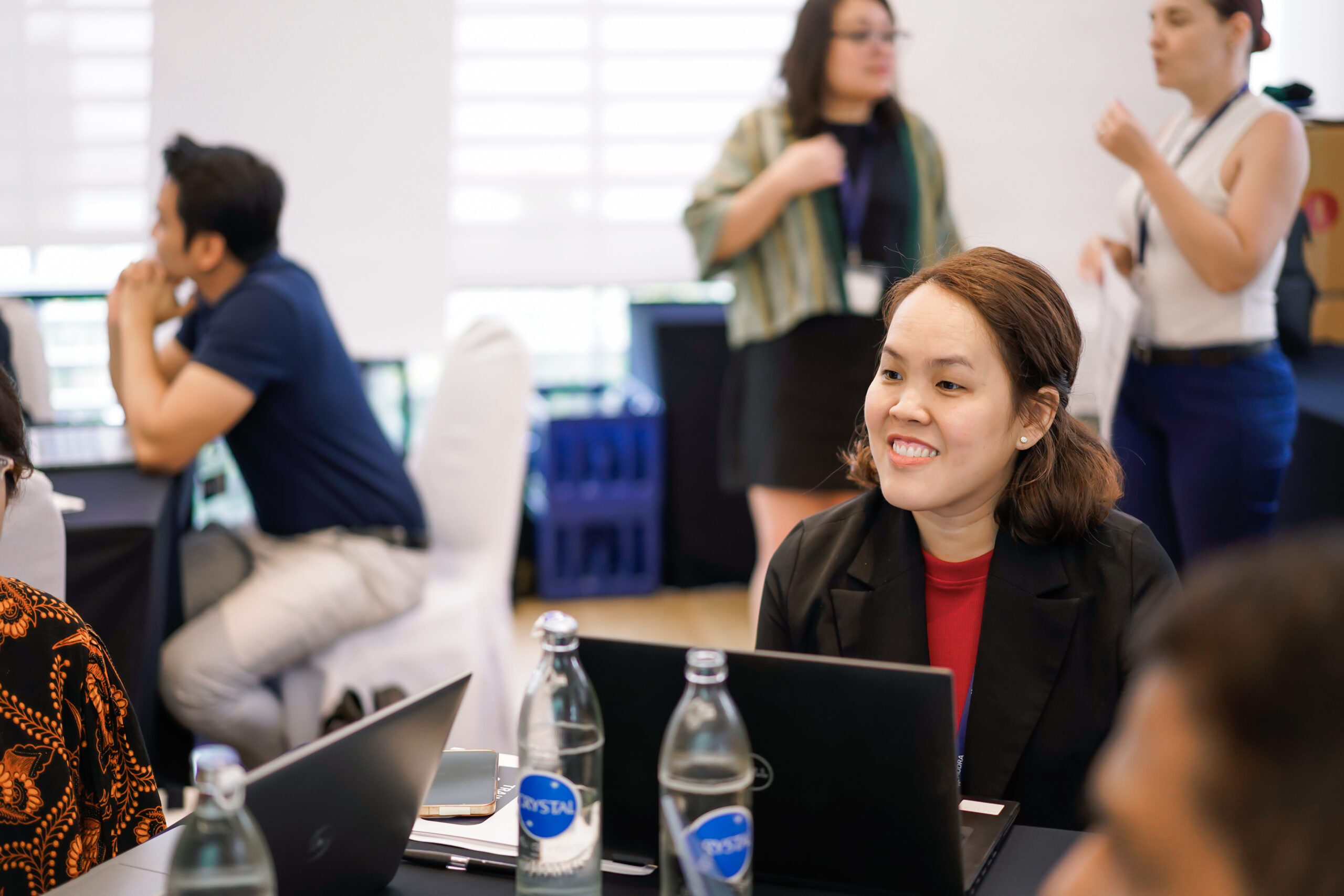
Dr Kien’s story highlights how MODRA provides young researchers the mentorship, funding, and training needed to transition into independent research careers.
“MODRA goes beyond financial support, it gives you the practical skills needed to succeed,” Dr Kien emphasises. “You learn how to present your work, write strong funding proposals, manage budgets, and run research projects. MODRA also connects you with a valuable network of collaborators and professional contacts essential for future success.”
“During my PhD, my supervisors handled everything,” reflects Dr Kien. “Now, leading my own research feels like running a startup, I have to manage everything, from budgeting to coordinating logistics and supplies. MODRA filled those skill gaps and prepared me for independent leadership.”
About MODRA
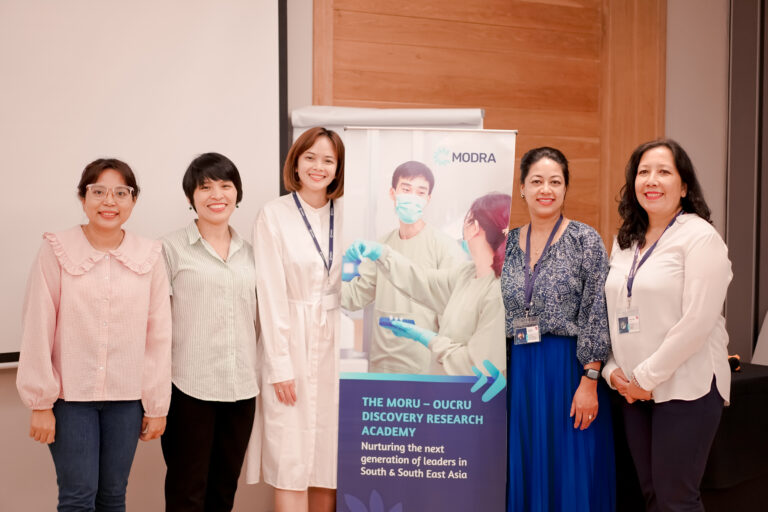
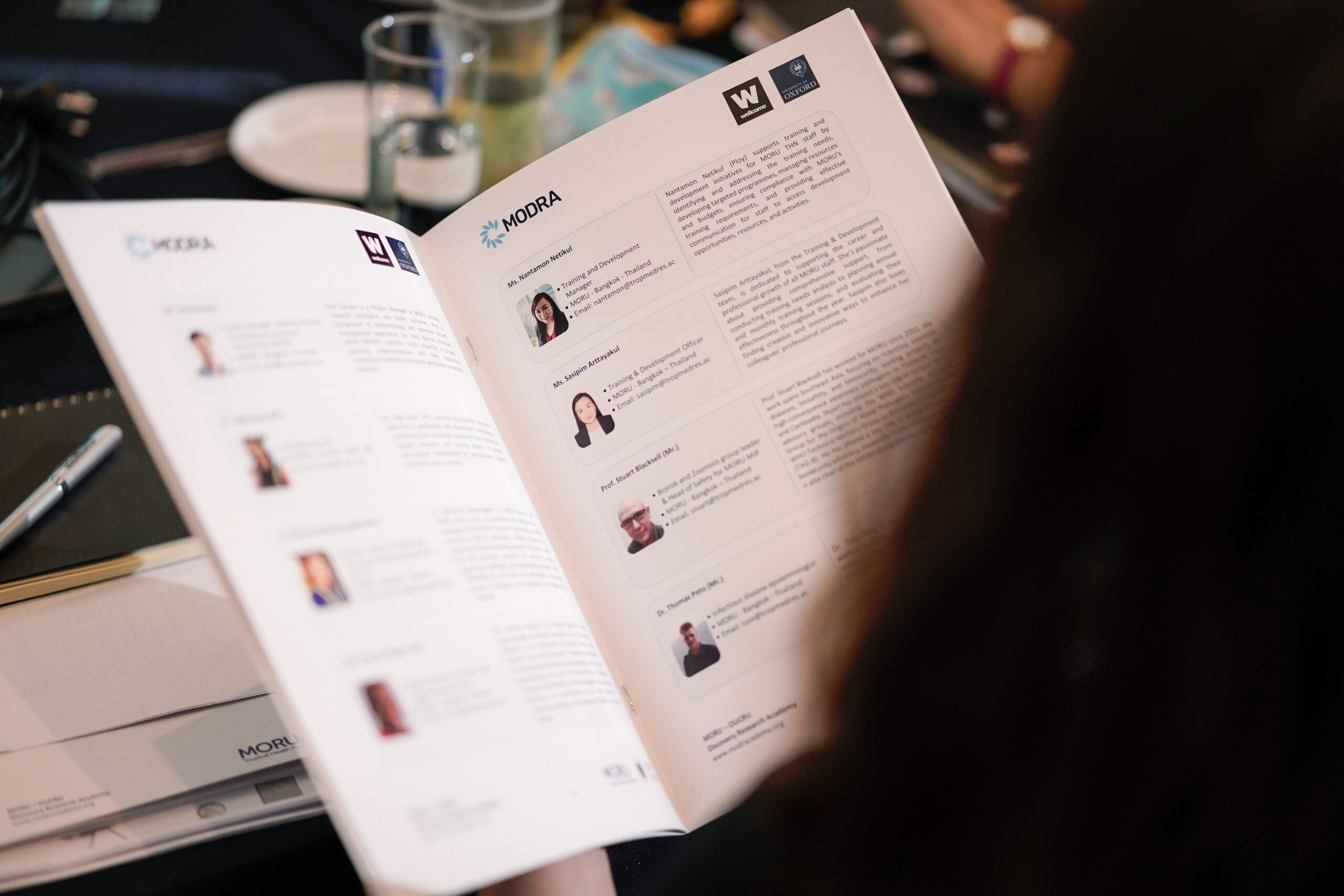
The MORU–OUCRU Discovery Research Academy (MODRA) is a fully funded 18-month programme designed to empower early-career postdoctoral scientists in Asia with the skills, mentorship, and funding needed to become independent researchers.
Participants receive:
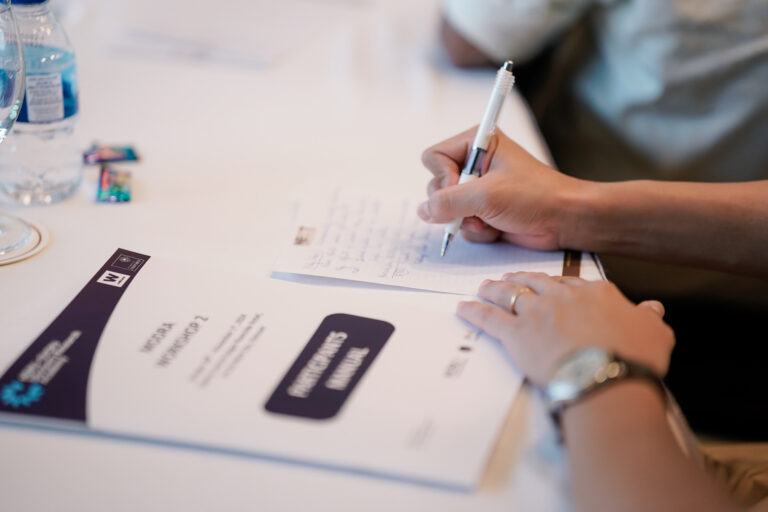
‣ Hands-on workshops on grant writing, budgeting, research design and project management.
‣ Ongoing mentorship from regional and global research leaders.
‣ Seed funding of up to $30,000 to launch preliminary research.
This programme is a joint initiative by the Oxford University Clinical Research Unit (OUCRU) and the Mahidol Oxford Tropical Medicine Research Unit (MORU), both leading centres in global health research. MODRA is funded by Wellcome Trust and affiliated with the Centre for Tropical Medicine and Global Health at the University of Oxford, ensuring world-class standards in training and mentorship.
If you’re ready to step into leadership and drive meaningful impact in global health, apply today.