

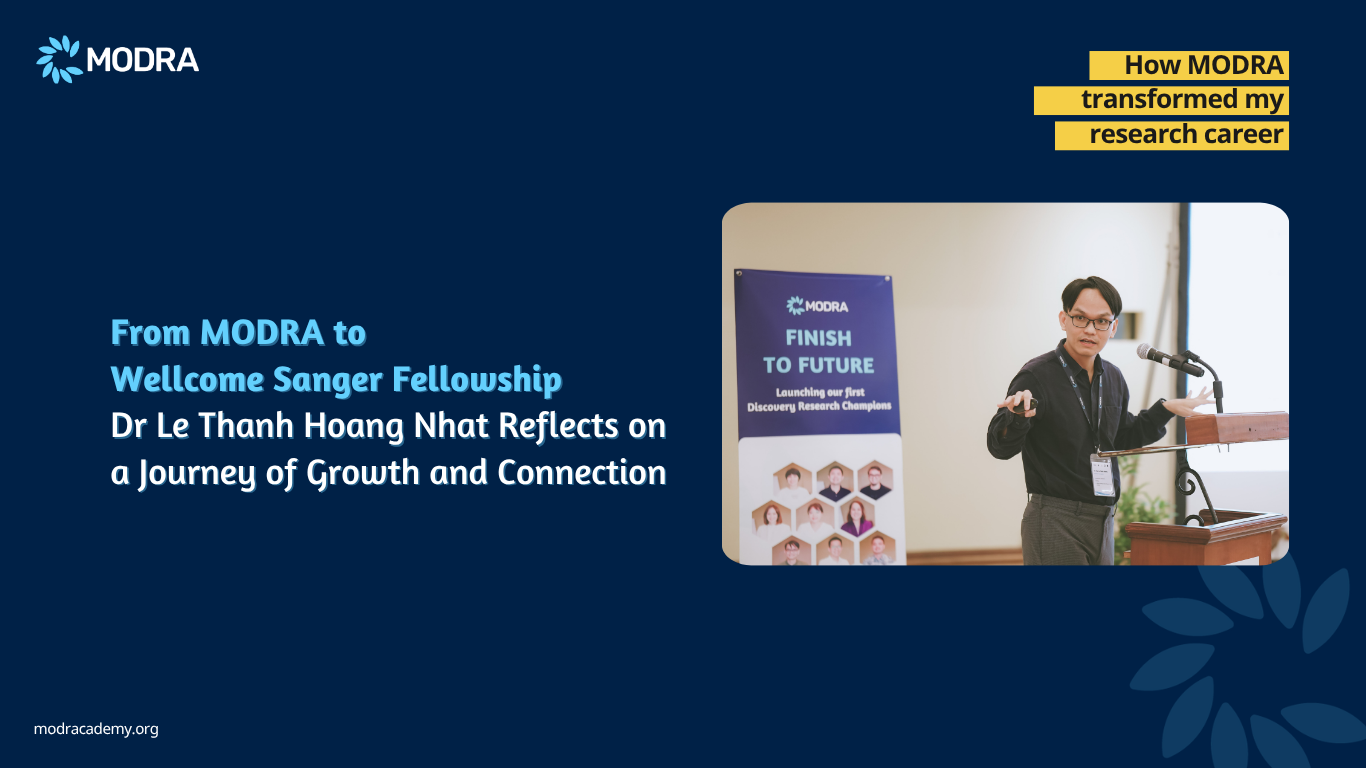
Dr Le Thanh Hoang Nhat, a member of the MODRA cohort 1, has been awarded the Wellcome Sanger Fellowship as an International Fellow in the Human Genetics programme, under the sponsorship of Dr. Emma Davenport. The three-year fellowship (£100,000) will support his research, developing a computational method to elucidate how human genetic variation shapes immune responses leading to severe pulmonary tuberculosis (PTB), with potential applications in improving treatment pathways for tuberculosis (TB) patients.
Reflecting on the application process, Nhat emphasized that success required not only technical strength but also clarity in demonstrating the relevance and potential impact of his work. Participation in MODRA played an important role in shaping this process. Through training, mentorship, and peer exchange, the programme helped him refine his research direction, strengthen his proposal narrative, and better position his work within a broader scientific landscape.
The role of MODRA: building confidence, perspective, and community
For Nhat, one of MODRA’s most valuable contributions was the opportunity to engage with a network of researchers from across Southeast Asia. Connecting with peers working in diverse areas of biomedical science broadened his perspective on the regional research landscape and highlighted shared challenges faced by researchers in low- and middle-income country contexts. Through these interactions, he developed a clearer understanding of how his work contributes to a wider body of research addressing regional and global health priorities.
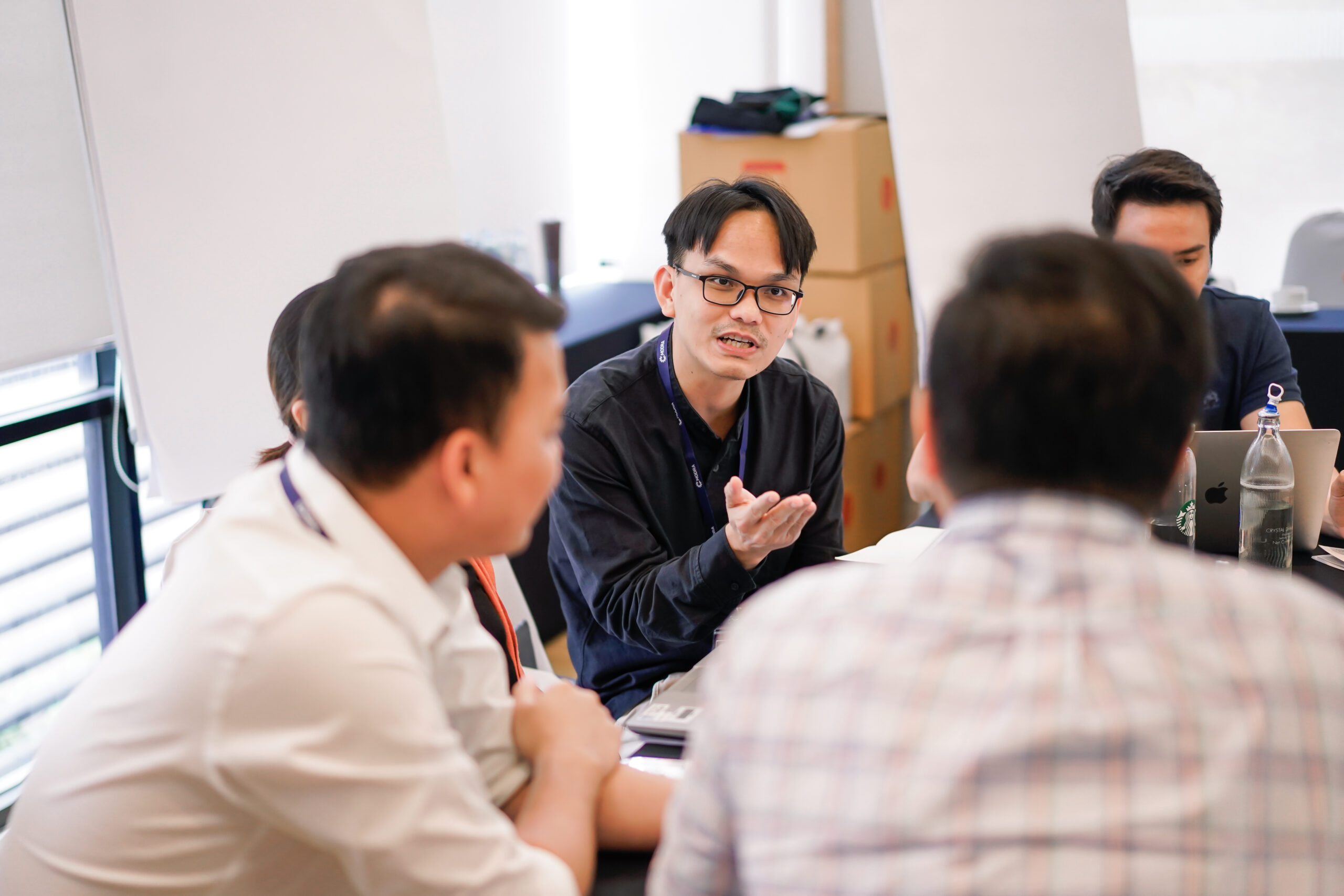
(Photo: OUCRU, 2024)
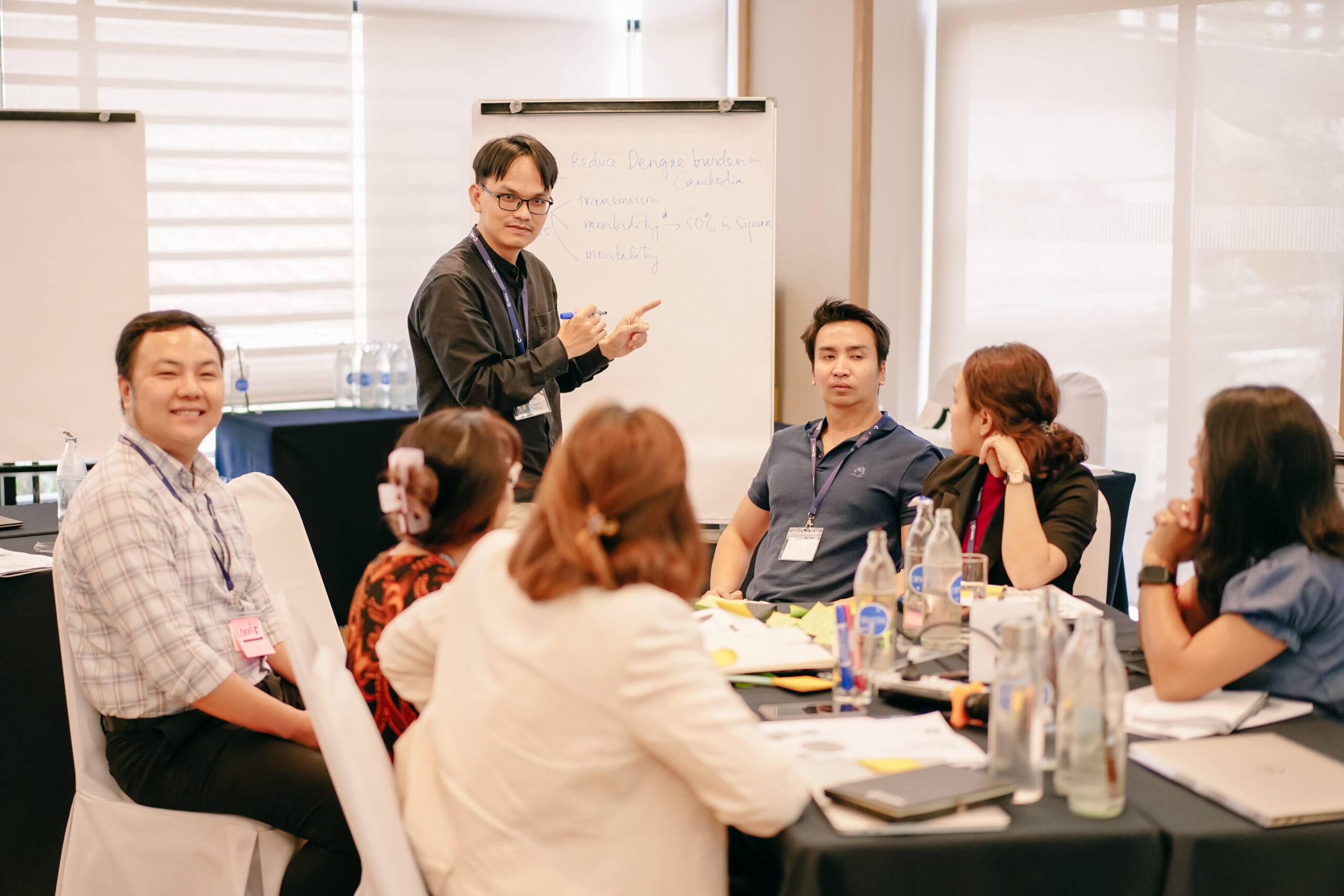
MODRA’s Training component was particularly meaningful at this stage of his career. With more than ten years of research experience, he valued the opportunity to consolidate existing leadership styles and strengthen how these could be applied strategically in proposal development. Rather than introducing entirely new techniques, the training created space to refine research questions, clarify methodological approaches, and strengthen how ideas are communicated to a multidisciplinary audience.
Mentorship also played an important role. Nhat highlights the long-term guidance of Dr Thuong, Head of the TB research group and a member of MODRA’s Academic Advisory Committee. Her understanding of both the scientific field and local research realities helped him connect global research questions with context-specific insight.
He also acknowledged the encouragement and practical support provided by MODRA trainers and coordinators, whose contributions ensured participants could focus fully on their development.
A transformative experience
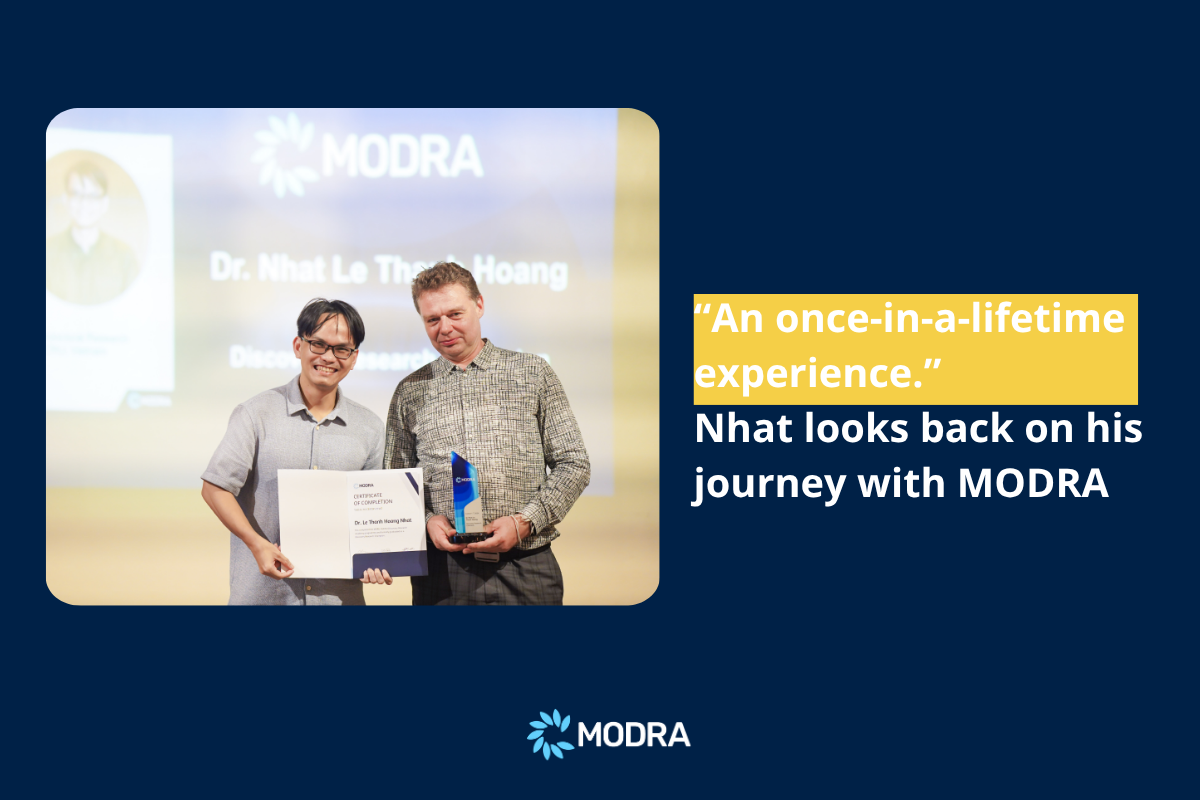
Looking back, Nhat describes MODRA as a “once-in-a-lifetime experience” that strengthened both his research direction and confidence as an independent researcher. The relationships built through the programme continue to provide a valuable source of support, helping him feel part of a wider scientific community working towards shared goals.
As he begins the Sanger International Fellowship, his experience highlights the importance of structured support mechanisms such as MODRA in enabling researchers to translate potential into opportunity and ideas into impact.
About MODRA
MODRA is an 18-month programme jointly delivered by OUCRU and MORU to support early-career postdoctoral researchers in Asia in becoming independent investigators. Through training, mentorship, and seed funding, the programme strengthens researchers’ ability to develop competitive, impactful research.