
Upon completion of the MODRA programme and moving move into the next stage of their careers, here’s a look at how our fellows are turning learning into lasting impact.
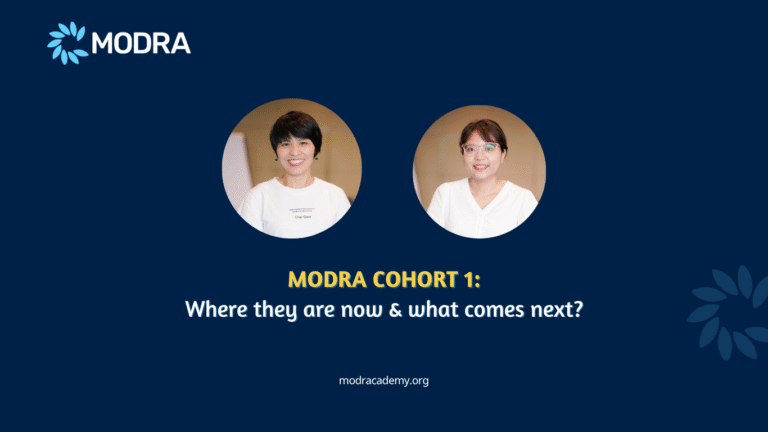
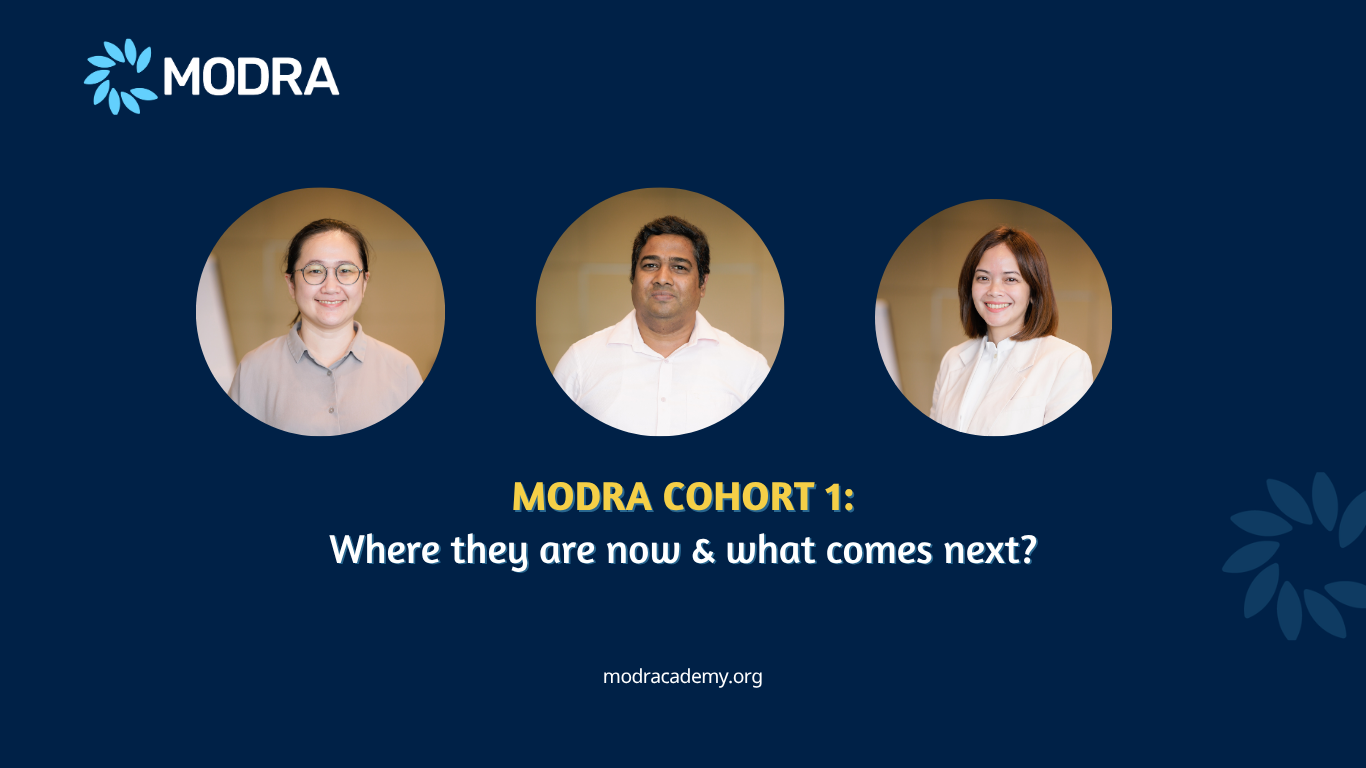
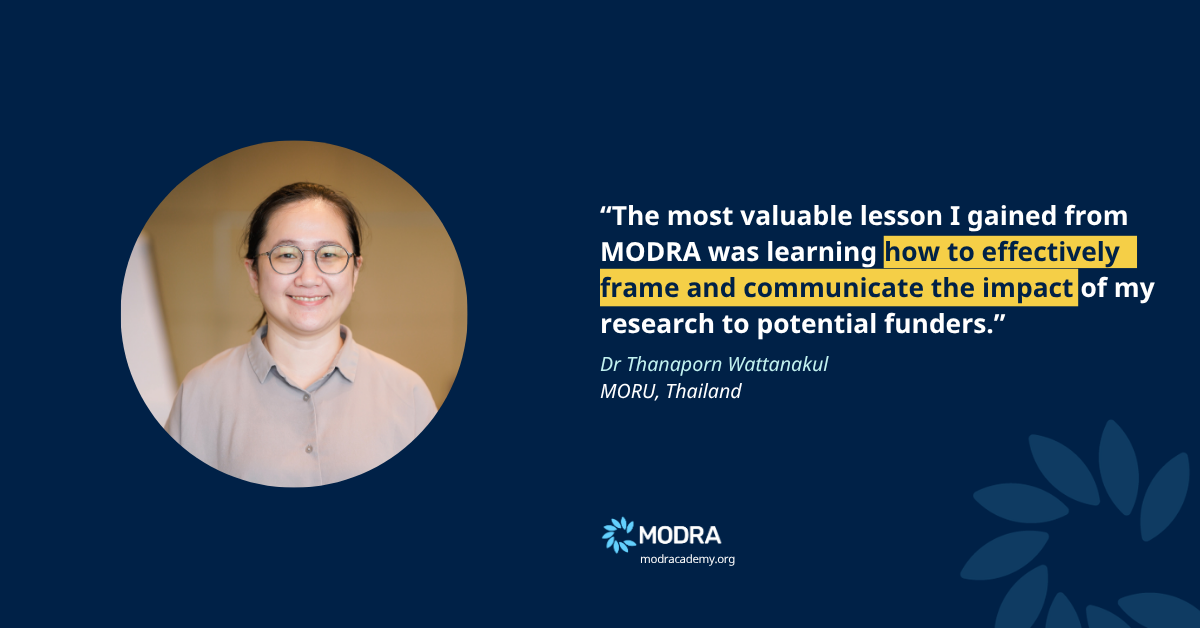
Dr Thanaporn Wattanakul’s research bridges pharmacometrics and pharmacoeconomics, an emerging field that connects drug modelling with cost-effectiveness analysis. Her MODRA seed project evaluates the cost-effectiveness of pre-referral rectal artesunate for children with severe malaria, integrating survival modelling and economic analysis to inform treatment policy.
“The most valuable lesson I gained from MODRA was learning how to effectively frame and communicate the impact of my research to potential funders,” she explains. Using the outcome framework, she learned to link objectives, activities, and measurable results, strengthening both her proposal writing and project delivery.
After joining MODRA, Thanaporn has established new collaborations with the Pharmacometrics Research Group at Uppsala University and the Centre for Health Economics and Medicines Evaluation at Bangor University. Her interdisciplinary work is laying the groundwork for more efficient and equitable malaria treatment strategies.
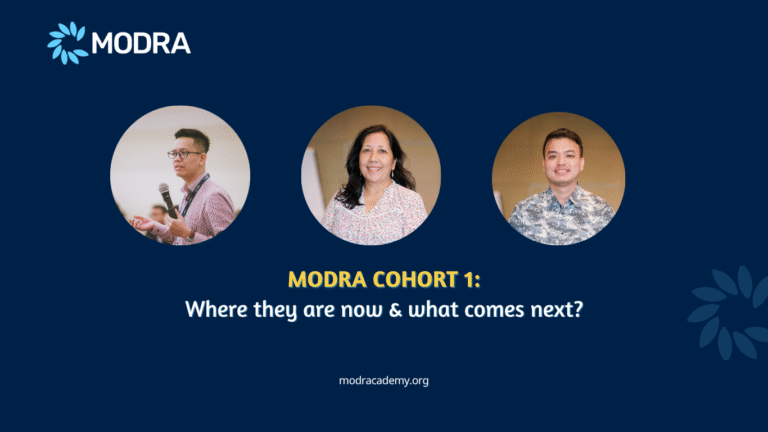
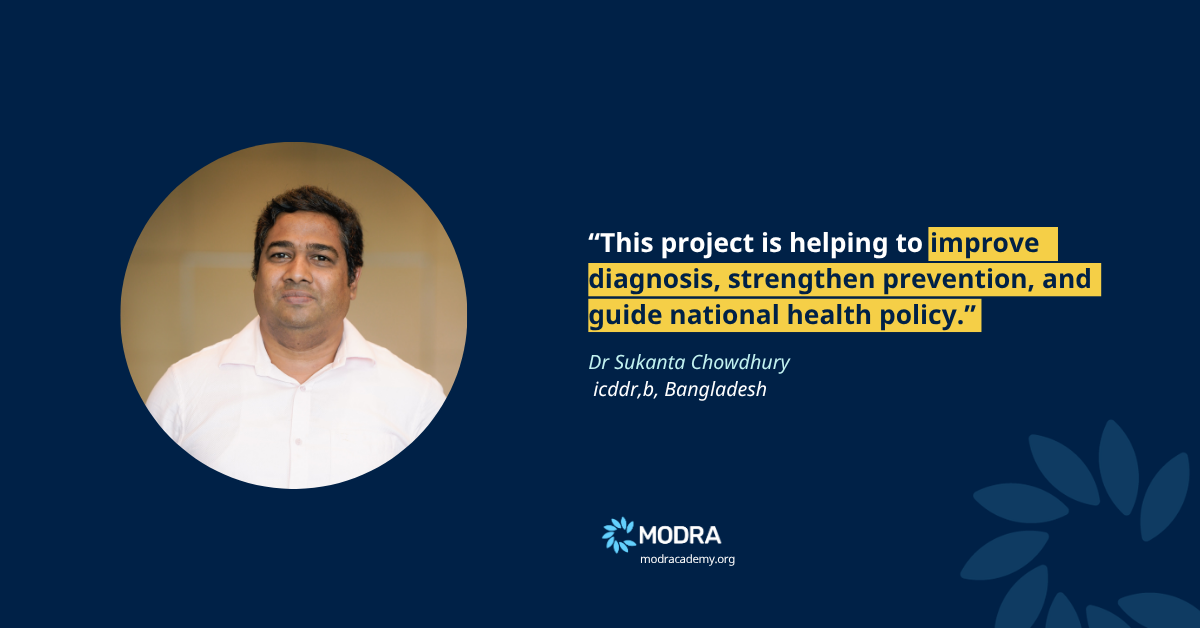
Dr Sukanta Chowdhury, an infectious disease researcher at icddr,b, is mapping one of Bangladesh’s most under-recognised threats, melioidosis, a deadly bacterial disease caused by Burkholderia pseudomallei. With his MODRA seed award, he is leading a nationwide project that combines GPS-guided soil sampling, laboratory testing, and whole-genome sequencing to identify high-risk areas.
“This project is helping to improve diagnosis, strengthen prevention, and guide national health policy.” he says. By linking clinical and environmental data, his study will produce one of Bangladesh’s first risk maps for melioidosis, supporting early detection and more targeted interventions.
Beyond scientific discovery, Sukanta’s work strengthens the country’s One Health framework – connecting human, environmental, and animal health – and provides crucial baseline data for future policy and funding initiatives.
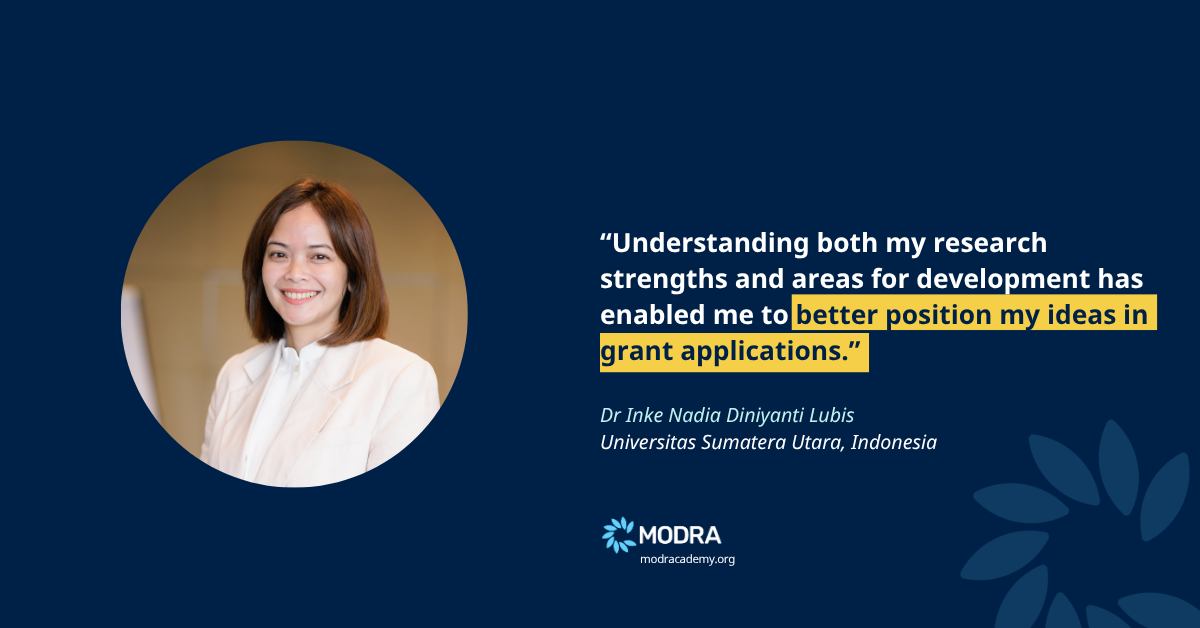
Dr Inke Lubis, a clinical researcher from Indonesia, focuses on the epidemiology of infectious diseases and the One Health approach. Through her MODRA seed award, she leads the project Land Use Change and Vector-Borne Disease Dynamics, which examines how environmental shifts in North Sumatra affect malaria and other vector-borne diseases.
“Understanding both my research strengths and areas for development has enabled me to better position my ideas in grant applications.” she says. The project uses geospatial and serological data to map disease hotspots and identify at-risk populations, helping inform more targeted public health strategies.
Building on this foundation, Inke recently received the UKRI–Southeast Asia Collaboration on Infectious Diseases research fund. She continues to foster collaborations that enhance Indonesia’s research capacity and apply her findings to shape evidence-based disease prevention policy.
The MORU–OUCRU Discovery Research Academy (MODRA) is a Wellcome-funded, 18-month programme that supports early- to mid-career researchers across South and Southeast Asia. Through mentorship, training, networking and seed funding, MODRA equips emerging scientists with the skills and opportunities to lead impactful research in global health and infectious diseases. Find out more about MODRA.