

Vietnam remains one of the region’s dengue hotspots. From January to October 2025, the country recorded 110,503 cases and 23 deaths, placing Vietnam among the countries with the highest incidence in Southeast Asia.
Dengue presents highly variable symptoms. With no specific treatment available and rising infection rates among adults and older people, patient monitoring is becoming increasingly challenging. Although only 5–10% of cases progress to severe illness, doctors still struggle to accurately identify high-risk patients, making hospital admission and close monitoring essential.
Speaking at the conference, Dr Ho Quang Chanh, Head of the Dengue Research Group at OUCRU, noted that one of the biggest challenges is the inability to directly measure plasma leakage, the key mechanism that leads to shock. Invasive monitoring can cause bleeding in dengue patients, highlighting the urgent need for safe, non-invasive alternatives.
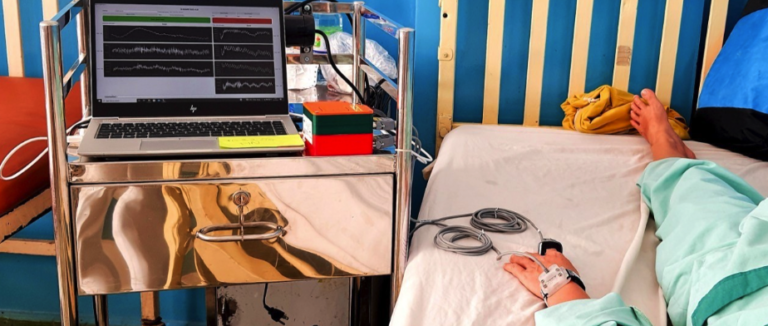
In response, OUCRU and the Hospital for Tropical Diseases in Ho Chi Minh City have investigated non-invasive wearable monitoring devices and an AI-powered clinical decision support tool.
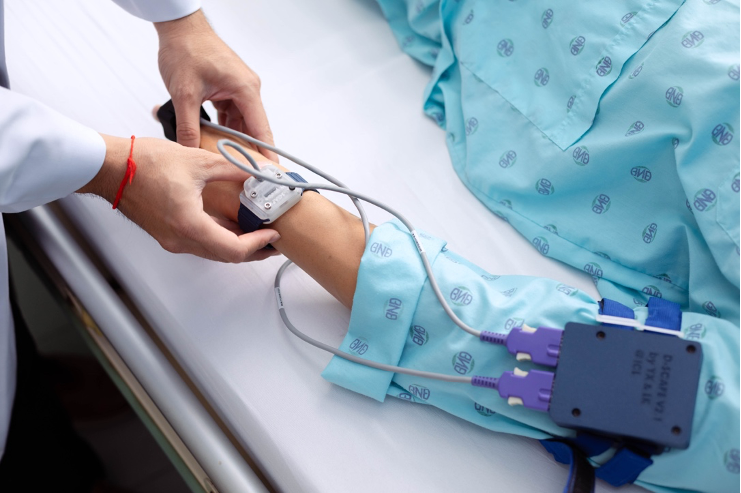
Early findings show that stroke volume can predict severe progression hours before blood pressure drops. The bioimpedance with two sensors placed on the wrist and ankle can deliver accuracy comparable to ultrasound. When researchers analysed PPG signals, a light-based method that measures changes in blood volume, a transformer model combining PPG and clinical data predicted severe disease two hours ahead with around 80% accuracy.
At the same time, the team is working with engineers at Imperial College London to create a multi-wavelength wearable device to measure blood pressure and other haemodynamic parameters. A compact wrist-worn version is expected to be ready for clinical testing next year.
As part of the clinical decision-support effort, the group has built an AI model using over 20 years of dengue data from Vietnam. Unlike earlier models based mainly on paediatric data, this deep-learning model reaches an accuracy of around 80% and performs consistently on independent datasets.
Dr Chanh added: “Qualitative studies show that healthcare workers need tools that are practical, easy to use and aligned with hospital workflows, not just a prediction model. Only when a tool fits real-world practice can dengue management truly improve. This means it must integrate prediction, treatment guidelines, adjusted weight calculations and other useful features.”
The project has been under development at OUCRU since 2022 and recently received new funding from LifeArc. In the coming period, OUCRU will continue refining the device, improving its performance and optimising it for integration into clinical practice in Vietnam.
This article is informed by reporting from the following source:
https://moh.gov.vn/tin-tong-hop/-/asset_publisher/k206Q9qkZOqn/content/sot-xuat-huyet-dengue-la-nguy-co-voi-moi-lua-tuoi-chu-khong-rieng-tre-em?inheritRedirect=false