

One morning, a group of university students arrived at the Hospital for Tropical Diseases to join a lab tour hosted by OUCRU’s Public and Community Engagement group. If they were honest, they didn’t know what to expect. At their schools, the science curriculum is quite rushed – a continuous marathon of lessons and exams, leaving little room for the fun, hands-on experiments they admired on social media.
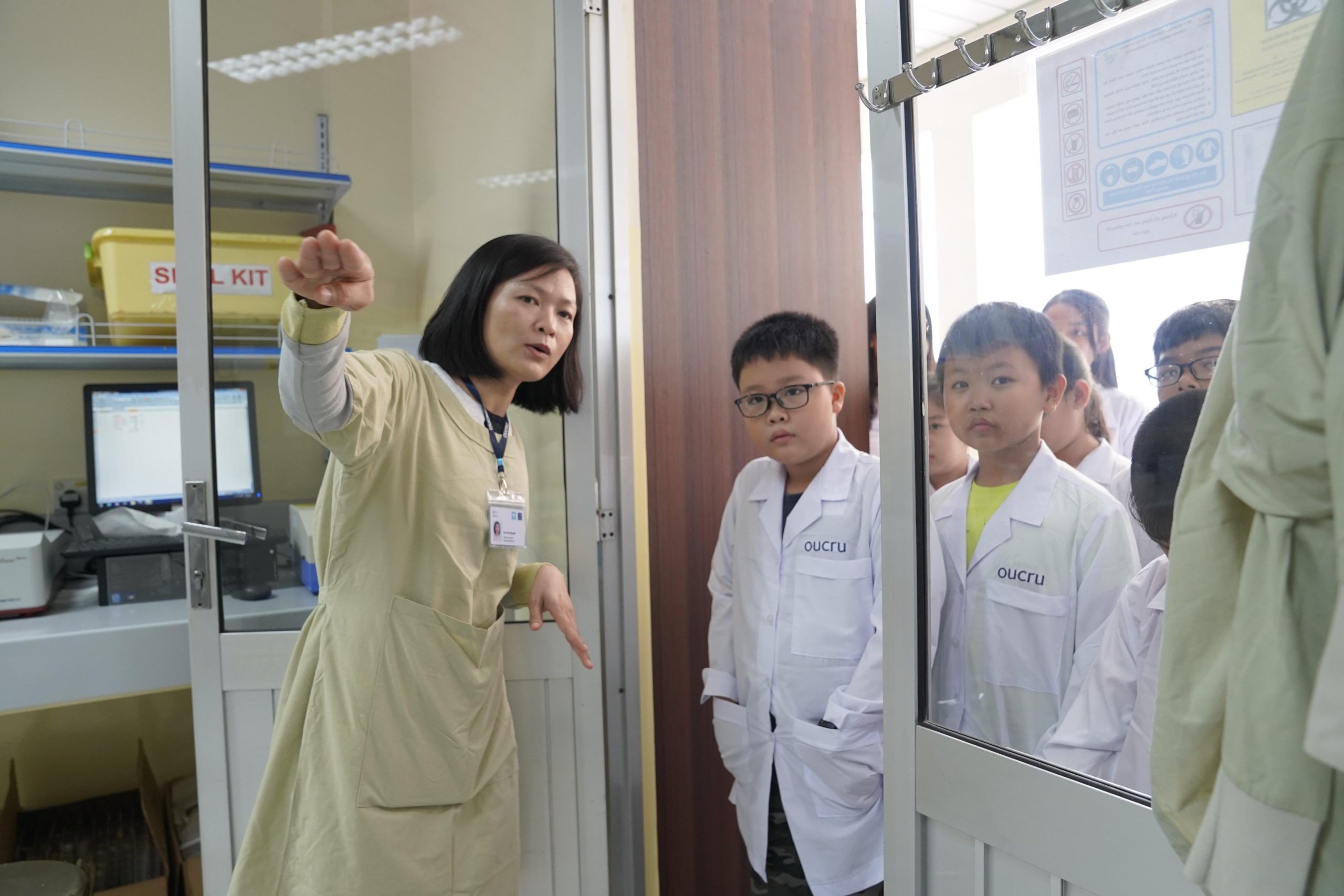
Welcomed by OUCRU’s Public and Community Engagement coordinator, Ms Duong Van Anh, the group stepped into a world of leading biomedical research laboratories. They spent time with scientists who examine bacteria and viruses under advanced microscopes, sequence DNA, and run mathematical models to forecast epidemics. They stood in front of complex specialised equipment and tackled scientific questions they had learned in school but were too nervous to answer.
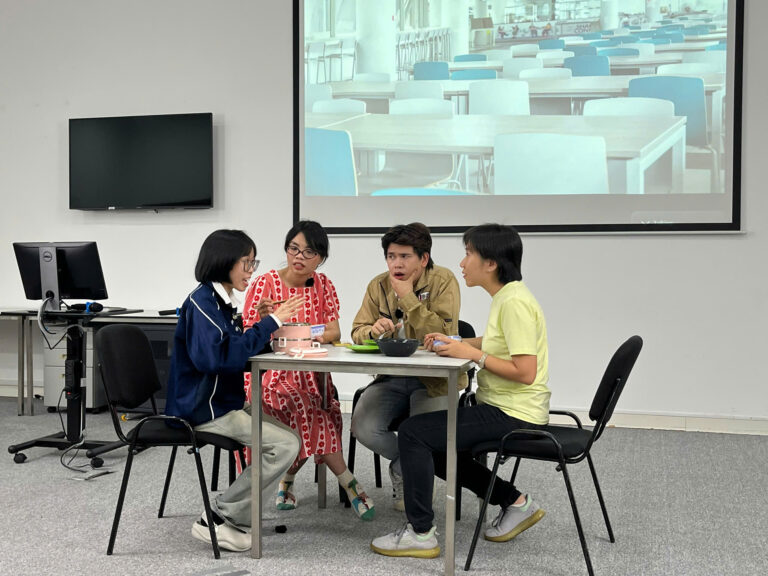
One highlight of the day was an immersive role-playing game simulating an outbreak scenario. Tasked with the role of epidemiologists, the students had to track symptoms and discuss strategies for containment measures. It was not as easy as researchers made it sound. Through the day full of laughter like this, science stopped feeling distant and abstract, turning instead into an approachable dream.
Experiences like this are at the centre of programmes like Science Visits, A day at the lab, or Behind the Papers at OUCRU, which open laboratory doors to students and young people. By offering opportunities to directly interact with scientists and participate in lab activities, those programmes aim to broaden young students’ horizons and break their preconceived limits about careers in science.
Over seven months, Mewahyu Dewi, S.Si., MBiomed, a PhD student at OUCRU Indonesia, organised a series of A Day in the Lab visits to a primary school and a community centre. Funded by the Public and Community Engagement (PCE) Seed Awards, the engagement brought together 110 students from grades 4 to 6, together with 20 teachers from Primary School (TK Immanuel Surya and Taman Palem) and Book Village Community Centre Cibubur, alongside 28 OUCRU staff as facilitators.
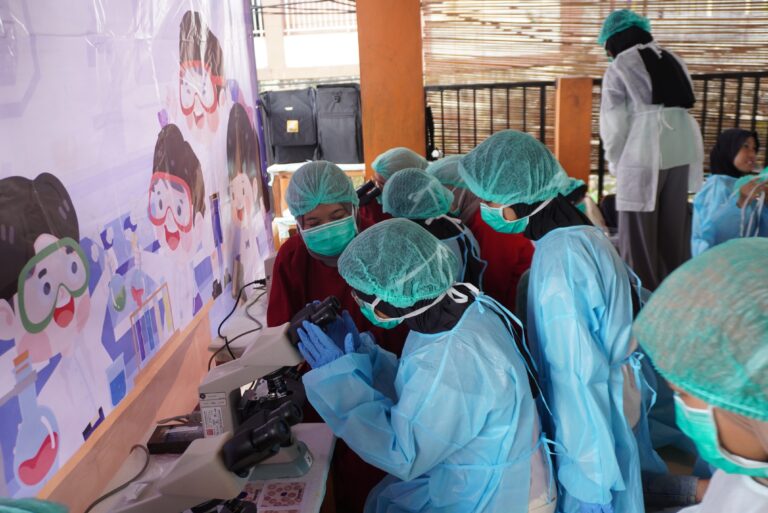
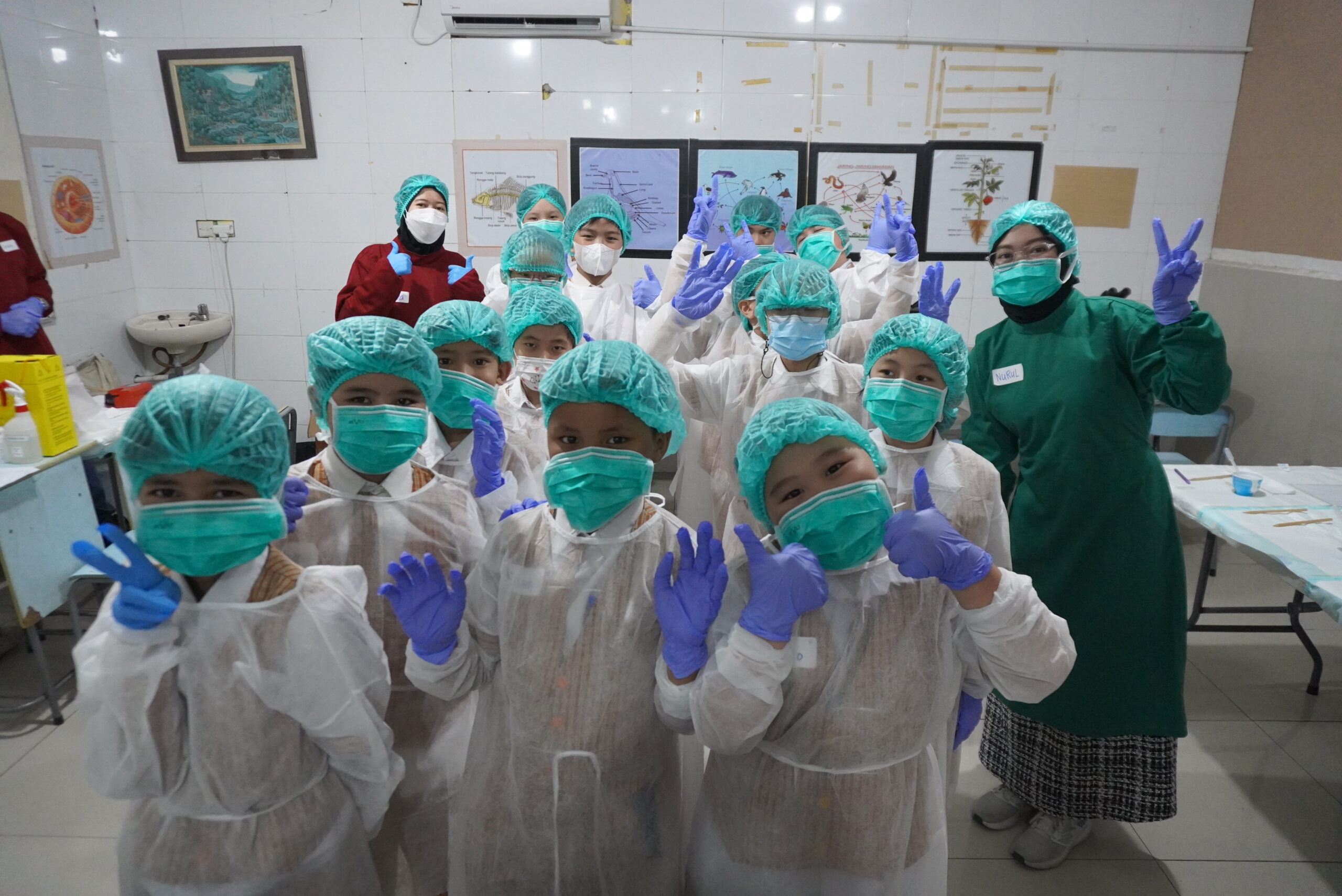
To start with, 15 children aged 7 to 12—many of them children of OUCRU Indonesia staff helped the laboratories team find the most interesting angles: science and the daily lives of researchers in the lab. Not only did the children consult the project team, but they also became co-creators, producing a series of educational science videos exploring the world inside the human body and following a scientist’s workday at the lab. The experience gained its climax when the children geared up in Personal Protective Equipment (PPE) and eagerly viewed real blood cells in action. Their excitement was unstoppable even in the post-test writing using their own words.
These activities create a two-way inspiration journey, benefiting scientists just as much as young participants. OUCRU’s Public and Community Engagement group organised a mini contest last year to encourage researchers to demonstrate their science communication skills. Explaining complex ideas to young curious minds is an art in its own right.
I see the kids enjoying what I say, and I feel really happy. As for me, after giving those talks and sharing, I understand my job even more.
A research assistant joined a Science Visit session
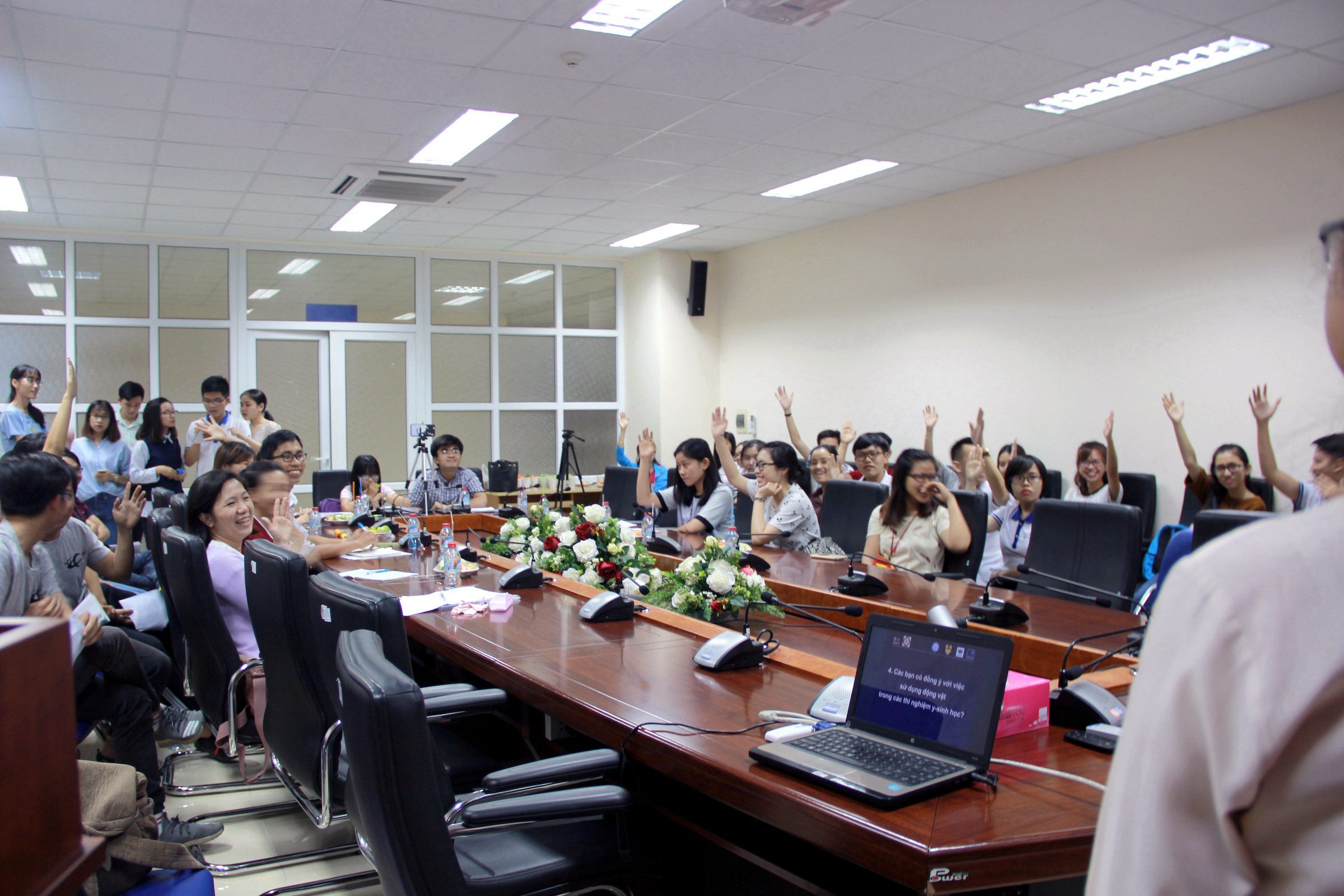
Going beyond laboratories, in Hanoi’s ‘Behind the Papers’ event, which focuses on the antimicrobial resistance theme, OUCRU’s researchers continue to test and refine the way they connect and engage with the pubic with growing global health topics. Using the same model as Collab Lab‘s Meet the Scientists series, Behind the Papers provides a platform where scientists are challenged to explain their complex research to university students, who may not have had the background knowledge beforehand. Moreover, the event is also a bridge for young people to have a look into scientists’ lives, learning all about the ups and downs of the profession that extend beyond the lab.
A day at OUCRU may be short, but through thorough presentations, interesting interactions and conversations, and a lot of fun, it could leave an imprint that can have a long impact on young people’s life passions.
Through today’s visit, I could understand more about OUCRU and mosquito-related infectious diseases.
A student, after a Science Visit session
This August, when we honour and encourage young people’s involvement in social change and science, we would like to emphasise that change may start from just one day visiting the lab.