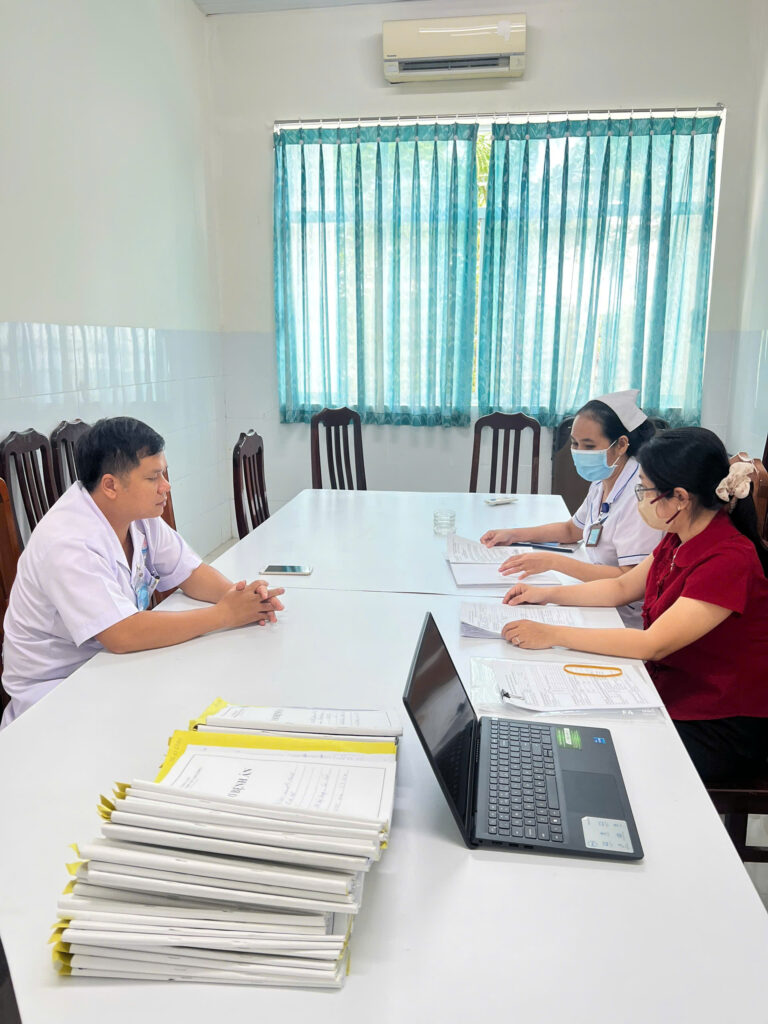


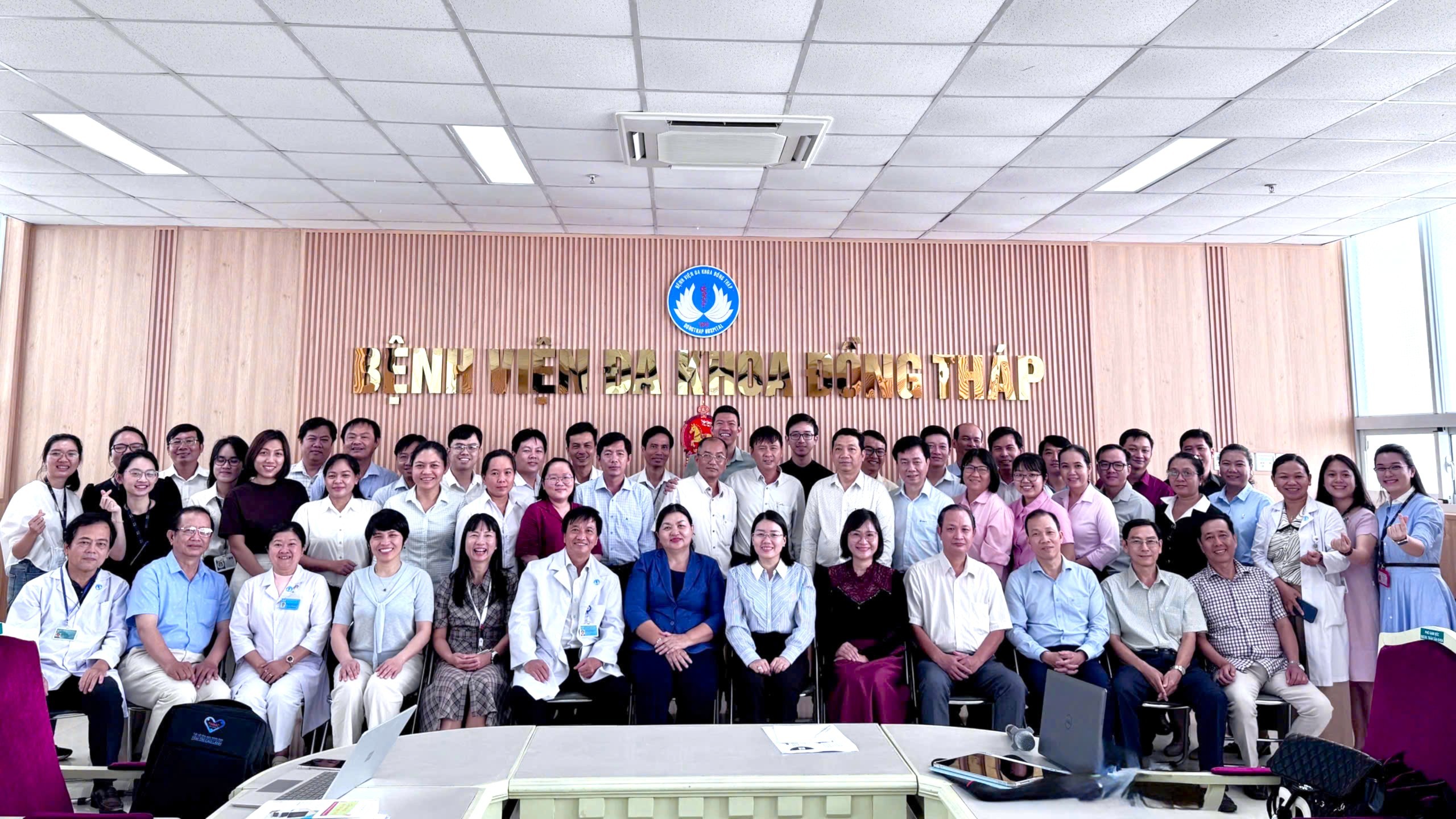
On March 05, 2026, under the coordination of the Dong Thap Department of Health (DoH), the network meeting was held with the participation of six network hospitals: Dong Thap General Hospital, Sa Dec General Hospital, Thap Muoi General Hospital, Cao Lanh 2 Health Center, Thanh Binh Health Center, and Lap Vo Health Center. The meeting provided an opportunity for participants to share progress, discuss current challenges, and propose solutions to enhance the effectiveness of antibiotic use practices across the province. Representatives from VNPT Dong Thap also attended to discuss opportunities for collaboration in applying data and information technology within healthcare facilities. The meeting served as a platform for connection, enabling hospitals in the network to gain an overview of the current antimicrobial stewardship (AMS) implementation situation, learn from one another in terms of organizational management practices, and align on key priorities for integrating routine data visualization tools to support data-driven decision-making and to strengthen and enhance microbiology data systems for the next phase.
In the opening report, the DoH presented an overview of network hospitals implementing the Antimicrobial Stewardship (AMS) programme activities from March 2025 to February 2026, including core AMS activities such as capacity‑building trainings, implementation of audit and feedback, strengthened infection prevention and control (IPC), development of antibiotic‑related guidelines and procedures, and completion of antibiotic consumption reports. The presentation also reviewed the major implementation milestones of the 60HN – ASPARNet project from 2024 to 2026, highlighting a clear and continuously evaluated implementation pathway.
The DoH emphasized the need for ongoing technical support, process standardization, and completion of antibiotic consumption reports at each unit to improve antibiotic stewardship across the province.
During the site sharing session, Cao Lanh 2 Health Center – one of the leading units in the quarter for implementing AMS activities – presented summary reports, shared experiences, and analyzed the strengths, weaknesses, facilitators, and challenges encountered during implementation. They reported organizing three IPC training sessions in late January 2026 for healthcare workers and cleaning staff, helping strengthen knowledge on infection prevention and safe antibiotic use. The hospital also completed its antibiotic consumption report for 2023–2024, which is now being used to support leadership decision‑making. These activities contributed meaningfully to raising awareness, standardizing practices, and improving antibiotic stewardship efforts at the facility.
During the next session, OUCRU introduced the Integrated Stewardship in Hospitals for Antimicrobial Resistance Control Platform (iSHARP), a model designed to connect different information sources (hospital data, surveys, etc.) and visualize key indicators related to antibiotic stewardship and infection prevention and control. The model aims to help hospitals in the network and the DoH monitor data more conveniently, consistently, and in a centralized manner. This model is expected to become a practical tool supporting management, monitoring, and decision‑making in the coming period. The presentation also outlined initial directions for piloting the system and suggestions for coordination between technical teams and information system providers. This was regarded as an important first step toward exploring and developing an integrated data model in the future.
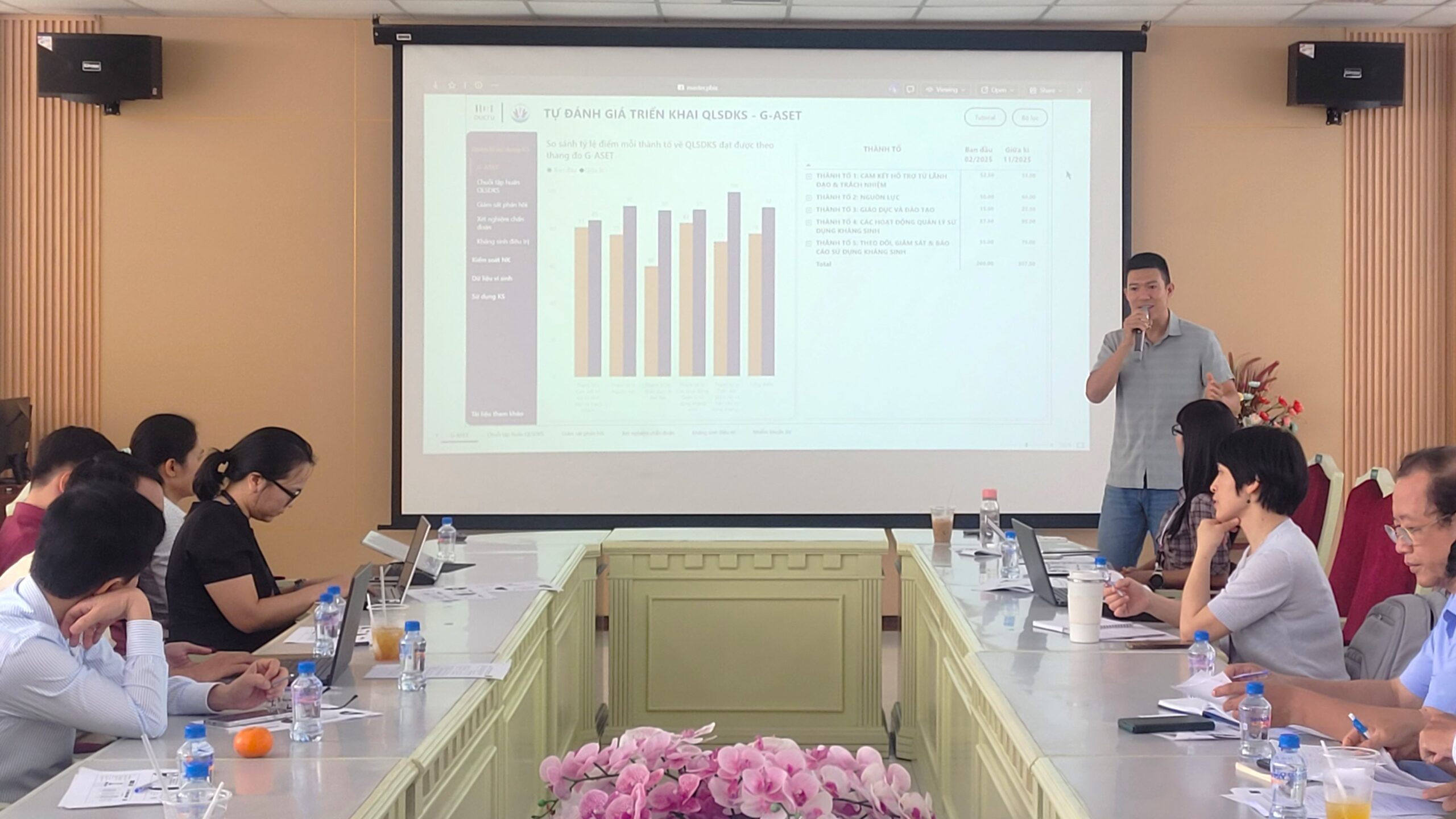
Following OUCRU’s introduction, representatives from VNPT Dong Thap, the local health information system provider, engaged in discussions with hospitals on the feasibility of integrating and effectively utilizing existing data sources. The discussion focused on system connectivity, technical requirements, and coordination mechanisms needed to develop a visualization model suitable for the entire network.
During the afternoon session, participants were divided into groups to discuss strategies for the future implementation of antimicrobial stewardship (AMS) programmes, as well as approaches to integrating these activities into routine practice. The group discussions were organized around key themes: (1) developing evidence- and data-driven tools to support AMS; (2) strengthening and sustaining AMS committees; (3) implementing infection prevention and control (IPC) programmes; and (4) enhancing microbiology capacity to support antimicrobial resistance (AMR) control. These activities are expected to support the long-term sustainability of AMS implementation, including beyond the duration of the study.
At the end of the meeting, the Dong Thap DoH acknowledged the efforts and achievements of the network units and issued a directive to ensure a unified approach for the next phase. The Department emphasized the importance of maintaining antibiotic stewardship activities regularly, systematically, and consistently. Units were also encouraged to continue sharing experiences, strengthening collaboration, and proactively identifying support needs to improve patient care quality across the province.