

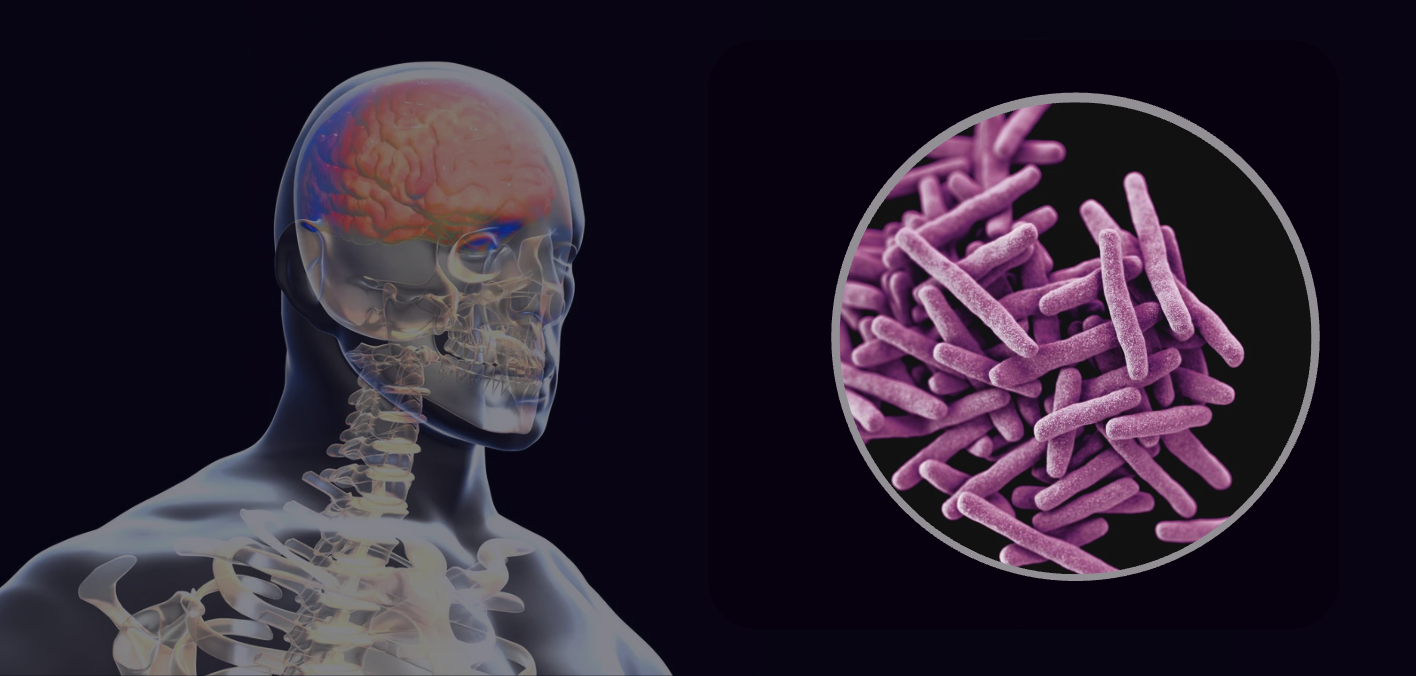
Tuberculous meningitis (TBM) is one of the most severe forms of tuberculosis, killing between 30 and 50% of those who develop it despite treatment. Doctors have relied on the same basic approach since the 1950s: antibiotics to kill the bacteria, and corticosteroids to reduce the dangerous brain inflammation that the infection causes.
Recent OUCRU clinical trials, including HARVEST (NEJM Dec 2025); SURE (unpublished); ACT HIV (NEJM Oct 2023); LAST ACT (Nat Med Jan 2026), have shown that this approach is not good enough: higher-dose antibiotic regimens have worsened outcomes rather than improved them, and corticosteroids appear not to control inflammation or benefit most patients. The field needs a new direction.
The opportunity
There are real opportunities to improve TBM treatment. A resurgent pipeline of new anti-tuberculosis drugs may kill bacteria faster than current drugs, and targeted anti-inflammatory drugs may control life-threatening brain inflammation better than the corticosteroids used as standard of care today.
However, these opportunities are impaired by three critical gaps: a poor understanding of disease and therapeutic mechanisms; a lack of animal models that can predict whether new drugs and regimens will work in humans; and no reliable biomarkers to measure whether treatment is succeeding.
A major new research programme, funded by a £5 million Wellcome Discovery Award over five years, will seek to close those gaps. Led by Professor Guy Thwaites at the University of Oxford, the project brings together an international team from OUCRU Vietnam, CIDRI-Africa in Cape Town, South Africa, the UK, and the USA. The programme will start in October 2026.
‘This is an incredibly exciting time in tuberculosis, with new anti-tuberculosis and anti-inflammatory drugs becoming available to improve treatment. But unless we understand the fundamental relationship between bacterial killing, inflammation, and outcome, we risk using the new drugs wrongly and missing the opportunity to increase survival from this lethal disease,’ said Professor Guy Thwaites.
What the research will do
The team will create a platform for the pre-clinical and clinical discovery and development of new therapeutic strategies for TBM, linking human experimental medicine in Vietnam and South Africa with animal models in the USA.
In the human study, the team will test four treatments in 160 adults with TBM: two potent bedaquiline-containing anti-tuberculosis regimens, and two drugs that target inflammation in the brain rather than the bacteria themselves. The study aims to quantify the relationship between drug concentrations in the body, bacterial killing, inflammation, and clinical outcome, and to discover novel inflammatory and physiological biomarkers that could be used to measure treatment success in future trials.
In parallel, the team will use rabbit and mouse models of TBM to define how well animal studies can predict human therapeutic responses. The models will also be used to evaluate the therapeutic potential of three new drugs in clinical development, ganfeborole (GSK), telacebec (TB Alliance), and TBAJ-876 (TB Alliance), establishing their role in the discovery and development of new treatment strategies for TBM.
An international team
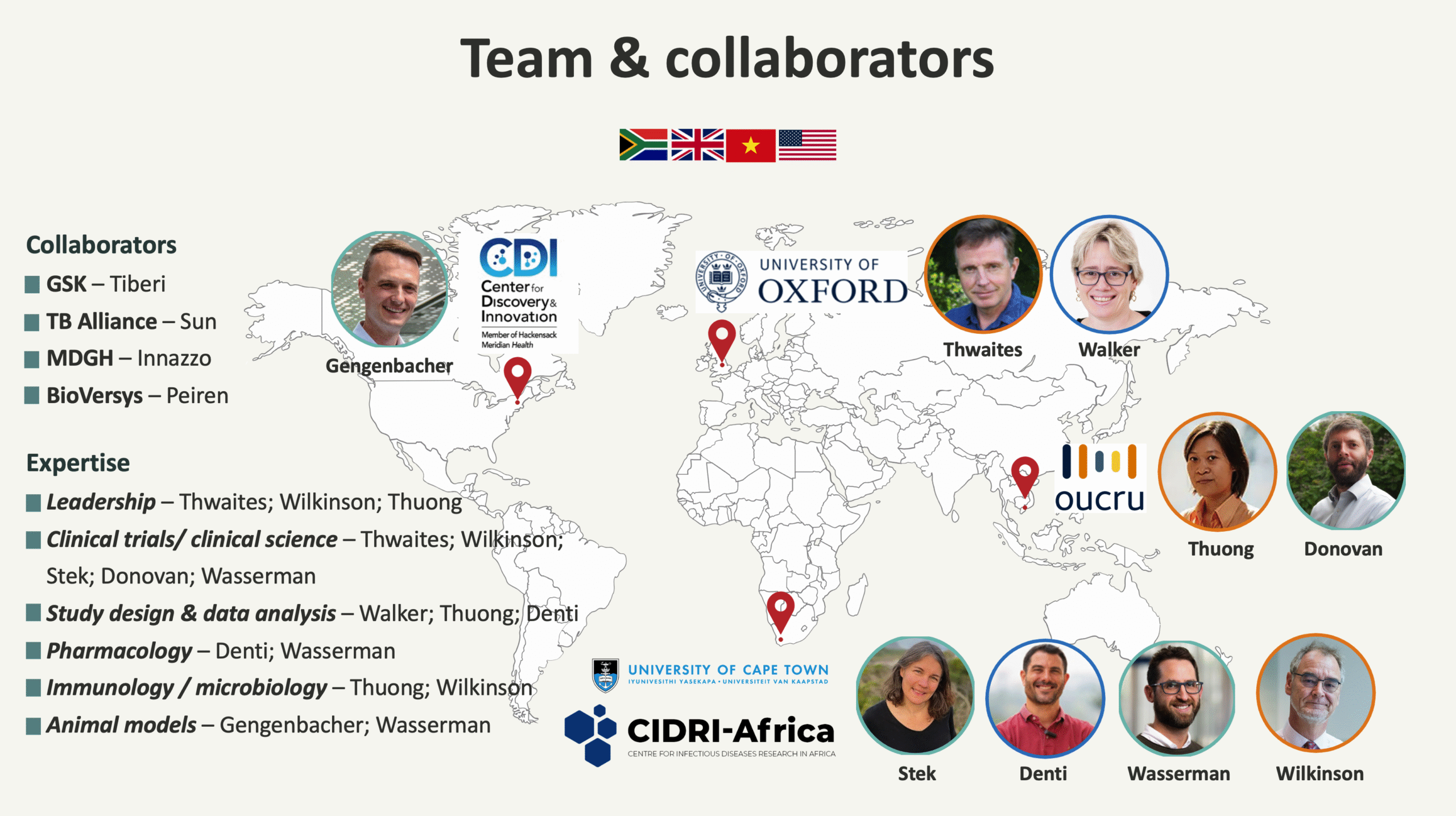
The research is led by Guy Thwaites, with Sarah Walker (University of Oxford), Nguyễn Thụy Thương Thương and Joseph Donovan (OUCRU Vietnam), and Martin Gengenbacher (Center for Discovery & Innovation, USA). The team also includes Robert Wilkinson, Cari Stek, Sean Wasserman and Paolo Denti at the University of Cape Town and CIDRI-Africa, South Africa.
Industry collaborators include GSK, TB Alliance, Medicines Development for Global Health, and BioVersys.
Looking ahead
TBM disproportionately affects people in low- and middle-income countries. New drugs are beginning to emerge, but without the knowledge to deploy them safely and effectively, their potential may not be realised.
This research aims to provide that knowledge, and in doing so, lay the foundation for a new generation of clinical trials that could meaningfully reduce deaths from this devastating disease.