Healthcare Worker Capacity Strengthening

Enhance the communication capacity of healthcare workers to improve care and health outcome of patients and communities.

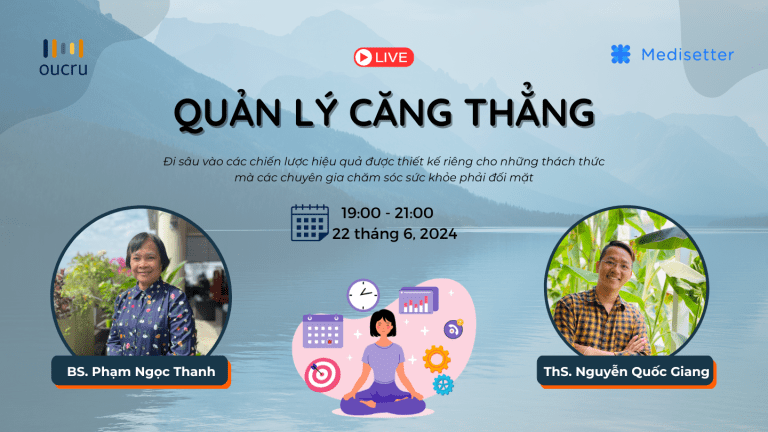
Healthcare workers (HCWs) often work in a challenging and stressful environment. Many of the complaints against HCWs relate to poor communication, and much of the stress and anxiety felt by health professionals is reportedly due to difficulties in dealing with patients and their families. HCWs may not have the skills or time to communicate well with patients or communities.

Aims of the programme:

  • HCWs have better communication skills to deal with complex situations and support patients and their families or rural communities.
  • HCWs are better able to share health information with patients/communities.
  • HCWs are better supported to prevent or alleviate their own stress and anxiety.

Key activities

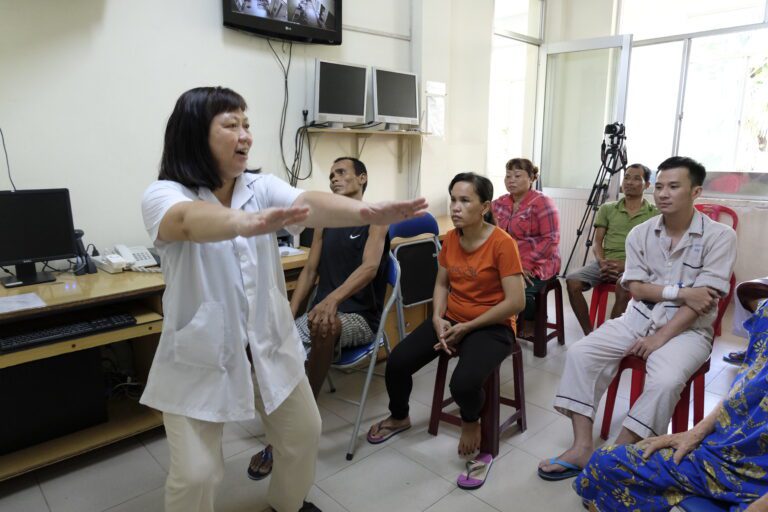
Building Capacity for Social Work Department at Hospital for Tropical Diseases

DURATION
2019
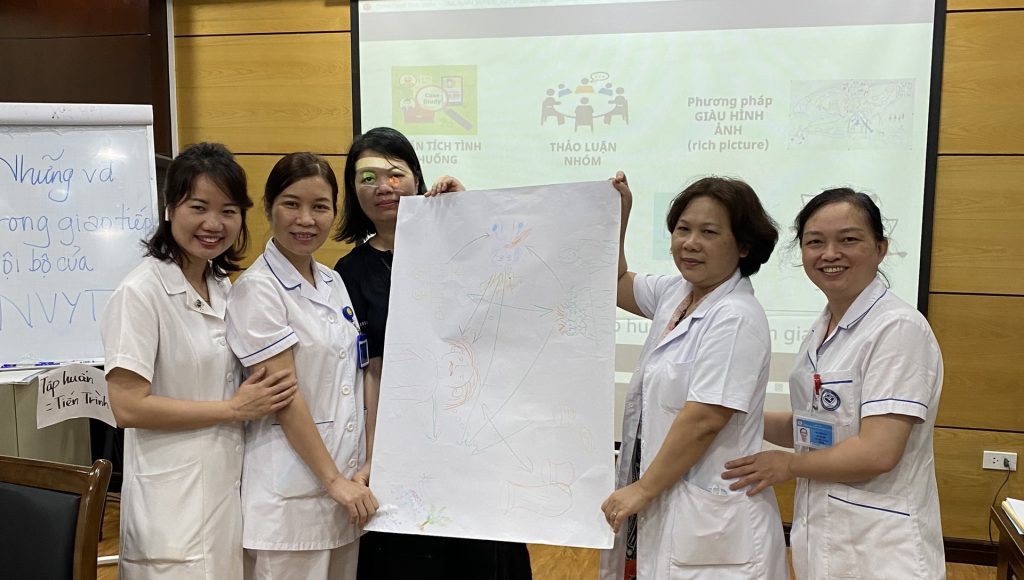
A series of training for healthcare workers was conducted at the hospital, covering several topics such as:
  • Skills to help HCWs to communicate better with their patients and carers
  • Group facilitation skills to help HCWs organise their community activities
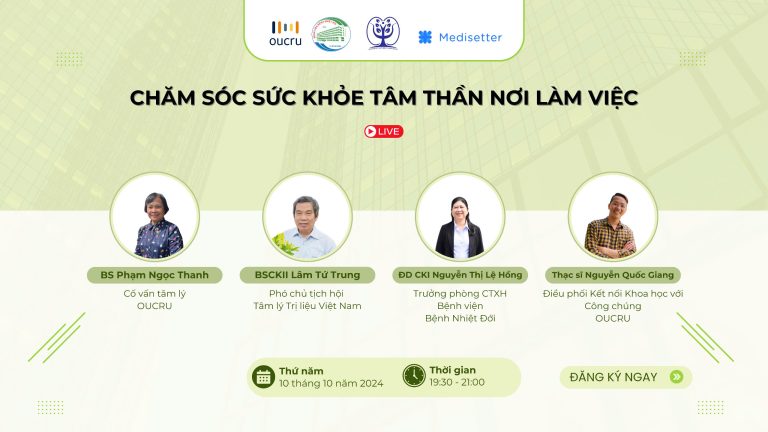
  • Ways and support to help HCWs deal with stress at work and in life

Partner with hospitals and international communities

DURATION

2020 – now

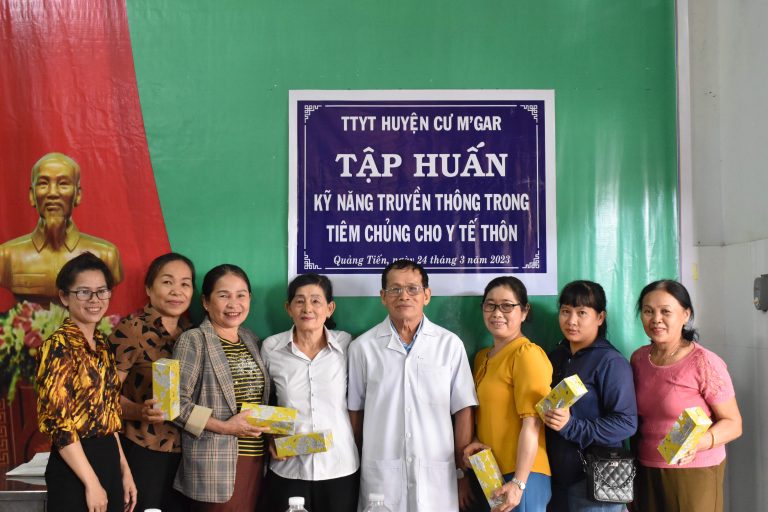
From the success of the pilot programme at the Hospital for Tropical Diseases in Ho Chi Minh City, the Research Enrichment programme team of the Public and Community Engagement department, OUCRU developed more materials to expand the training sessions to other partnered hospitals such as the Hanoi Maternity Hospital.

We also disseminate training materials to the international healthcare worker communities via CONNECT, a knowledge hub on The Global Health Network.

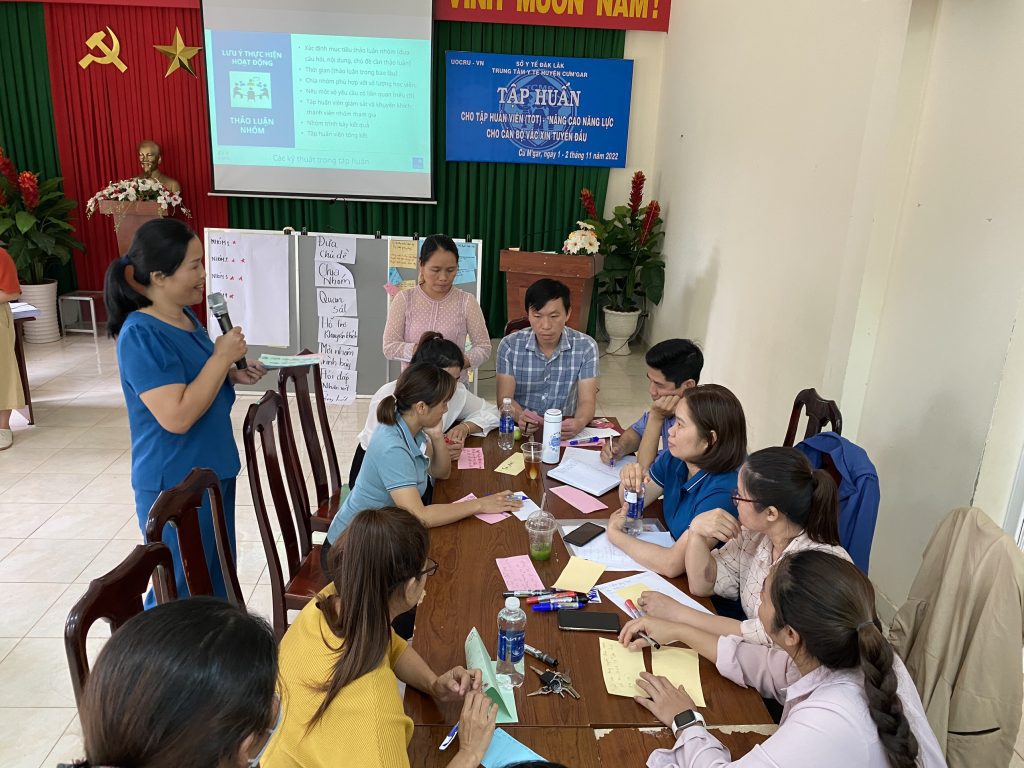
Capacity strengthening for frontline vaccine workers, Dak Lak

FUNDED BY

UK in Vietnam

We are collaborating with Dak Lak Center for Disease Control to build a sustainable training curriculum that can be applied in other provinces in Vietnam. Read more.

Loading...

OUCRU Investigators

LEARN MORE

Related

dak lak cdc logo

Centre for Disease Control Dak Lak

TGHN logo square

The Global Health Network

Forum Theatre Simulation

Analyse Tam’s choices. Step inside the story as an interactive spectator to break the chain of medical mishaps before it’s too late.

STORY TIMELINE PROGRESSION

progress step 6

The Ultimate Prevention: Vaccine Status

What if the volunteer leader had checked everyone’s Tetanus vaccination status before leaving for the field trip?

Vaccination Changes Everything

  • 100% Preventable: As you can see from our play, Tetanus cannot be cured easily once symptoms start and can be costly. But it is almost completely preventable with regular vaccination.
  • 10-Year Rule: Adults need a Tetanus booster shot every 10 years to maintain immunity.
  • Early booster shot: If you receive a deep or dirty cut (such as in the play, one from a rusty tool), you may need a booster if your last shot was more than 5 years ago.

When was your last Tetanus shot? Check your records today — a simple booster is the ultimate protection against unexpected accidents.

Forum Theatre Simulation

Analyse Tam’s choices. Step inside the story as an interactive spectator to break the chain of medical mishaps before it’s too late.

STORY TIMELINE PROGRESSION

progress step 5

Scenario Solved at Step 5!

Life-saving intervention! Jaw stiffness (lockjaw) is a classic symptom of active Tetanus toxin. Immediate hospital admission is required to secure the airway and control muscle spasms.

What if Tam had an ultimate shield against tetanus—protecting him from rusty tools before the trip even started?

Forum Theatre Simulation

Analyse Tam’s choices. Step inside the story as an interactive spectator to break the chain of medical mishaps before it’s too late.

STORY TIMELINE PROGRESSION

progress step 4

Scenario Solved at Step 4!

Good call! Healthcare providers depend on the full context. Clearly stating that an injury involved rusted metal alerts the nurse to assess Tetanus exposure immediately.

What if Tam had an ultimate shield against tetanus—protecting him from rusty tools before the trip even started?

Forum Theatre Simulation

Analyse Tam’s choices. Step inside the story as an interactive spectator to break the chain of medical mishaps before it’s too late.

STORY TIMELINE PROGRESSION

progress step 3

Scenario Solved at Step 3!

Spot on! Social media content often promotes unverified advice that delays crucial medical intervention. Deep, dirty cuts always require professional evaluation within hours.

What if Tam had an ultimate shield against tetanus—protecting him from rusty tools before the trip even started?

Forum Theatre Simulation

Analyse Tam’s choices. Step inside the story as an interactive spectator to break the chain of medical mishaps before it’s too late.

STORY TIMELINE PROGRESSION

progress step 2

Scenario Solved at Step 2!

Smart choice! Clostridium tetani bacteria thrive in organic material like dirt and leaves. Keeping raw plants out of deep cuts prevents pushing bacterial spores deeper into tissue.

What if Tam had an ultimate shield against tetanus—protecting him from rusty tools before the trip even started?

Forum Theatre Simulation

Analyse Tam’s choices. Step inside the story as an interactive spectator to break the chain of medical mishaps before it’s too late.

STORY TIMELINE PROGRESSION

progress 1 of 6

Scenario Solved at Step 1!

Great call! By stopping work with high-risk, corroded tools, you removed the physical source of Tetanus exposure entirely before an injury could even happen.

What if Tam had an ultimate shield against tetanus—protecting him from rusty tools before the trip even started?

Skip to content