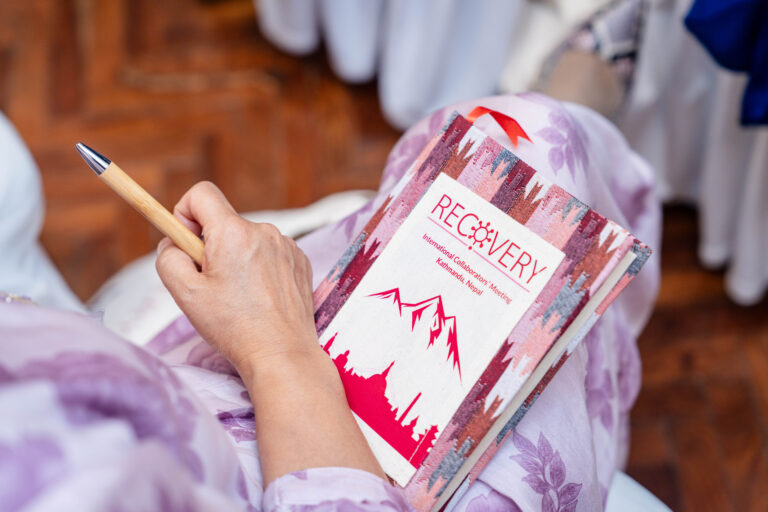
Randomised Evaluation of COVID-19 Therapy (RECOVERY)

This international clinical trial aims to identify treatments that reduce the risk of death in patients hospitalised with suspected or confirmed COVID-19. It is a large multicenter trial recruiting in hospitals in the United Kingdom, Indonesia, Nepal, Viet Nam and Ghana.

Background

The RECOVERY Protocol describes an overarching trial design to provide reliable evidence on the efficacy of candidate therapies for confirmed COVID-19 in hospitalised patients receiving the usual standard of care. The focus of RECOVERY is the impact of candidate treatments on mortality and on the need for hospitalisation/ventilation. This trial randomises eligible participants to the usual standard of care for the local hospital alone vs the usual standard of care plus one/more additional study treatments. Randomisation will always be relevant to the current clinical situation, and the incremental effects of the study treatments will be appropriately assessed.

Study Design

Well-designed, pragmatic, and easy to implement clinical trials are key to generating the evidence needed to best manage pandemic diseases, which occur essentially in emergency situations. The RECOVERY trial sets this paradigm. It is a large open-label factorial designed platform trial that enables the simultaneous testing of multiple different treatments. As particular treatments are found to be effective or ineffective, they are dropped from the trial and should form part of the standard of care.

The study is designed to have high power to deliver precise estimates of the effect of particular treatments on the risk of death. New treatment interventions are added to the trial as evidence emerges from small scale studies of their possible value. While originally based in the UK, the extension of the RECOVERY trial to international sites, building upon well-established clinical research networks and collaborations, will ensure that the results of the trial have global relevance.

Outputs to date

Having enrolled more than 47,000 patients to date,  RECOVERY has provided precise data demonstrating the efficacy of dexamethasone, tocilizumab, and a cocktail of CoV antibodies (Regeneron) in reducing the risk of death in hospitalized patients, and that hydroxychloroquine, azithromycin, lopinavir-ritonavir, aspirin, colchicine, and convalescent plasma are ineffective. These results have influenced World Health Organisation and national guidelines for the treatment of COVID19. Current treatments undergoing evaluation include high dose corticosteroids and empagliflozin.


Loading...

OUCRU Investigators

Publications

Loading...
LEARN MORE

Related

Dr Erni Nelwan

Dr Erni Nelwan

Pradip

Dr Pradip Gyanwali

OUCRU logo dark

Armed Police Force Hospital

UI

Faculty of Medicine, University of Indonesia

RSHS

Hasan Sadikin Hospital

HAMS

Hospital for Advanced Medicine and Surgery

HTD-updated logo

Hospital For Tropical Diseases

OUCRU logo dark

Martha Friska Hospital

Metropolitan Medical Centre Hospital Jakarta

Metropolitan Medical Centre Hospital Jakarta

NHTDw

National Hospital of Tropical Diseases

Nepal-Health-Research-Council-(NHRC)-Notice

Nepal Health Research Council

NPH

Nepal Police Hospital

OUCRU logo dark

Pokhara Academy of Health Sciences

Puri Raharja

Puri Raharja Hospital

OUCRU logo dark

RSUP Prof. Dr. R. D. Kandou Manado

Sukraraj Tropical and Infectious Disease Hospital

Sukraraj Tropical and Infectious Disease Hospital

UNAIR

UNAIR Hospital

Forum Theatre Simulation

Analyse Tam’s choices. Step inside the story as an interactive spectator to break the chain of medical mishaps before it’s too late.

STORY TIMELINE PROGRESSION

progress step 6

The Ultimate Prevention: Vaccine Status

What if the volunteer leader had checked everyone’s Tetanus vaccination status before leaving for the field trip?

Vaccination Changes Everything

  • 100% Preventable: As you can see from our play, Tetanus cannot be cured easily once symptoms start and can be costly. But it is almost completely preventable with regular vaccination.
  • 10-Year Rule: Adults need a Tetanus booster shot every 10 years to maintain immunity.
  • Early booster shot: If you receive a deep or dirty cut (such as in the play, one from a rusty tool), you may need a booster if your last shot was more than 5 years ago.

When was your last Tetanus shot? Check your records today — a simple booster is the ultimate protection against unexpected accidents.

Forum Theatre Simulation

Analyse Tam’s choices. Step inside the story as an interactive spectator to break the chain of medical mishaps before it’s too late.

STORY TIMELINE PROGRESSION

progress step 5

Scenario Solved at Step 5!

Life-saving intervention! Jaw stiffness (lockjaw) is a classic symptom of active Tetanus toxin. Immediate hospital admission is required to secure the airway and control muscle spasms.

What if Tam had an ultimate shield against tetanus—protecting him from rusty tools before the trip even started?

Forum Theatre Simulation

Analyse Tam’s choices. Step inside the story as an interactive spectator to break the chain of medical mishaps before it’s too late.

STORY TIMELINE PROGRESSION

progress step 4

Scenario Solved at Step 4!

Good call! Healthcare providers depend on the full context. Clearly stating that an injury involved rusted metal alerts the nurse to assess Tetanus exposure immediately.

What if Tam had an ultimate shield against tetanus—protecting him from rusty tools before the trip even started?

Forum Theatre Simulation

Analyse Tam’s choices. Step inside the story as an interactive spectator to break the chain of medical mishaps before it’s too late.

STORY TIMELINE PROGRESSION

progress step 3

Scenario Solved at Step 3!

Spot on! Social media content often promotes unverified advice that delays crucial medical intervention. Deep, dirty cuts always require professional evaluation within hours.

What if Tam had an ultimate shield against tetanus—protecting him from rusty tools before the trip even started?

Forum Theatre Simulation

Analyse Tam’s choices. Step inside the story as an interactive spectator to break the chain of medical mishaps before it’s too late.

STORY TIMELINE PROGRESSION

progress step 2

Scenario Solved at Step 2!

Smart choice! Clostridium tetani bacteria thrive in organic material like dirt and leaves. Keeping raw plants out of deep cuts prevents pushing bacterial spores deeper into tissue.

What if Tam had an ultimate shield against tetanus—protecting him from rusty tools before the trip even started?

Forum Theatre Simulation

Analyse Tam’s choices. Step inside the story as an interactive spectator to break the chain of medical mishaps before it’s too late.

STORY TIMELINE PROGRESSION

progress 1 of 6

Scenario Solved at Step 1!

Great call! By stopping work with high-risk, corroded tools, you removed the physical source of Tetanus exposure entirely before an injury could even happen.

What if Tam had an ultimate shield against tetanus—protecting him from rusty tools before the trip even started?

Skip to content