

Project progress updates
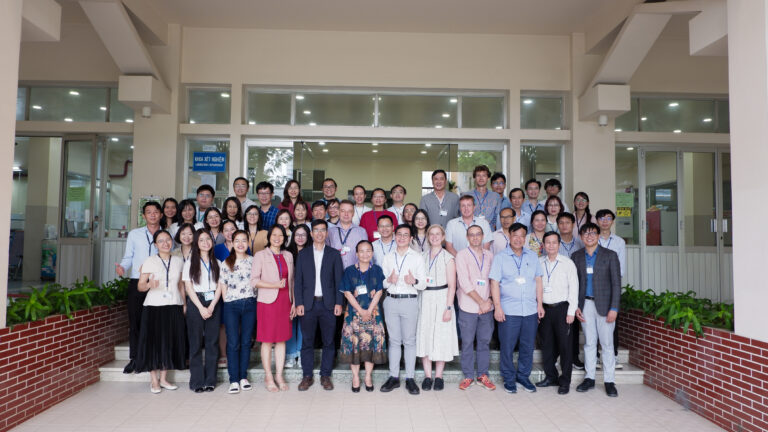
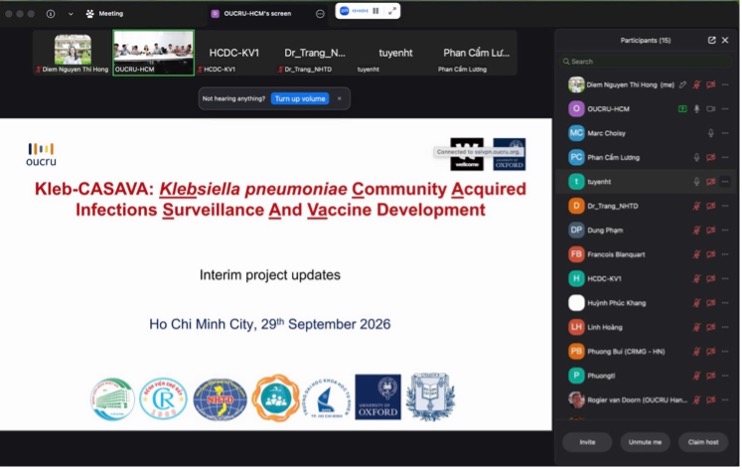
On September 29, 2026, the Molecular Epidemiology group of OUCRU is presented by Dr. Pham Thanh Duy, together with Prof. Susanna Dunachie (University of Oxford, United Kingdom), Dr François Blanquart (Centre for Interdisciplinary Research in Biology, Collège de France, France), Assoc. Prof. Nguyen Duc Hoang and Assoc. Prof. Phan Thi Phuong Trang (University of Science, HCMC), Assoc. Prof. Marc Choisy (Head of Mathematical Modelling group, OUCRU HCMC), Prof. Rogier Van Doorn (Director of OUCRU Ha Noi), and presentations of Hospital of Tropical Diseases, Cho Ray Hospital, National Hospital of Tropical Diseases and Ho Chi Minh Center for Disease Control (HCDC) had an online meeting to look back on the 1-year journey of project implementation. As of September 2026, the project has achieved important milestones:
The clinical surveillance of community-accquired Klebsiella pneumoniae infections (43EN study) has been implemented at 3 hospitals in Ho Chi Minh City and Ha Noi:
- Provided training to 3 hospital study sites.
- As of September 2026, total 377 patients were recruited into study, reached 50% of total target. Beside that, 145 close contacts of the patients also enrolled into the study.
The community household surveillance (44EN study), collaborated with HCDC:
- Provide GCP and protocol training to HCDC study team and Commune Health Stations’ staffs.
- This longitudinal cohort study completed the recruitment, follow-up and sampling of 345 participants from 100households across 20 wards/communes in Ho Chi Minh City.
- Isolated and stored ESBL-producing and carbapenem-resistant Kp from participants’ throat swab and stool samples.
Immunological investigation:
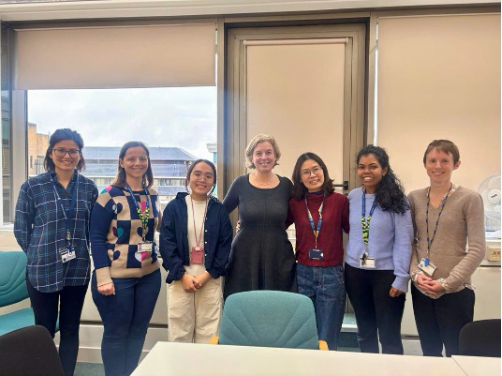
- Exchange of DPhil students from OUCRU-HCM, University of Science-HCMC and University of Oxford for immunology training in November 2025.
- Initial result updates on the antibody response to Kp protein antigens in patients with bloodstream infection and healthy controls.
Organised a 5-day ‘Beginner Course on Microbial Genomics: Applications & Research’ from 11-15 May 2026 with 42 attendees from local hospitals, public health institutions and universities in Vietnam.
At the meeting, the initial data statistics were analyzed, as a basis for the orientation for the upcoming in-depth research steps.
Wrap-up and retrospective on community household surveillace
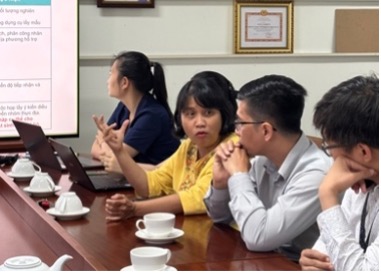
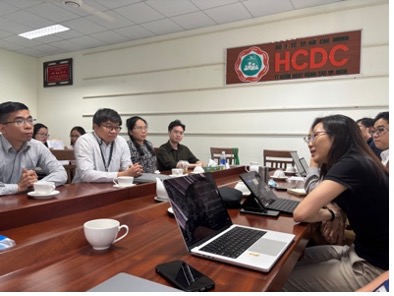
On November 4, 2026, the Molecular Epidemiology group and HCDC held a joint review meeting following the six-month study period (April – September, 2026). The session focused on evaluating overall progress and reflecting on the primary operational facilitators and obstacles faced during screening, recruitment, and follow-up.
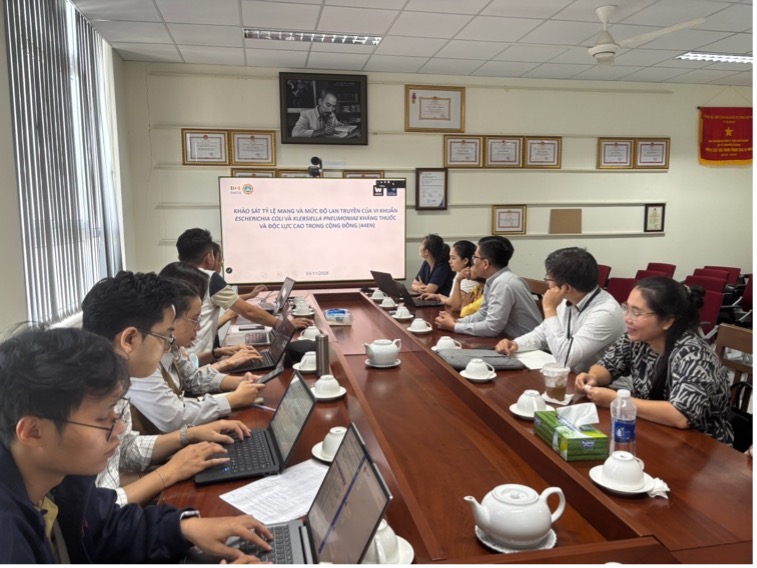
Initial data on demographic characteristics and risk factors on living conditions, health status, water and food use habits of households as well as inviduals are preliminarily presented through the Research Data Management Platform – RESSYNT – A digital transformation system collects research data developed by the research team accompanying the field team throughout the data collection process at the time of recruitment and participant follow-ups.
HCDC staff shared practical insights during meeting. Although participant recruitment and follow-up presented notable obstacles, the surveillance was completed on schedule as outlined in the research proposal. This outcome reflects strong HCDC leadership and the enthusiasm of communes/wards community health workers.

Next steps
Base on the preliminarily resutls, the Kleb-CASAVA project will focus on the next goals:
- Ongoing recruitment and follow-up for the 43EN study to define the epidemiology and clinical features of commnity-accquired Kp infections in Vietnam.
- Engage with researchers and study partners to standardize advanced molecular microbiological techniques and construct mathematical models. The core aim is to estimate the prevalence of Kp carriage and quantify the transmission rates of Kp in the community.
- Assess the human immune responses to Kp antigens among patients with bloodstream infections and their correlation with treatment outcomes.